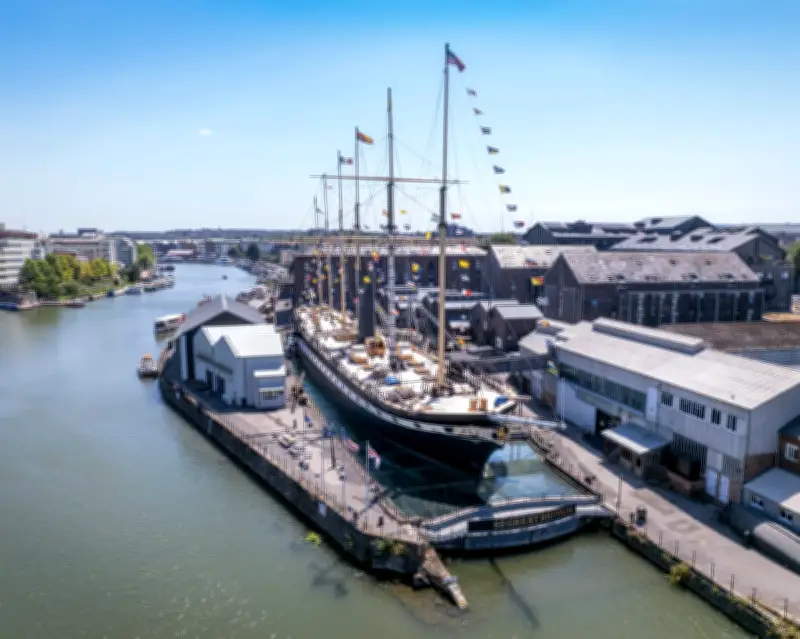
The SS Great Britain museum has reopened at Bristol Dockyards with a new focus on presenting a 'warts and all' history of the iconic ship, acknowledging its role in imperialism and the hardships faced by those who built and travelled on it.
New Museum Emphasizes 'Rounded' History
Tim Bryan, project manager for the museum, said the exhibition provides a balanced perspective. 'It's the ship that changed the world, but there's always an upside and a downside. That's human life. We have tried to provide a rounded picture of history, which we think is what people want.'
The museum details how after its transatlantic service, the ship was used to transport soldiers to suppress the Indian rebellion of 1857, and later carried passengers to Australia, contributing to the disruption of Indigenous ways of life.
Focus on People Behind the Ship
Bryan emphasized the importance of telling the stories of the people connected to the ship. 'This exhibition is also about the people behind the ship – the people who built it, worked on it and travelled on it. Visitors are very interested in the people side of the ship – who they were, where they were going, what life was like onboard. It's not just a big object in the dry dock – it's about people.'
Among the stories featured is that of Allan Gilmour, a young passenger who travelled from the UK to Australia in 1852. His diary includes a diagram of a steerage cabin illustrating the cramped conditions. The museum also highlights the experiences of apprentice shipwright James Johnson, who began working on the ship at age 13, and fireman John Lee, who shoveled coal for hours to power the engines.
Community Involvement and Difficult Conversations
The museum project involved local communities in selecting stories from the archives. Bryan noted, 'We started working with local communities a few years ago. We offered them the opportunity to discover things in our archive and to look at stories that really interested them.'
One such story is that of James W Jones, who was transported from Barbados to Australia for stealing a horse in 1837. In 1862, he sailed on the SS Great Britain from Australia to England, working as a barber, performing poetry, and participating in a mock trial debating slavery.
Ship's Technical Innovations and Challenges
The museum also covers the ship's engineering milestones. SS Great Britain was the first ocean-going ship made of metal and the first to use a screw propeller instead of paddlewheels. However, it was not an immediate success. Launched in Bristol in 1843, it moved to Liverpool due to lack of local support. Its engines were underpowered for rough seas, making it initially unpopular with passengers.
After ceasing passenger service in the 1880s, the ship was converted to carry cargo like wheat and coal. It was damaged in a storm and sold as a wreck, later serving as a floating warehouse in the Falkland Islands until abandoned in the 1930s. It was returned to Bristol in 1970 and restored as a museum ship.
The new museum opens on Saturday 18 July, aiming to spark conversations about migration, empire, and the human stories behind this historic vessel.