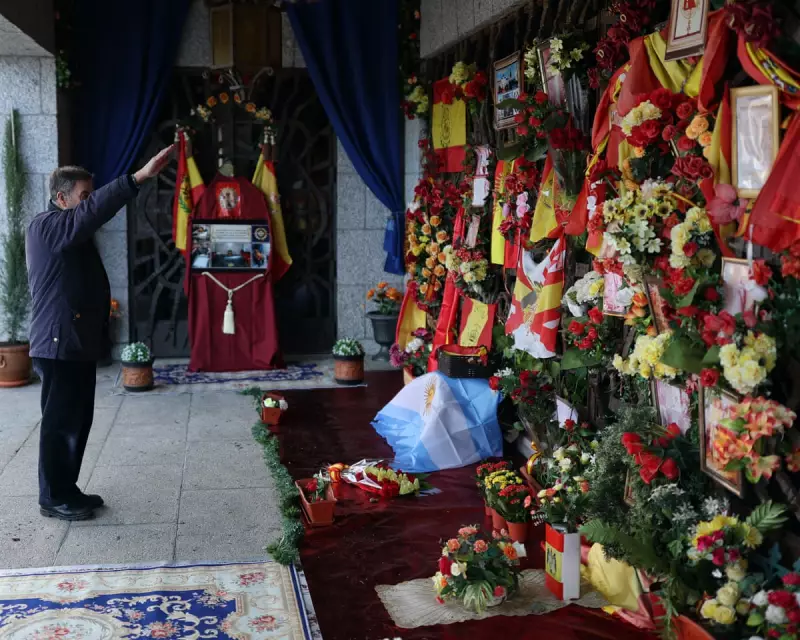
Spain Confronts Franco's Legacy on Dictatorship Anniversary
Spain has marked the 50th anniversary of General Francisco Franco's death with a notable absence of official ceremonies, instead hearing a powerful call from Prime Minister Pedro Sánchez for the nation to remember the lessons of its authoritarian past. The socialist leader emphasised the importance of defending democratic freedoms that were "wrenched from us for so many years" during Franco's nearly four-decade rule.
Authoritarian Nostalgia Raises Concerns
The anniversary arrives amid growing apprehension about fading knowledge of the dictatorship era, particularly among younger Spaniards. Recent polling reveals disturbing trends, with one survey showing more than 21% of respondents viewing the Franco period as "good" or "very good". Another study published by El País on the anniversary itself found nearly a quarter of Spaniards aged 18 to 28 believe an authoritarian regime could sometimes be preferable to democracy.
In an opinion piece for elDiario.es, Sánchez celebrated Spain's "almost unique" democratic progress over the past half-century, noting the country's transformation from a "repressive dictatorship to a full democracy" and from "a poor and isolated country to one that is prosperous and integrated in the world". Notably avoiding direct mention of Franco by name, the Prime Minister stressed that "democracy didn't fall from the sky" but was secured through the determination of the Spanish people.
Government Actions Against Franco's Legacy
The Spanish government has employed historical memory legislation introduced three years ago to help the nation reconcile with its difficult past. Significant measures include redesignating the Valley of the Fallen, where Franco's remains lay for 44 years, as the Valley of Cuelgamuros, now recognised as a "place of memory". The site contains the graves of more than 30,000 people from both sides of the Spanish Civil War.
Authorities are currently compiling an inventory of goods seized by the Franco regime and working to eliminate remaining Francoist symbols from public spaces. The government is also in final stages of attempts to shut down the Francisco Franco National Foundation, which exists to preserve and promote the dictator's legacy.
Culture Minister Ernest Urtasun told state broadcaster RTVE that his department is seeking to recover Franco's official archive from the foundation, containing approximately 30,000 documents that he argues are public property. "These documents are public documents that refer to the dictator as head of state and are therefore government property," Urtasun stated, emphasising that the archive "belongs to Spaniards and to researchers".
The conservative People's party is boycotting the government's initiative to celebrate 50 years of democracy, joined by the far-right Vox party, which dismissed the programme as "absurd necrophilia that divides Spaniards".
Franco's military coup against the elected republican government in 1936 triggered a devastating civil war that claimed more than 500,000 lives and led to hundreds of thousands forced into exile. Reprisals continued long after Franco's victory in 1939, with estimates suggesting over 100,000 people killed during the war and its aftermath lie in unmarked mass graves.
Following Franco's death on 20 November 1975, Spain embarked on a remarkable transition to democracy, holding its first free election in 41 years in 1977 and approving a new constitution by referendum the following year.