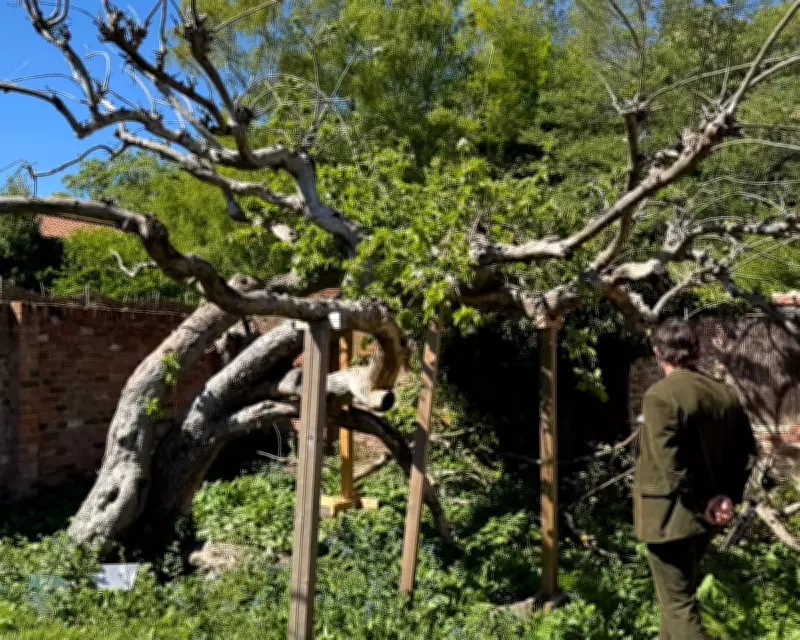
Campaigners have launched an appeal to save for the nation the mother tree of perhaps the most popular cooking apple in the world. The original Bramley apple tree, growing in the garden of a cottage in Southwell, Nottinghamshire, is for sale after its owner, Nottingham Trent University, put the property on the market.
Every single Bramley apple ever eaten can be traced back to this tree, which was planted from a pip by a young girl, Mary Ann Brailsford, in the early 19th century. Recognised as one of the 50 most important historic trees in Britain, it currently has no legal protection. Rather than see the 220-year-old tree fall into private hands with no public access, campaigners are seeking to raise money to buy the property and transform it into a heritage centre.
Artist Dan Llywelyn Hall, a co-founder of the campaign who has painted the mother tree many times, said: "Saving this tree for the nation sends a much wider message about preserving our ancient heritage trees and appreciating them like any cultural asset. If we can buy paintings for museums for gargantuan sums, why can’t we see these natural wonders as equals and give them due reverence, care and dignity? It would be a great travesty and a national embarrassment to lose this opportunity."
The crowdfunding campaign aims to raise £250,000 towards the purchase price. It is supported by musician Cerys Matthews and Celia Stevens, the great granddaughter of Henry Merryweather, the horticulturist who first spotted the potential of the unique hybrid apple. Merryweather first sold the apple in 1876, naming it after a later owner of the house and tree, Matthew Bramley.
Merryweather grew grafts from the original tree and successfully produced more Bramley apples. Nicknamed the "King of Covent Garden", the Bramley became the only British cooking apple available all year round, its natural acidity adored by cooks. Stevens noted that the original tree, which has survived attacks by honey fungus and still fruits with vigorous new shoots amid some dead branches, is an important part of Britain’s culinary and fruit history.
"Although it is in its senior years, it is pretty unique for an apple tree to be alive and in blossom when it is well over 200 years old," she said. "It is the finest culinary apple this country has ever produced, and still commercially viable which is remarkable in its own right. To be seen by the public with care and explanations after so many years of service would be very special to Southwell and Nottinghamshire. It is known all over the world – I have been to Japan and seen the Bramley industry there for myself. There is even a Bramley fan club."
The tree has been cared for and propped up by Nottingham Trent University, which has used the cottage as a halls of residence since buying it in 2018. The campaign to buy the cottage and create a heritage centre is supported by a local business that would manage accommodation for tourists and Bramley fans within the cottage.
The tree has been cloned, and last month Stevens attended a special planting of one of its offspring in the garden of Anne Hathaway’s cottage in Stratford-upon-Avon, also attended by Bramley fans from Japan. Bramley plantations still produce apples for cooking and cider-making worldwide. "How many things are still commercially viable after more than 150 years?" added Stevens. "It’s a pretty good record and the Bramley has earned our respect for what it’s given this country. It’s a special tree, and we’re no good without trees. It would be lovely if the public knew more about it."