Royal Artillery Under Fire for Concealing Looted Asante Golden Ram's Head
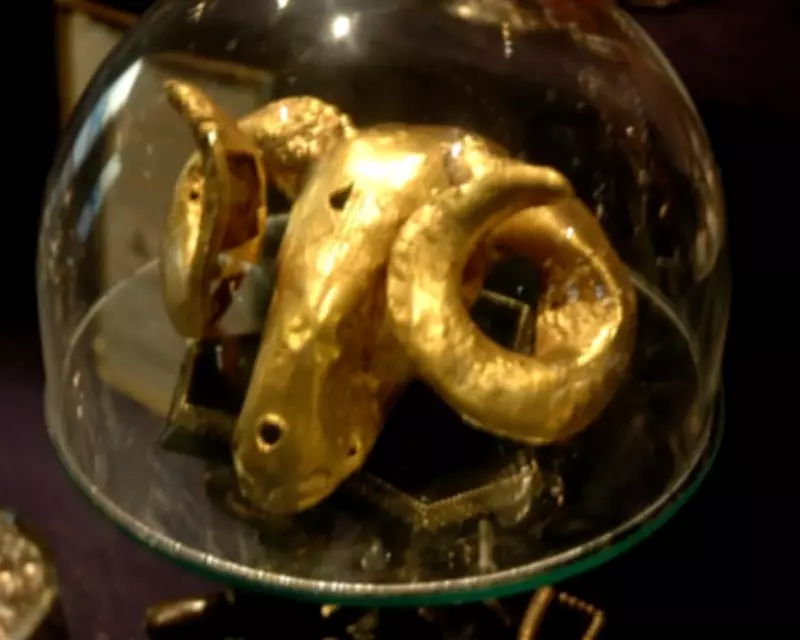
The Royal Artillery is confronting significant criticism after revelations that they are denying public access to an extraordinary golden ram's head, a priceless artifact looted by the British army from the Asante people in modern-day Ghana during the 19th century. This glistening treasure, arguably one of the most impressive spoils of the Anglo-Asante wars, remains concealed within the regiment's officers' mess at their barracks in Larkhill, Wiltshire, rather than being displayed in a museum.
The Historical Plunder and Its Aftermath
The artifact was pillaged in 1874 when British soldiers ransacked the sprawling old royal palace in Kumasi, the capital of the Asante state, before setting the city ablaze and demolishing the palace. The British returned in 1896 to loot the rebuilt palace, with their commander later boasting, "I had shown the power of England." The spoils from these conflicts were sold and dispersed among private and public collections, including institutions like the Victoria & Albert Museum and the British Museum.
In a historic move in 2024, these two museums agreed to return 32 pieces of gold court regalia to the Manhyia Palace Museum in Ghana, albeit only on a long-term loan basis. However, the golden ram's head, measuring approximately 19cm in width with beautifully cast spiraling horns, remains inaccessible to the public, hidden away by the Royal Artillery.
Denied Access and Growing Outcry
Barnaby Phillips, a former BBC correspondent with extensive experience reporting from Africa, was shocked when his request to view the ram's head for research on his forthcoming book, The African Kingdom of Gold: Britain and the Asante Treasure, was rejected on security grounds. Phillips received a curt letter from the Royal Artillery's regimental secretary stating that the regiment was "unable to agree" to his request due to a long-standing policy against public access, primarily for insurance and security reasons.
Phillips remarked, "It's an army institution holding the spoils of war, but they say it's not safe to show it to me. That's somewhat ironic." He further highlighted the regiment's potential embarrassment over a stand commissioned for the ram's head in 1875, which depicts three black boys in loincloths as if holding the object aloft, with an engraved base commemorating the battles and capture of Kumasi. Phillips described this stand as "in shockingly bad taste" from a modern perspective.
Calls for Repatriation and Transparency
Ivor Agyeman-Duah, a Kumasi-born historian, diplomat, and director of the Manhyia Palace Museum, has been tasked by the Asante king, Otumfuo Osei Tutu II, with negotiating the return of Asante regalia from British institutions. Agyeman-Duah expressed interest in engaging with the Royal Artillery, stating, "We are interested in negotiating with the Royal Artillery. This piece is iconic evidence of Asante prowess over two centuries." He plans to write to the regiment and visit the officers' mess during his next trip to England.
The Anglo-Asante wars, driven by Britain's interests in West Africa's natural resources and resistance from the Asante people, ended in 1901 with the formal annexation of Asante territory into the Gold Coast British crown colony. For the Asante, such gold objects are imbued with the spirits of their ancestors, adding cultural and spiritual significance to the looted artifacts.
Broader Implications and Secret Holdings
Phillips noted that the ram's head is not the only controversial item in the officers' mess; it shares space with a magnificent silver cross looted by soldier William Knox from a church during the 1868 military expedition to Abyssinia. Phillips argued that these important objects should at least be loaned to public museums rather than being restricted to a select few invited guests. He quoted an unnamed director of a major national museum who, after visiting the objects at Larkhill, said, "When you see those things, and you realise no one else can see them, and they will never leave this place, it's like a punch in the stomach."
An army spokesperson declined to comment on individual cases but emphasized that access to military locations is controlled for security, operational, and safety reasons. As debates over colonial restitution intensify, the Royal Artillery's stance on this looted treasure continues to spark controversy and calls for greater transparency and ethical handling of historical artifacts.