The Unresolved Legacy of Roger Casement: Rebel, Traitor, and Symbol
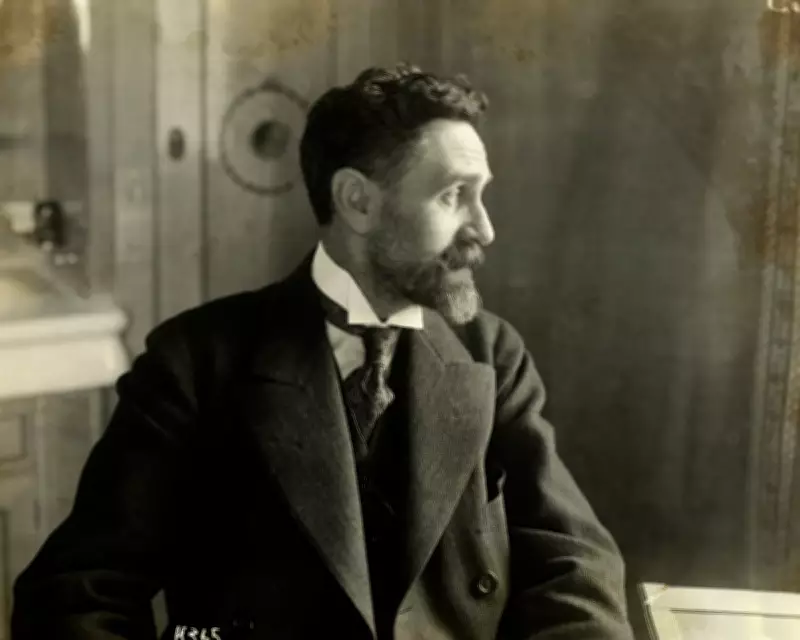
More than a century after his execution, Roger Casement's name still resonates with a radioactive intensity in the complex tapestry of British-Irish relations. Knighted by King George V in 1911 for his imperial service, Casement later embraced radical Irish nationalism, seeking German support for the 1916 Easter Rising. His subsequent execution at Pentonville prison on August 3, 1916, was not just a punishment for treason but a calculated move to tarnish his legacy, with British authorities leaking private diaries that documented his homosexuality to ensure his disgrace.
A Controversial Figure in History
Casement's story is one of stark contradictions. He was a humanitarian who exposed atrocities against Indigenous tribes in the Congo and Peru, yet he was convicted of high treason for his role in the Easter Rising. The British government, led by figures like Sir Ernley Blackwell, chief legal adviser to the Home Office, advocated for his execution and the public dissemination of his diaries, framing him as a pervert to undermine clemency efforts. This decision has left an indelible mark, with Ireland commemorating him on stamps, statues, and murals, while Britain has largely relegated him to a footnote in World War I history.
The Role of Intelligence and Betrayal
At the heart of Casement's capture was Royal Navy captain Reginald "Blinker" Hall, head of admiralty intelligence, who tracked him from Germany to Ireland. In a twist, Casement had returned to Ireland to call off the rising, believing it doomed, but Hall refused to allow him to send a message to his comrades. Hall's withholding of intelligence from British authorities in Ireland suggests a hope that the rebellion would fail, providing a pretext to crack down on nationalists. However, the rising's aftermath, described by W.B. Yeats as a "terrible beauty," ignited the Anglo-Irish war and led to independence for much of Ireland.
The Fight for a Pardon and LGBTQ+ Recognition
Casement's execution was met with cheers outside Pentonville, but his legacy has evolved. While he was guilty of treason, many argue he was ultimately killed by homophobia. In recent years, there has been a growing movement to pardon him, akin to Alan Turing's posthumous pardon in 2013. Ireland now widely accepts the authenticity of his diaries, celebrating him as both a nationalist and LGBTQ+ symbol. However, complexities remain, including his relationships with younger partners and more pressing legacy cases like that of Pat Finucane, a Catholic solicitor murdered in Belfast in 1989.
Political Tensions and Unfulfilled Wishes
Casement's last wish to be buried in County Antrim remains unfulfilled. When his bones were repatriated in 1965, Harold Wilson's government insisted they stay out of Northern Ireland, leading to his interment in Dublin's Glasnevin cemetery. Today, Northern Ireland's political landscape, polarized between Sinn Féin and the Democratic Unionist party, makes any move to relocate his remains contentious. Even the redevelopment of Casement Park in Belfast has become a symbolic battleground, reflecting deeper historical disputes.
British-Irish relations have improved post-Brexit, with renewed defense agreements and diplomatic warmth, but Casement's case remains a taboo subject. Until all sides acknowledge his dual identity as both rebel and traitor, a pardon and his return home seem distant. His story underscores the enduring battles over history, identity, and justice in these islands.