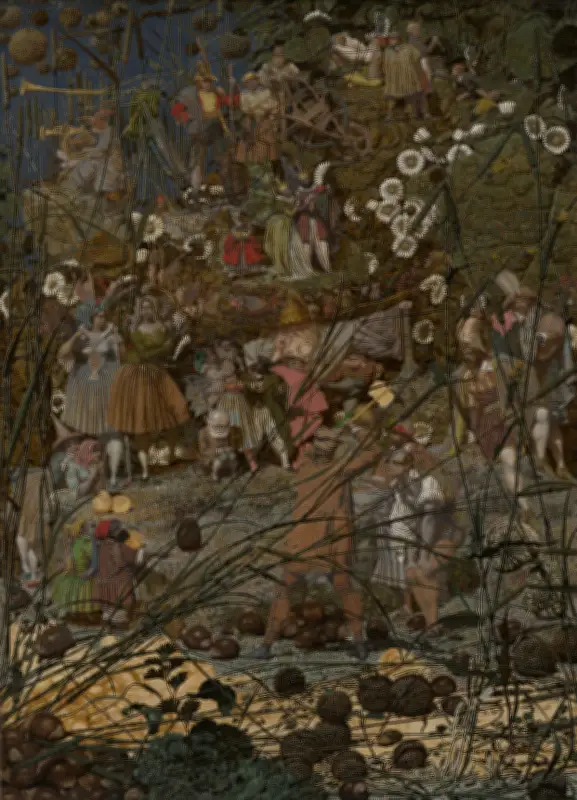
Richard Dadd, a 19th-century British painter who murdered his father during a psychotic episode and spent 43 years in Bethlem Royal Hospital, is the subject of a major new exhibition at the Royal Academy of Arts. Titled Richard Dadd: Beyond Bedlam, the show runs from 25 July to 25 October and is the first dedicated to the artist in over 50 years. Co-curator Sylvie Broussine emphasizes that the exhibition returns Dadd to his alma mater, focusing on his artistic career rather than his crime or illness. "The before and after narrative is reductive: his style changes, but that happens with many different artists in all different circumstances. A number of his subjects remain the same," Broussine said.
Dadd's Artistic Journey
Dadd was a rising star at the Royal Academy before his breakdown. After killing his father in 1843, he was committed to Bethlem, where he began painting again. His works include scenes from a trip to the Eastern Mediterranean, portraits, allegories, and intricate fantasies like The Fairy Feller's Master-Stroke (1855–1864). The exhibition pairs early works like Titania Sleeping (1841) with later pieces, suggesting that Dadd's retreat into fairyland was not simply a symptom of detachment from reality.
Balancing Art and Illness
Jennifer Higgie, author of the novel Bedlam, acknowledges that Dadd's later work shows intensity: "You can't look at The Fairy Feller's Master-Stroke without noticing a certain mania in the way he painted it – in its incredible intricacy and focus on detail." However, co-curator Nicholas Tromans, a leading Dadd authority, cautions against over-psychologizing. In his 2011 book Richard Dadd: The Artist and the Asylum, he wrote: "No more than were I writing about JMW Turner or Claude Monet have I pretended to know exactly what he thought and felt whilst making his pictures." Tromans notes that Dadd's figures never interact, which may reflect his isolation.
Contemporary Perspectives
Andrea Mindel of the Bethlem Artist Collective (BAC) worries that downplaying Dadd's illness does a disservice. "It's OK if you want to back off, but you have to explain yourself," she said. The RA engaged a sensitivity panel of three BAC members to review gallery texts, and plans include signposting NHS support and a quiet space for reflection. Karim Sultan of Bethlem Gallery emphasizes the "flattening effect" of treating artists equally: "If you're coming into the space and you're working as an artist, then that's what you are."