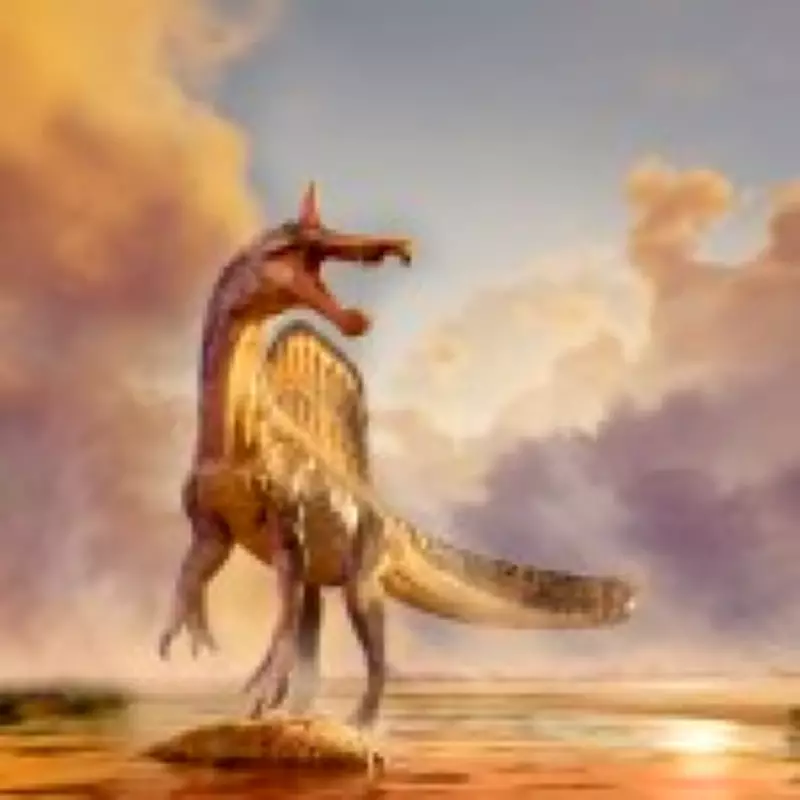
New 'Hell-Heron' Dinosaur Discovery Sparks 'First Dragon' Theories
A remarkable new species of dinosaur, dating back approximately 95 million years, has been unearthed in the Sahara Desert, with its dragon-like skull fueling speculation that it could represent the 'first dragon' to roam Earth. Officially named Spinosaurus mirabilis, this prehistoric predator has been dubbed the 'hell-heron' by researchers due to its hunting behavior and aquatic adaptations.
The Dragon-Like Skull That Captured Imagination
The mysterious skull, discovered by University of Chicago paleontologist Paul Sereno and his team, bears an uncanny resemblance to mythical fire-breathing dragons from fantasy lore. While scientists confirm that actual fire-breathing creatures never existed, they theorize that legends of dragons may have originated from ancient humans encountering large reptiles like this newly discovered species.
'I definitely think the ancients encountered at least a couple of things like this because this is definitely a dragon,' one observer noted on social media, echoing the sentiments of many who have seen reconstructions of the fossil.
The Sahara Expedition That Made History
The discovery resulted from a dramatic expedition deep into the Sahara's heart. Sereno and his team connected with a local Tuareg guide who led them on motorbikes to a remote location where massive fossil bones had been spotted. With daylight fading and time running short, the researchers made their breakthrough find: teeth and jaw bones belonging to this previously unknown spinosaurid species.
'This find was so sudden and amazing, it was really emotional for our team,' Sereno recalled in an official statement. 'I'll forever cherish the moment in camp when we crowded around a laptop to look at the new species for the first time.'
Scientific Significance and Aquatic Adaptations
Published in the prestigious journal Science, the research represents the first new spinosaurid species identified in over a century. Scientists estimate that during the Cenomanian period, approximately 95 million years ago, there were between ten and seventeen different species of these formidable predators.
The discovery challenges previous assumptions about spinosaurid behavior. While earlier finds of spinosaurid teeth near ancient shorelines suggested these fish-eaters might have been fully aquatic, this new specimen found miles inland indicates a different lifestyle.
'I envision this dinosaur as a kind of 'hell heron' that had no problem wading on its sturdy legs into two meters of water but probably spent most of its time stalking shallower traps for the many large fish of the day,' Sereno explained, painting a vivid picture of the creature's hunting methods.
The End of an Era and Educational Legacy
The spinosaurid era came to an abrupt end about 95 million years ago when rising sea levels and dramatic climate changes made their environment uninhabitable. Despite this extinction, Spinosaurus mirabilis will continue to inspire future generations through educational exhibits.
Replicas of the discovery will join the Dinosaur Expedition exhibit at the Chicago Children's Museum next month. 'Letting kids feel the excitement of new discoveries—that's key to ensuring the next generation of scientists who will discover many more things about our precious planet worth preserving,' Sereno emphasized, highlighting the importance of public engagement with paleontology.
The 'hell-heron' discovery bridges the gap between scientific reality and mythological imagination, offering tangible evidence of creatures that may have inspired dragon legends while advancing our understanding of prehistoric ecosystems and evolutionary adaptations.