Ancient Native American Dice Reveal Gambling Practices 6,000 Years Before Old World
A groundbreaking study has uncovered that Native American hunter-gatherers were engaging in dice-based gaming and gambling more than 12,000 years ago, a practice that predates similar activities in the Old World by over 6,000 years. This discovery challenges long-held historical assumptions about the origins of probability and chance-based games.
Archaeological Evidence from the Pleistocene Era
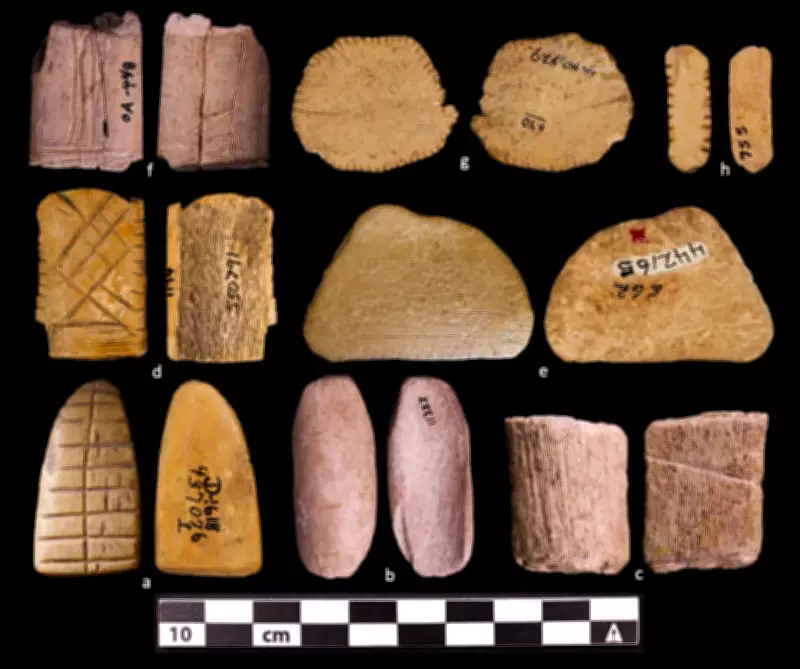
The research, led by Robert Madden, a PhD student in archaeology at Colorado State University, re-examined artifacts from late Pleistocene archaeological sites in Wyoming, Colorado, and New Mexico. These sites, such as the Agate Basin in Wyoming, yielded two-sided dice crafted from wood and bone, dating back up to 12,800 years. Previously, these objects were often mislabeled as "gaming pieces" or overlooked entirely in collections.
Madden spent three years meticulously combing through online databases and libraries, describing the process as "a treasure hunt." He compiled a dataset that traces the use of dice from the well-documented historical era over the last 2,000 years back to the late Pleistocene. This persistence of practice highlights a sophisticated understanding of randomness among ancient Native American groups.
Redefining Early Probability and Social Interaction
The study argues that these dice were not merely toys but tools for structured games of chance, indicating that ancient Native Americans possessed a basic working knowledge of probability and randomness. Madden emphasizes that while they were not practicing formal probability theory, they were intentionally creating and observing random outcomes in rule-based ways, leveraging probabilistic regularities like the law of large numbers.
Games of chance served as a crucial social mechanism, allowing disparate groups with no prior relationships to interact, exchange goods, information, and mates, and forge new social bonds. Unlike modern casino gambling with a "house" advantage, these were fair, one-on-one games where participants had equal opportunities, used as a form of exchange between infrequently contacting communities.
Implications for Global History
Historically, dice and probability have been considered innovations of Bronze Age societies in Mesopotamia and the Indus Valley. However, this study shifts the narrative, showing that Native Americans were early movers in humanity's emerging understanding and practical application of these concepts. The findings, published in the journal American Antiquity under the title "Probability in the Pleistocene," suggest a reevaluation of how probabilistic thinking developed globally.
Madden concludes that this research matters for understanding the global history of probabilistic thinking, revealing an incredible persistence of dice use that stretches back millennia before previously recognized examples. This insight not only enriches our knowledge of Native American cultures but also broadens the scope of archaeological and historical studies on gaming and social practices.