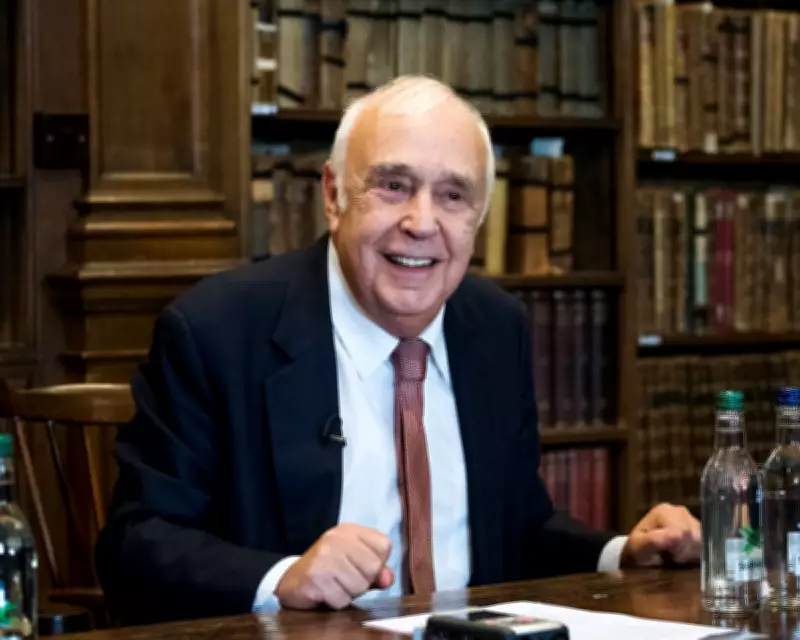
Lord Skidelsky: The Keynesian Scholar Who Challenged Economic Orthodoxy
Lord Robert Skidelsky, the esteemed economic historian and politician, has passed away at the age of 86. Best known as the preeminent authority on the life and work of John Maynard Keynes, Skidelsky's legacy spans decades of scholarly dedication and political engagement, particularly during times of global economic upheaval.
A Lifelong Dedication to Keynes
In the summer of 2008, Skidelsky believed his work on Keynes was complete. After two decades of meticulous research, including living in Keynes's Sussex home to immerse himself in the economist's environment, he had published a three-volume biography, later condensed into a single omnibus edition in 2003. At that time, Keynesian economics was largely dismissed as outdated, with free-market ideologies dominating global discourse.
However, the collapse of Lehman Brothers on September 15, 2008, triggered a worldwide financial crisis, reviving interest in Keynes's theories. Central bankers and finance ministers urgently revisited Keynes's General Theory, seeking solutions to avert a second Great Depression. Skidelsky felt compelled to re-enter the fray, publishing Keynes: The Return of the Master in 2009, which highlighted the sudden relevance of Keynesian ideas in a time of economic despair.
Political and Economic Advocacy
Initially, policymakers globally embraced Keynesian measures, implementing interest rate cuts, monetary expansion, and fiscal stimulus to combat the slump. Skidelsky, as the leading expert on Keynes, supported these actions. Yet, this revival was short-lived. Following the 2010 UK election, Chancellor George Osborne introduced austerity policies to reduce the budget deficit, a move Skidelsky vehemently criticized as misguided.
He often expressed frustration at the political failure to adopt Keynesian principles fully, warning that premature austerity would hinder recovery. His predictions proved accurate, as the UK economy struggled post-crisis, with lasting impacts felt nearly two decades later. Skidelsky remained a vocal part of what he termed an embattled minority, advocating for sustained government intervention to stabilize economies.
Early Life and Academic Career
Born in Harbin, China, in 1939, Skidelsky was the son of British citizens of Russian descent. His family endured internment by the Japanese during World War II before settling in Britain. Educated at Brighton College and Jesus College, Oxford, he began his academic career at Nuffield College, Oxford, where he published his first book, Politicians and the Slump: The Labour Government of 1929-31, in 1967.
His 1975 biography of Oswald Mosley sparked controversy, leading to tenure denial at Johns Hopkins University and blocked opportunities at Oxford. Despite this, he secured a professorship at Warwick University in 1978, where he worked for 28 years, producing his seminal Keynes biography across three volumes published between 1983 and 2000.
Political Evolution and Later Years
Skidelsky's political affiliations evolved over time. He left the Labour Party to co-found the Social Democratic Party in 1981, accepted a Conservative life peerage in 1991, and later served as a crossbench peer after 2001. Known for his maverick stance, he supported Jeremy Corbyn's 2015 Labour leadership bid and critiqued neoliberal economics in works like How Much Is Enough?, co-authored with his son Edward.
In the House of Lords, he advocated for diplomatic solutions in conflicts such as the Ukraine-Russia war and criticized economic policies, including Rachel Reeves's 2023 budget, for adhering to what he saw as flawed orthodoxies. His passion for education persisted, with roles including chair of governors at Brighton College and critiques of economics teaching methods.
Enduring Legacy
Skidelsky's fascination with Keynes remained unwavering until his death. His final book, Keynes for Our Times, is set for publication next month, underscoring his lifelong commitment to Keynesian thought. He is survived by his wife Augusta, three children, and six grandchildren, leaving behind a profound impact on economic historiography and policy debates.
Throughout his career, Robert Skidelsky challenged conventional wisdom, championing Keynesian economics as a vital tool for navigating financial crises. His work continues to inspire scholars and policymakers alike, ensuring his place as a pivotal figure in modern economic discourse.