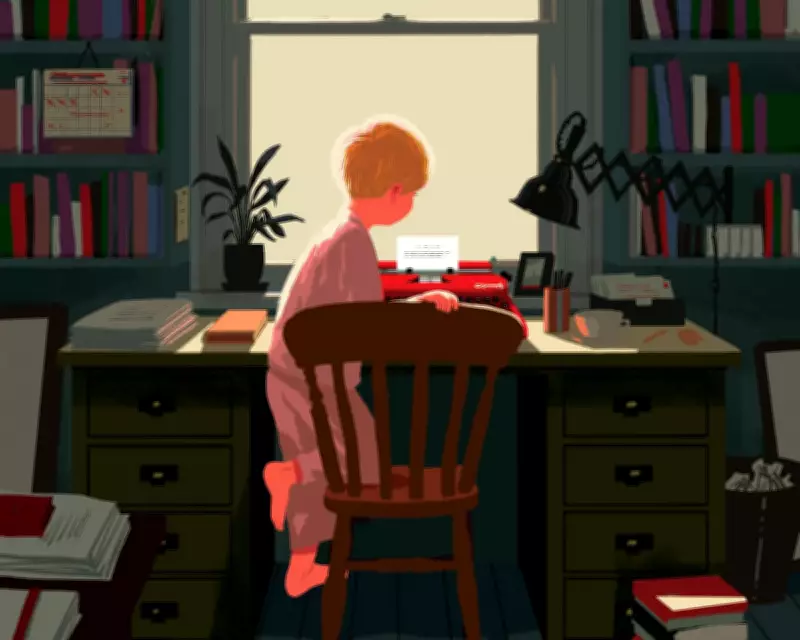
The rise of the literary nepo baby? More children of famous novelists are becoming authors themselves. From Naomi Ishiguro to Jess Atwood Gibson, a growing number of offspring from high-profile writers are entering the literary world, raising questions about privilege, talent, and the nature of creativity.
A Historical Anomaly No More
Martin Amis once described the father-son novelist duo he and Kingsley Amis formed as a "literary curiosity." But history shows others: Alexandre Dumas père and fils, Fanny and Anthony Trollope, Arthur and Evelyn Waugh. Today, the trend has accelerated. Kazuo Ishiguro's daughter Naomi publishes her first fantasy series this month. Margaret Atwood's daughter Jess Gibson debuted her fiction this spring. Patrick Charnley, son of poet and novelist Helen Dunmore, released his acclaimed first novel earlier this year.
Growing Up in a Writer's Household
Nick Harkaway, John le Carré's son, recalls meeting Martin Amis: "I must have pissed him off as he was running around maintaining [he and Kingsley] were unique, and then I came along and said: 'Oh, I am too.'" Harkaway has published eight novels and now extends his father's legacy with new books featuring le Carré characters. He notes his childhood was "quite odd" — le Carré novels were ubiquitous, and once "there was a hush in the house because Isaiah Berlin had dropped in."
Deborah Moggach, whose parents were both authors, says, "I think if they'd been butchers, I'd have been a butcher." Her daughter Lottie Moggach has also become a novelist, with her fourth book published in February. Deborah kept her writing hidden: "I felt I was neglecting [my children] because I was a sort of husk, the inner life was with my characters."
Pressure and Inspiration
Amanda Craig describes writing as "absolute torture," but her daughter Leon Craig became a writer anyway. "Mum always said: 'Don't ask me how it's going, I'll be happy when it's done.' Which maybe doesn't make it sound that attractive, but it's very much a way of life." Harkaway agrees: his father had "a tempestuous relationship with his own creativity," but demonstrated "that it was possible to finish a book and get paid for it."
Frank Cottrell-Boyce, who writes for film, TV, and children's books, says, "It felt like Avalon. I couldn't believe I was making a living as a writer." His son Aidan Cottrell-Boyce published his debut novel in 2023. Aidan says, "I do think you have a slight intolerance of people who make heavy weather out of creative tasks." For him, it's harder not to write than to write.
Navigating the Literary World
Many second-generation writers try to distance themselves from their parents' fame. Leon Craig was "very furtive" and didn't let her mother read her work until it was in print. Aidan Cottrell-Boyce didn't tell his father he was writing at all; Frank found out from actor Shaun Evans, who brought a copy of Granta with Aidan's story. Patrick Charnley submitted his debut under a pseudonym, concerned his name would be recognized after accepting a posthumous Costa prize for his mother.
Despite efforts at anonymity, connections often surface. Charnley's agent was his mother's agent, and the UK publisher knew his identity. Harkaway notes, "I couldn't keep it a secret because half the publishers in London had literally changed my nappies." Still, he used a pen name when submitting his debut.
Advantage or Meritocracy?
Francis Bickmore, a publisher at Canongate, acknowledges that a famous parent may help get a manuscript read, but he becomes "a harsher judge." Lottie Moggach admits her name helped get her debut novel read, but the book was "so different from Mum's it would stand on its own." Amanda Craig warns against assumptions of nepotism: "What is writing if not an individual talent and vision of how the world is?"
Leon Craig adds, "I'm still sending out lots of short stories on submission and getting knocked back. None of these people care who my mother is." Once published, media often highlight the connection. For Charnley, seeing a review headline "Helen Dunmore's magic lives on" was a compliment: "It gave me a feeling that I have not let her down."
Is Literary Talent Heritable?
Frank Cottrell-Boyce doesn't "believe in talent" but credits a childhood surrounded by books and storytelling. Harkaway agrees: "If you're in a household where the currency is stories, it's an environment conducive to learning those tricks." Lottie Moggach humorously notes she didn't inherit her mother's work ethic: "I'm more distracted, and more angsty." Deborah counters, "Kingsley [Amis] was jealous of Martin's books. That's the last thing you should be."
Charnley summarizes: "I don't know whether it's genetic, or just witnessing the process, seeing that it's something that can be done. All I know is that my mother was a writer, and now I'm a writer."