Reclaiming My Heritage: Learning Welsh to Connect with Family and History
My maternal grandmother passed away two decades ago, and her funeral was held in a small Methodist chapel nestled in the lush Conwy valley of north Wales. The entire service was conducted in Welsh, her first language, and also the native tongue of my mother. I did not understand a single word, feeling isolated in my English-speaking grief as the congregation sang hymns and prayed. However, during the final soaring bars of the hymn Cwm Rhondda, a tune familiar from Welsh rugby matches, I looked at my grandmother's coffin and felt a profound realization: I am part of her language, and I must not let it go.
The Early Years and Family Roots
I called my grandmother Nain, pronounced like "nine," and my grandfather Taid, sounding close to "tide." These were my first Welsh words, picked up as a toddler, and for many years, they were my only connection to the language. Growing up in southern England, where Welsh was virtually unknown, I did not feel the need to learn more. My grandparents spoke English, and my family always communicated in English at home, despite my mother's Welsh lullabies and occasional Welsh slang.
I often heard English people dismiss Welsh as a confusing jumble of consonants or a dying language, and I took these insults personally, feeling protective of my family's heritage. Yet, I seldom questioned why I could not speak the language of my Welsh cousins, even as I felt different from them.
The Historical Struggle of the Welsh Language
Welsh, known as Cymraeg to its speakers, belongs to the Celtic language family, alongside Cornish and Breton. Its decline began during the Industrial Revolution, as English-speaking workers flooded Welsh coalmines and Welsh-speaking families migrated for better opportunities. In 1847, a government report blamed the Welsh language for social ills, leading to aggressive promotion of English in schools. Children, including my grandmother, were punished for speaking Welsh with the infamous "Welsh Not" paddle.
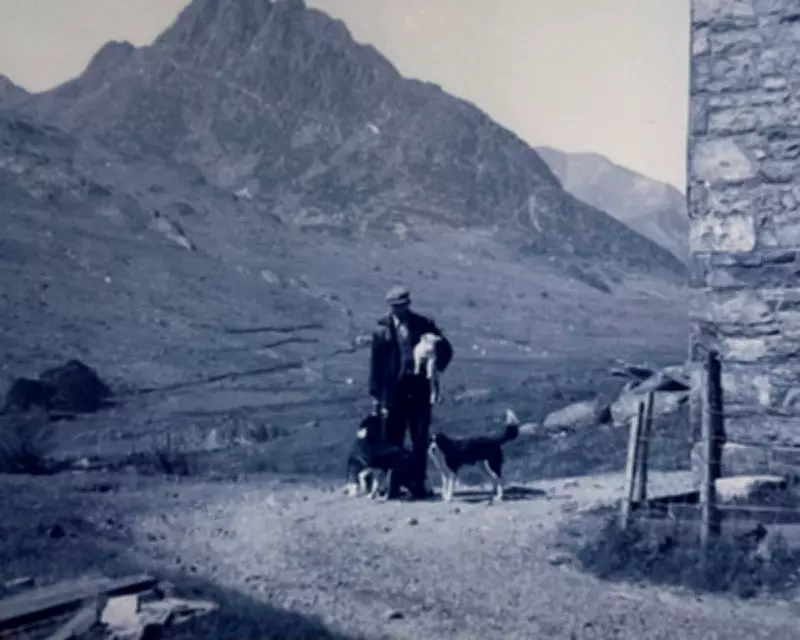
By 1911, only 43% of Wales spoke Welsh, dropping to nearly 30% by the 1930s and a quarter by the 1960s. The language became concentrated in rural areas like the Conwy valley, where my grandparents lived. Their life was conducted entirely in Welsh, from daily conversations to chapel services, creating a world that felt timeless and deeply rooted.
A Turning Point: The Funeral and a Promise
At my grandmother's funeral, the emotional power of the Welsh hymn stirred something within me. I realized that the language was not just a means of communication but a vital part of my identity and heritage. This moment planted a seed of determination to learn Welsh, though it would take years before I acted on it.
As an adult, I pursued a career in art criticism, living in New York and surrounded by multilingual immigrants. I felt like a monoglot in a polyglot world, and the memory of my grandmother's funeral resurfaced, reminding me of my neglected heritage. The COVID-19 pandemic, which stranded me away from my aging parents, became the catalyst for change. Isolated and longing for connection, I downloaded Duolingo and began learning Welsh.
The Journey of Learning Welsh
The initial pleasure of learning Welsh was immediate, as familiar sounds crystallized into words and phrases. I discovered that Welsh has more vowels than English, with unique letters like ch, dd, and ll, and a grammar that includes mutations and context-dependent words for "yes." However, I soon realized that apps like Duolingo had limitations, and my mother's critical feedback pushed me to seek more authentic methods.
I turned to resources like SaySomethingin, which emphasized practical sentences and social contexts, mirroring how I had heard Welsh in family gossip and conversations. This approach felt real and connected me to my family's way of speaking. I began incorporating Welsh into emails and phone calls with my mother, creating a new bond through shared language.
Cultural Revival and Modern Challenges
Welsh has experienced a cultural revival since the mid-20th century, driven by activism and policy changes. The 1960s saw protests like the flooding of Capel Celyn, which galvanized the Welsh Language Society and led to demands for bilingual recognition. Legislation in the 1980s and 1990s made Welsh compulsory in schools and required bilingual signage, while the establishment of Senedd Cymru in 1999 provided a platform for the language.
Today, Welsh is supported by media like S4C and BBC Radio Cymru, and the government aims to increase speakers to 1 million by 2050. However, challenges remain, including political divisions and economic struggles. For me, learning Welsh is not about utility but about emotional connection and preserving family stories.
Personal Reflections and Future Hopes
My journey with Welsh is ongoing and imperfect. I still struggle with fluency and often shy away from speaking in front of my family, feeling like an outsider. Yet, each small step brings me closer to understanding my heritage. On visits to Wales, I listen to my mother's stories about her childhood in Tal-y-Braich, a remote farmhouse now maintained by the National Trust, and I feel a sense of hiraeth—a longing for a place that may no longer exist.
My mother is now a grandmother herself, and my niece and nephew speak Welsh fluently, bridging generations. Through our shared language, we explore old novels and family memories, creating a private world of meaning. As I carry this talisman of Welsh with me, from New York to wherever life takes me next, I am reminded that language is not just a tool but a heart—a way to keep my family and history alive, always in the room with me.