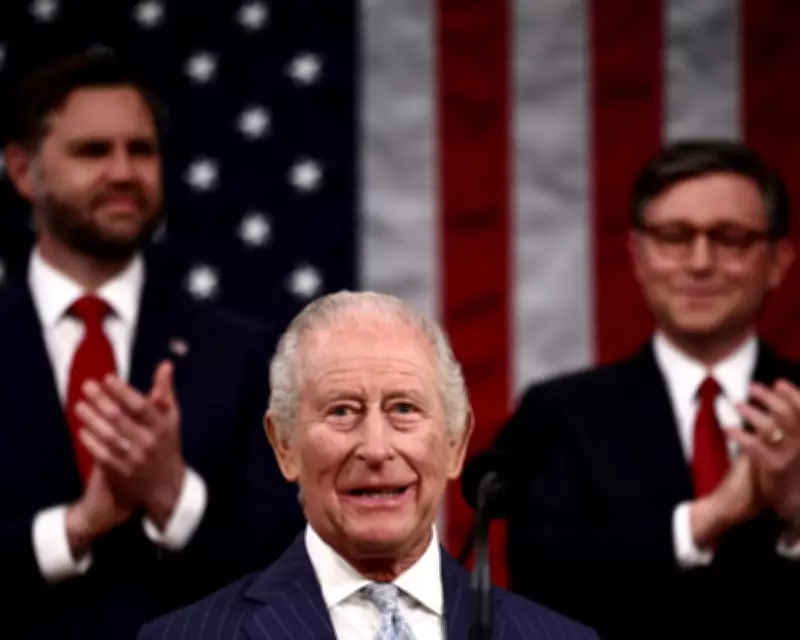
King Charles's address to a joint session of the US Congress was a meticulously crafted speech that balanced diplomacy with pointed references, drawing applause from both sides of the aisle while subtly challenging the Trump administration's policies. The speech, which President Donald Trump called "fantastic," included mentions of NATO, support for Ukraine, and warnings against isolationism, as well as references to Magna Carta and the importance of checks on executive power.
The Speechwriting Process
The speech was the result of close collaboration between Buckingham Palace, Downing Street, and the Foreign Office. Sir Clive Alderton, the king's private secretary and a former diplomat, played a key role in liaising with No 10 and the Foreign Office. Other contributors included Theo Rycroft, the king's deputy private secretary, and Tobyn Andreae, director of communications. The UK ambassador to the US, Christian Turner, and his deputy, James Roscoe, also provided input, discreetly channeling White House views.
Drafts were refined multiple times, with King Charles personally editing them in red ink. He added commentary in the margins, crossed out sections, and inserted new content. The king also held meetings with Alderton to discuss the speech. The final version was completed just before delivery.
Political Subtext and Reception
The speech was praised for its subtlety and bravery. Historian Anthony Seldon called it "exceptional," noting that the king judged the tone incredibly well. The address included firm mentions of Prime Minister Keir Starmer and the Royal Navy, both of which Trump has criticized. Democrats cheered references to Magna Carta and the principle that executive power is subject to checks and balances.
While the speech avoided direct criticism of the Trump administration, it was seen as an implied rebuke. The Washington Post noted "subtle rebuttals to Trump," and the New York Times highlighted the king's call for checks on executive power. Professor Philip Murphy of the University of London said the speech's eloquence was an implicit reproach to the president's own undisciplined public pronouncements.
Long-Term Impact
Experts caution against judging the speech's impact immediately. Seldon argued that its true effect will be seen in how Republicans and Democrats view NATO, the Ukraine war, and executive power. Jonathan Dimbleby, the king's biographer, said the address contained an "implied rebuke to Trumpery" and an "eloquent plea" for democracy and the rule of law.
Republican Senator Lindsey Graham called the speech a "much-needed morale boost," while Congressman Michael Baumgartner praised the king's comments on military capability but stressed that actions must follow words. Baumgartner's personal view of Starmer remained negative, referring to him as a "leftist weeny."
Overall, the speech was seen as a success, with Lord Darroch, former UK ambassador to the US, describing it as "brave and bold and actually really excellent." The king's ability to deliver a warm and beautifully crafted address was itself a subtle challenge to the president's style.