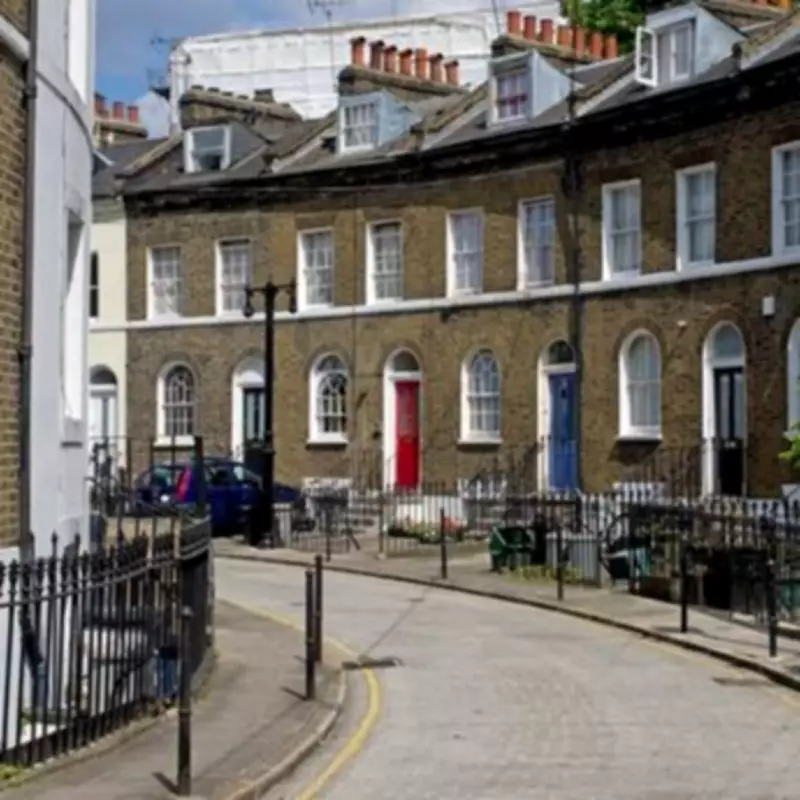
Nestled just off Caledonian Road and a short walk from King's Cross, Keystone Crescent stands as a picturesque, semi-circular street that seems suspended in Victorian times. This hidden gem, originally known as Caledonian Crescent, was constructed to house early Victorian workers and has since earned the title of Europe's smallest crescent.
A Victorian Legacy with 24 Houses
With 24 houses lining both sides of the thoroughfare, Keystone Crescent was built by Robert James Stuckey in the mid-19th century. In 1846, the road was christened Caledonia Crescent, later renamed Caledonian Crescent after the nearby Caledonian Asylum for children. According to Living London History, these properties originally accommodated lower and middle-class Victorian households, with approximately 240 residents occupying 22 houses along the street.
The Scandalous Double Life of Robert Stuckey
Robert Stuckey managed many of the homes and operated number 2A as his estate office. Correspondence discovered hidden beneath a bed at 2A Keystone Crescent revealed a shocking revelation: Stuckey was leading a double life. He married Hannah Bennewith, with whom he had seven children, and simultaneously wed Sarah Culver in 1864, fathering another seven offspring. Hannah passed away in 1857, but the correspondence showed Stuckey maintained relationships with both women concurrently.
Transformation to Keystone Crescent
The crescent received its current name, Keystone Crescent, in the early 1990s after Robert's grandson, Algerton Stuckey, sought to regenerate the neighborhood. This change came as the area had acquired notoriety for prostitution and overcrowding, marking a new chapter for the historic street.
Modern Property Market and Architectural Features
Today, properties on Keystone Crescent command premium prices. According to Rightmove, average prices have exceeded £700,000 over the past year. The homes range from two-bedroom to five-bedroom residences and carry Grade II listed status, meaning occupants require permission to carry out any works on the buildings.
Architecturally, the crescent features courtyard gardens, with homes on the outer circle being larger and those on the inner circle having fewer floors and more compact rooms. One distinctive house is painted blue, while others boast brightly colored doors, adding to the street's unique charm.
A Frozen-in-Time Oasis in North London
Despite its proximity to the busy King's Cross area and London Underground stops, Keystone Crescent remains a tranquil, frozen-in-time oasis. Its Victorian architecture, combined with a rich history of scandal and renewal, makes it a fascinating piece of London's heritage, now highly sought after in the property market.