Canine Dig Reveals Chilling Artifact from Infamous 1865 Poisoning
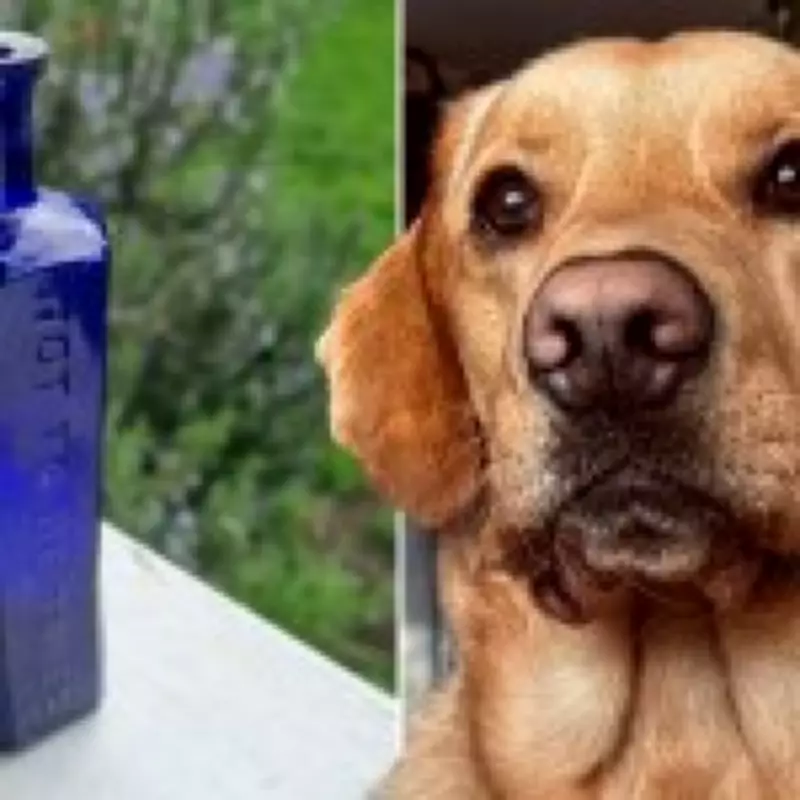
In a remarkable twist of fate, a family dog has potentially uncovered the missing evidence in a notorious Victorian murder case that dates back over 160 years. Stanley, a Labrador from Clyst Honiton in Devon, dug up a pristine blue glass vial in his family's back garden, sparking a historical investigation that links directly to a local poisoning tragedy.
The Discovery That Changed Everything
Stanley's owner, Paul Phillips, 49, initially mistook the object for a pipe when he spotted it in the freshly turned earth. Upon closer inspection, however, he noticed the ominous words 'Not to be taken' etched into the glass. This discovery led Phillips down a research rabbit hole that revealed a shocking connection to his own neighborhood's dark past.
"It was a bright blue bottle in perfect, mint condition," Phillips recalled. "When I saw those words, I knew it was something special. My research identified it as a Victorian poison bottle, and then I remembered reading something about a hanging in our village years ago."
The Murder That Shocked Victorian England
Phillips soon discovered that just two doors away from his current home once lived Mary Ann Ashford, who was convicted of murdering her husband William in November 1865. The case involved arsenic poisoning administered through William's tea, with Mary Ann allegedly motivated by financial gain and a desire to start a new life with her younger lover, Frank Pratt.
William Ashford, a 45-year-old shoemaker with an estate valued at £120, began experiencing unexplained illness before his sudden death. Subsequent investigation revealed traces of arsenic and strychnine on Mary Ann's clothing, leading to her arrest by the police officer who lived next door.
The Trial and Execution That Changed History
Mary Ann's trial at the Devon Lent Assizes on March 16-17, 1866, resulted in a swift guilty verdict, with the jury deliberating for only minutes. Her execution on March 28, 1866, before an estimated crowd of 20,000 at Exeter's County Gaol, became notorious for its brutality.
Contemporary reports indicate the hanging took approximately three minutes to complete, requiring improvisation by the executioner. The gruesome spectacle reportedly turned public opinion against capital punishment and played a significant role in ending public executions in England.
The Suspicious Circumstances
Phillips noted several compelling factors that suggest the bottle's connection to the murder. "If you had bought that bottle for legitimate reasons like pest control, why would you bother burying it?" he questioned. "The fact it was buried and not discarded shows someone was trying to hide it. Combined with a poisoning murder just next door, you have to put two and two together."
The property where Phillips lives was historically a large cider barn with more extensive grounds, potentially explaining how evidence could have been buried and remained undiscovered for over a century and a half.
Stanley's Unusual Behavior
What makes the discovery even more intriguing is Stanley's behavior. The Labrador had been persistently digging in the same spot for approximately a year, despite his owners repeatedly patching the area and even placing a paving slab over it.
"Stanley was insistent there was something there he wanted," Phillips explained. "Remarkably, since uncovering the bottle, he hasn't returned to dig in that spot. It's as if he knew exactly what he was looking for and stopped once he found it."
The Bottle's Current Status and Historical Significance
Despite recognizing the bottle's historical value and aesthetic appeal, Phillips has chosen to store it in his garage rather than display it in his home. "It was a brutal hanging, so there's no way I want that bottle in my house," he admitted. "It's a shame because it's lovely, but I bet it comes with some weirdness."
The blue poison bottle dates to the mid-19th century when such containers became standardized for dangerous substances. Phillips and his family have become engrossed in the story, sharing their discovery with neighbors and local officials while hoping a historian might help uncover more details.
"What's crazy is how everything connects," Phillips reflected. "We've found a piece of history from a woman who was instrumental in ending corporal punishment 160 years ago. If there's a local historian interested in doing more digging, that would be great."
The discovery serves as a chilling reminder of how the past can surface in unexpected ways, with a family pet becoming an unlikely historical detective uncovering secrets buried for generations.