Desmond Morris, Pioneering Zoologist and Author, Passes Away at 98
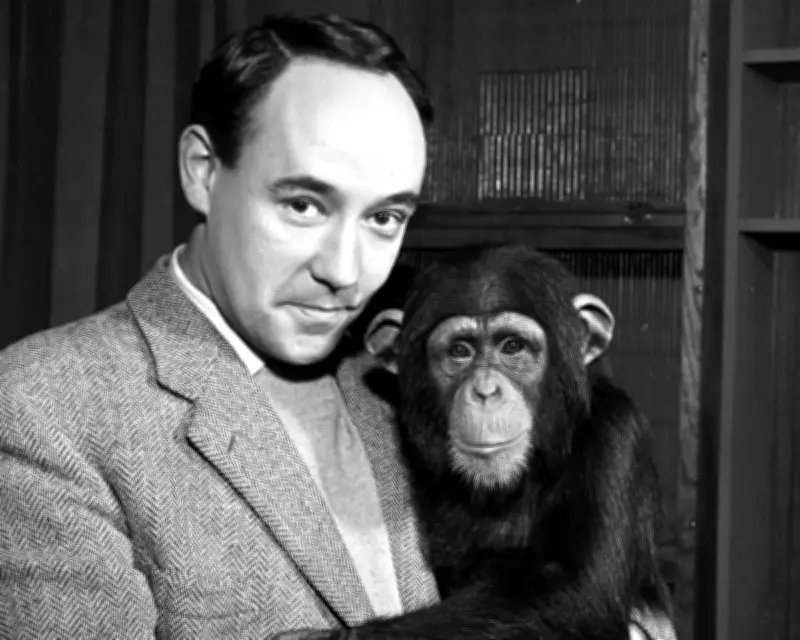
Desmond Morris, the celebrated zoologist, writer, and broadcaster, has died at the age of 98. Over six decades, he authored more than 50 books and presented hundreds of hours of television, beginning with the Granada children's programme Zoo Time in 1956. This show was broadcast from a dedicated studio within London Zoo's grounds, marking the start of his influential media career.
A Multifaceted Career in Science and Art
Morris established himself as an authority on mammals and became an encyclopedic observer of human behaviour. He also maintained a distinguished parallel career as an artist, with his first London exhibition in 1950 shared with surrealist master Joan Miró. His unique background allowed him to transition from curator of mammals at London Zoo to director of the Institute of Contemporary Arts (ICA) in Pall Mall.
However, his tenure at the ICA was interrupted by the phenomenal success of his 1967 book, The Naked Ape: A Zoologist's Study of the Human Animal. This work, which sold an estimated 18 million copies, explored human evolution and behaviour, describing humans as "the sexiest primate alive." It was placed on the Catholic Church's index of forbidden books, a ban Morris accepted as flattery, given it included authors like Balzac and Voltaire.
Impact and Legacy of The Naked Ape
While not the first popular evolution-based book of its time, The Naked Ape addressed human intimacy with zoological decorum, arguing that biological instincts shaped civilisation. Though some of its ideas now seem dated, the book resonated with the 1960s zeitgeist and set a template for future popular science writers.
Morris's career began with a 1958 study on the ten-spined stickleback and concluded with 101 Surrealists in 2024. He viewed living things as works of beauty and paintings as a form of biology, creating imaginary organisms in his art. His 1979 memoir, Animal Days, reflected this philosophy, describing his invented creatures as obeying biological rules.
Television and Personal Connections
By 1979, Morris had also built a career as a TV presenter, producing programmes on animal and human behaviour backed by scientific papers. Born in Purton near Swindon, he was educated at Dauntsey's school and the University of Birmingham, where he studied under Peter Medawar. He earned his doctorate in 1962 with a paper on homosexuality in the ten-spined stickleback.
His personal life included teaching jitterbug to future actor Diana Dors and briefly meeting poet Dylan Thomas. He formed friendships with scientific greats like Konrad Lorenz and artists such as Henry Moore, while also maintaining a rapport with fellow broadcaster David Attenborough.
Contributions to Zoology and Beyond
As curator of mammals at London Zoo from 1959 to 1967, Morris published The Mammals: A Guide to the Living Species in 1965, cataloguing 4,237 species. He encouraged a chimpanzee named Congo to paint, with Pablo Picasso acquiring one of the ape's works, and pioneered panda diplomacy during the Cold War.
After The Naked Ape's success, Morris moved to Malta with his wife Ramona and son Jason, though the book was banned there. He later returned to Oxford, continuing to write and make TV programmes. Over 30 years, he travelled to 76 countries, authoring books on topics from human gesture to soccer tribes.
Ramona, his co-author on some books, died in 2018. Morris then moved to Ireland to be near their son. He is survived by Jason, leaving a legacy as a scholar and entertainer who bridged science and art.