Colonial Monuments Targeted in Melbourne Flagstaff Gardens Vandalism Attack
Two significant monuments commemorating Australia's colonial history have been severely vandalised in Melbourne's Flagstaff Gardens overnight, with police establishing a crime scene and launching an investigation into what authorities describe as a disgraceful act of destruction.
Monuments Destroyed and Defaced with Political Messages
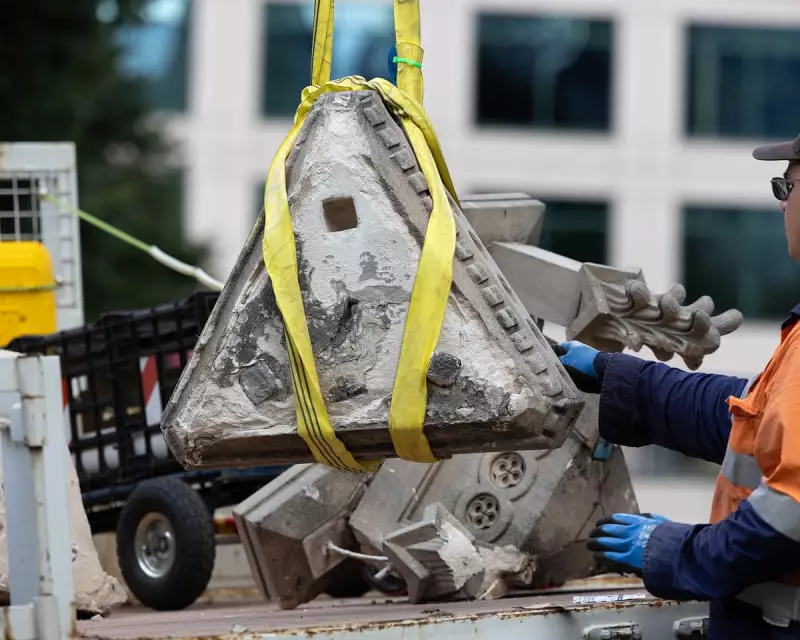
The Pioneer Monument, a sandstone obelisk erected in 1871 to mark the first European burial ground on the site, was completely destroyed using machinery. Police discovered the monument smashed into pieces beside its plinth early on Thursday morning, with the structure daubed with the phrases "land back" and "death to Australia" in red paint. An inverted red triangle was also painted on the monument, a symbol that has appeared in various political contexts including Palestinian resistance movements.
A second nearby monument, the Separation Memorial erected in 1950 to commemorate the centenary of Victoria's separation from New South Wales, was also vandalised with red paint. Police believe the incidents occurred between 10pm on Wednesday night and 6am on Thursday morning.
Political Condemnation and Security Concerns
Victorian Premier Jacinta Allen condemned the vandalism, stating that "the groups who continue to commit these crimes must face the full force of the law." Melbourne's Lord Mayor Nick Reece described the perpetrators as "idiots" and "moronic," emphasising that such behaviour "will not and cannot be tolerated in Melbourne."
Reece revealed that while the council had increased security at statues and monuments across Melbourne in the lead-up to Australia Day on 26 January, including installing cyclone fencing and cameras in some areas, these measures were not present at the Flagstaff monuments on Wednesday night. "We'll obviously be reviewing arrangements across the remainder of our collection and we'll be stepping things up in the days ahead," he told local radio.
Pattern of Colonial Monument Vandalism
This incident continues a pattern of vandalism targeting colonial monuments in Melbourne, particularly around Australia Day which marks the arrival of the First Fleet in 1788. The date has become increasingly controversial, with many Indigenous Australians and their supporters referring to it as Invasion Day.
Just last year on 24 January 2024, a statue of Captain Cook in St Kilda's foreshore gardens was sawn off at the ankles and spray-painted with the slogan "The colony will fall." The timing of the latest vandalism is particularly sensitive as it occurred on what had been designated a national day of mourning for victims of the December terror attack at Sydney's Bondi beach.
Ongoing Investigation and Community Impact
Police have established a crime scene around both monuments and their investigation remains ongoing. By Thursday morning, workers had largely washed off the red paint and were removing the smashed masonry from the site. Authorities are appealing to the public for any information that might assist their investigation.
The vandalism raises significant questions about:
- How societies commemorate contested histories
- The security of public monuments
- The ongoing debate about Australia's colonial legacy
- Appropriate responses to acts of political vandalism
As Australia approaches another contentious Australia Day, this incident highlights the deep divisions that continue to surround the nation's colonial history and how it should be remembered in public spaces.