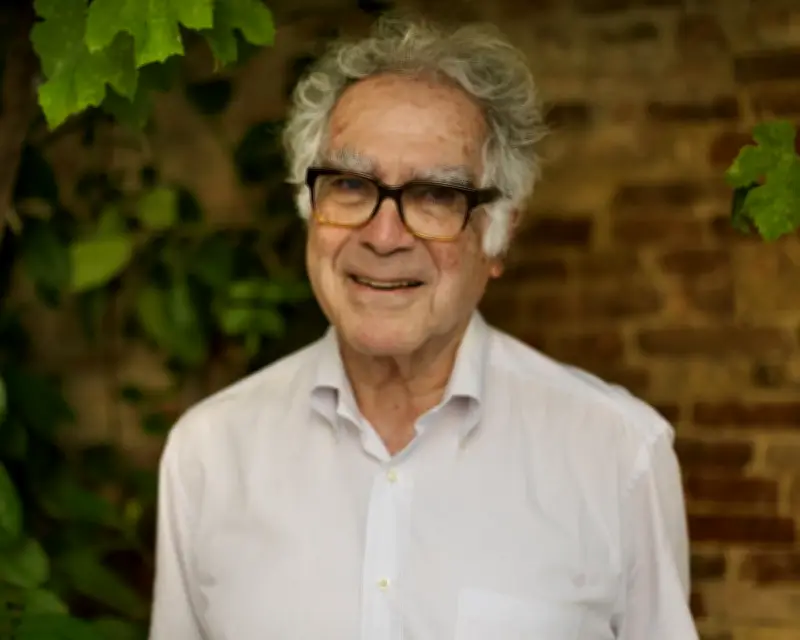
Carlo Ginzburg, the Italian historian whose groundbreaking work 'The Cheese and the Worms' transformed the study of ordinary people, died last week at the age of 87. His death severs one of the last living links with a remarkable postwar generation of historians who championed 'history from below.'
A life devoted to the persecuted
Ginzburg's most famous book, 'The Cheese and the Worms,' reconstructed the trial of Domenico Scandella, known as Menocchio, a 16th-century miller burned by the Roman Inquisition. By immersing himself in the trial records, Ginzburg turned what could have been a footnote into a seminal work of microhistory. Fifty years after its publication, the book remains a supreme exemplar of historical research focused on 'the persecuted and the vanquished,' as Ginzburg wrote.
His approach resonated with the Annales school in France and E.P. Thompson's 'history from below' movement. In the preface, Ginzburg argued that if sources allow us to reconstruct individual personalities, 'it would be absurd to ignore it.' This philosophy guided his examination of Menocchio's dangerously egalitarian views, formed from a mix of peasant culture, religious chronicles, and Boccaccio's 'The Decameron.'
Legacy for today's outsiders
As 21st-century authoritarianism creates new generations of scapegoats, Ginzburg's work speaks directly to our times. His use of medieval and Renaissance court records influenced historians of women and oppressed minorities, who learned to read between the lines of documents written by the powerful. Ginzburg noted with satisfaction that his works gained an enthusiastic reception in postcolonial societies, where imperial archives held treasure troves of official documents.
During the 1990s, Ginzburg applied his detective methods to contest the conviction of leftwing radical Adriano Sofri, accused of ordering a 1972 murder during Italy's 'years of lead.' He publicly argued for Sofri's innocence, demonstrating his commitment to justice beyond academia.
Personal roots of his commitment
Ginzburg later realized that his dedication to history's victims stemmed from his own past. During the Nazi occupation of Italy, his father, Leone, was tortured and murdered. As a young boy, Ginzburg was forced to disguise his Jewish identity and go into hiding. In a postscript to the 50th-anniversary edition of 'The Cheese and the Worms,' published this year, he reflected that this had been an internally suppressed connection.
In that postscript, one of his last pieces of writing, Ginzburg recalled Menocchio's words to his interrogators: 'My mind … wished for a new world.' He argued that in 2026, these words 'make these words, pronounced nearly five centuries ago, more urgent than ever. Menocchio is with us, speaks to us.' The same will surely continue to be true of Ginzburg's own work.