The Bund's Enduring Influence: A Socialist Beacon in Jewish History
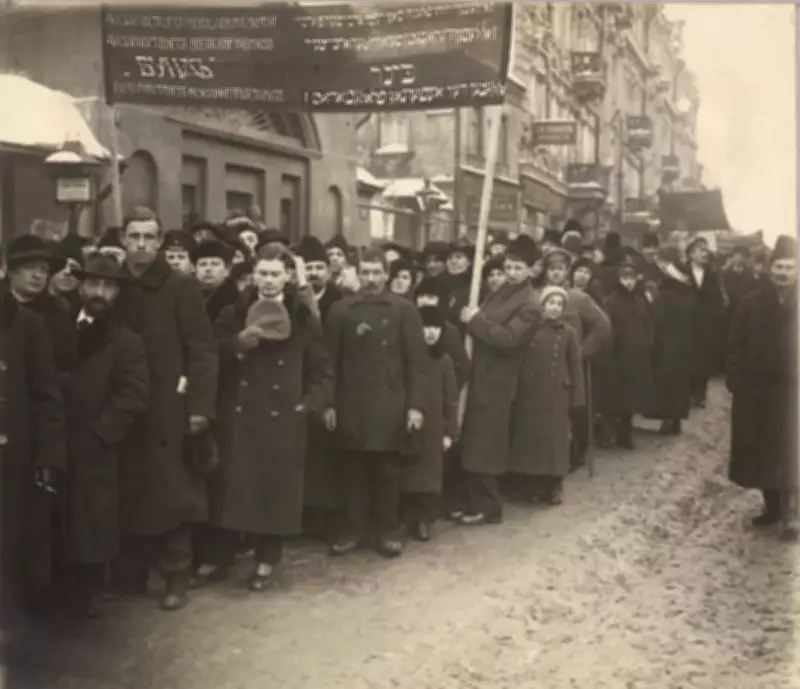
In 1917, members of the Bund demonstrated with placards in Russian proclaiming: 'Hail the Russian Social Democratic Worker's Party! Hail the General Jewish Worker's Union Bund. Hail the International Proletariat.' This moment captures the essence of a movement that championed cosmopolitanism over nationalism, social democracy over capitalism, and collective liberation over ethno-chauvinism. Founded in 1897 within the Tsarist empire, the Jewish Labour Bund emerged as a revolutionary party that fought against Zionism while promoting solidarity across diverse communities.
A New Historical Account by Molly Crabapple
Author, activist, and artist Molly Crabapple has released a compelling new book titled Here Where We Live is Our Country: The Story of the Jewish Bund. This work documents the Bund's rise and fall over half a century, during which it became the most popular socialist movement in Russia at one point. Crabapple describes the book as 'a defeated person's history of the 20th century,' weaving personal connections with historical analysis through 380 pages enriched with her illustrations.
The Bundists were fervent advocates for eastern European Jewish culture and staunch internationalists. They organized defense squads against pogroms, promoted the Yiddish language, and participated in the revolutions of 1905 and 1917. After Lenin suppressed their activities post-October Revolution, they reconstituted in Poland, building schools, trade unions, women's movements, and newspapers that reported on global workers' struggles from Alabama to China.
Confronting Zionism and Nationalism
From its inception, the Bund viewed Zionism with skepticism and later as a dangerous ideology. Bundist leader Henryk Ehrlich warned in 1933 that Jewish nationalism could exhibit the same fascist tendencies as other nationalisms if given power and territory. The Bund rejected the Zionist aim of establishing a Jewish nation-state, arguing it aligned with imperialist forces and denied political rights to indigenous populations.
Despite their efforts, the Bund faced total defeat amid the rise of nationalism, the Holocaust, and the establishment of Israel. Their memory faded into obscurity, but their principles endure. Crabapple highlights how contemporary movements, such as Jews advocating for Palestinian liberation, echo the Bund's call for 'solidarity across difference.'
Personal Connections and Modern Relevance
Crabapple's personal ties to the Bund add depth to her narrative. Her great-grandfather, Samuel Rothbort, joined the Bund in 1898 and later created memory paintings of shtetl life, including one titled Itka the Bundist Breaking Windows, which sparked Crabapple's curiosity about the movement. This familial link enriches her account, blending historical scholarship with empathetic storytelling.
The book's relevance today is unmistakable. As global conflicts intensify, the Bund's vision of liberation without exodus—freeing Jews alongside their neighbors—offers a radical alternative to ethno-nationalism. Crabapple argues that the Zionist model has led to genocide, whereas the Bund's ethos promotes a more humane world based on mutual support.
In conclusion, Molly Crabapple's work revitalizes the Bund's legacy, presenting it as a moral inspiration for current activists. The Bund's defeat, rather than failure, underscores the power of their ideals in the face of overwhelming forces, reminding us that solidarity across differences remains a crucial path forward in combating modern savagery.