Ancient DNA analysis has revealed that the Upton Lovell Shaman, a Bronze Age individual long assumed to be male, was in fact a woman. The finding overturns decades of assumptions about gender roles in prehistoric society and provides what experts call 'smoking gun evidence' of a female metalworker from around 1,800 BC.
Discovery and Significance
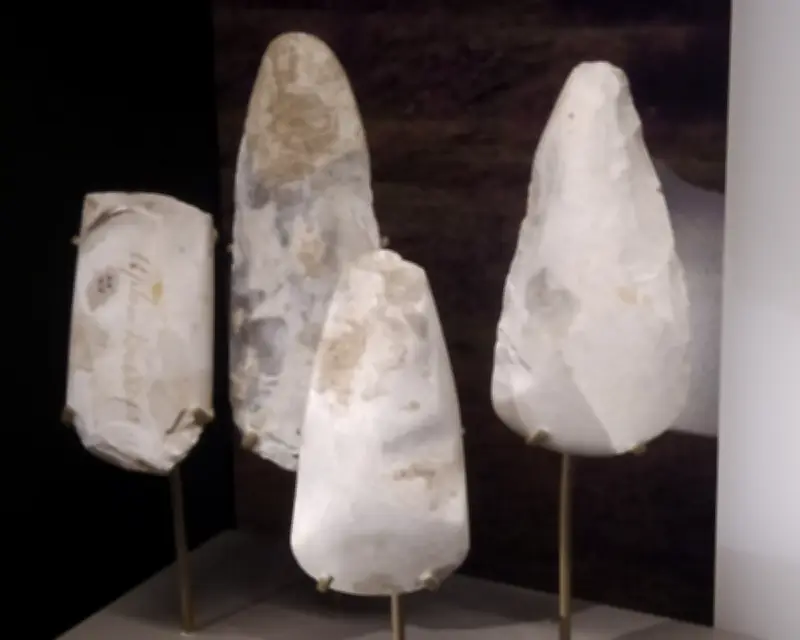
The skeleton, discovered in 1801 in the village of Upton Lovell, about 10 miles west of Stonehenge, is considered one of the most significant Bronze Age burials in Britain. The grave contained an extensive collection of stone axes, metalworking tools, and the remains of an elaborate ceremonial cloak. The artefacts date to approximately 1,800 BC, a time when metalworkers held a special, possibly spiritual, position in society due to their ability to transform rock into metal.
David Dawson, director of the Wiltshire Museum, which holds the remains, said: 'It completely tears up previous assumptions. It’s a fantastic revelation of the position of women in society. We’re so used to the assumption of men do everything, men are the leaders, men are the metalworkers. Here we have smoking gun evidence of a female metalworker. And metalworking was the space science of its day.'
Grave Goods and Craft
Alongside the skeleton were goods linked to metalworking, including a pouch decorated with boar's tusks, four fossil sponges hollowed into cups, flints, metalworking scribes, and a touchstone for assessing metal quality. An earlier analysis revealed gold traces on stone surfaces, suggesting the woman crafted ornaments such as clasps made from a core of bone, wood, or copper covered in thin gold sheet. The grave also contained a battle axe made from greenstone brought from Cornwall.
'It shows the depth of understanding of her craft,' Dawson said. 'The people she left behind wanted her to take her tool kit into the afterlife.'
DNA Analysis and New Insights
The skeleton was initially sent for DNA analysis to determine ancestry, which indicated Beaker ancestry typical of Britain at the time. However, the biological sex came as a surprise. Pontus Skoglund, senior group leader of the ancient genomics laboratory at the Francis Crick Institute, which performed the analysis, said: 'The field of ancient DNA has surged in technical capability over the last two decades, now giving us answers to questions that were previously inaccessible. It feels really good to give this to archaeologists.'
The team confirmed the sex by analysing a tooth and a toe bone, which gave consistent results, with no evidence of more than one skeleton in the grave. The individual was tall for a Bronze Age woman (165 cm or 5 ft 4 in) and robustly built, with arthritis in the right wrist suggestive of repeated use of metalworking tools throughout life.
Exhibition and Broader Implications
The findings are unveiled in a new exhibition, 'We Go Way Back', opening at the Francis Crick Institute in London on 16 July. The exhibition explores how genetic techniques provide new insights into ancient movements and lives. Prof Mary Beard, classicist and broadcaster, said: 'So often we have assigned the sex of an ancient skeleton partly on the basis of our own assumptions about sex and gender roles – if it is buried with a sword, it’s male, with a necklace, it’s female. As with the Upton Lovell shaman, DNA analysis can help us correct those assumptions and think harder about the roles of men and women in the deep past – and perhaps also about in our own world too.'