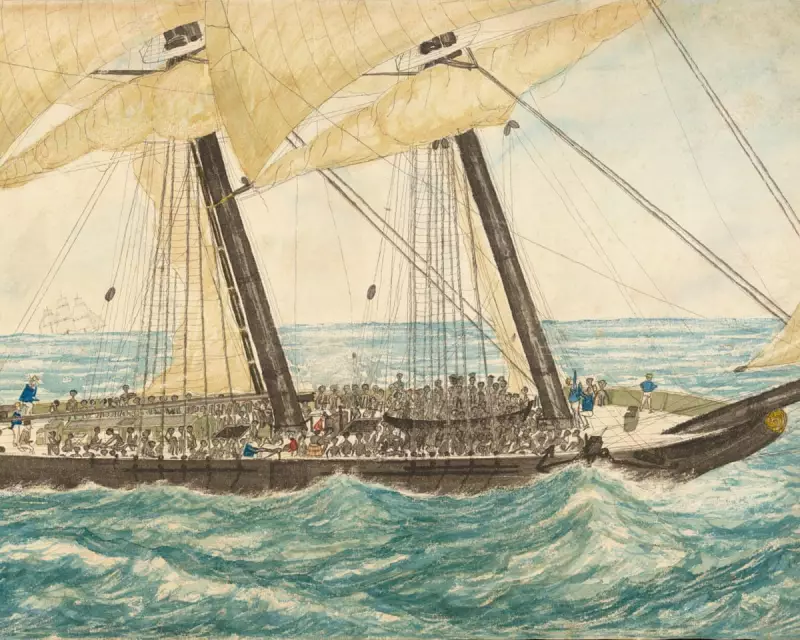
Groundbreaking historical research has uncovered the extensive involvement of the British monarchy and Royal Navy in expanding and protecting the transatlantic slave trade for centuries. A new book by historian Brooke Newman reveals unprecedented details about these institutional connections, challenging traditional narratives about Britain's role in slavery.
The Crown's Dominant Role in Slave Purchasing
The Crown's Silence, published by HarperCollins, follows the Guardian's 2023 Cost of the Crown report and presents startling revelations about royal involvement in human trafficking. The research shows that by 1807, when Britain officially abolished the slave trade within its empire, the British crown had become the world's largest purchaser of enslaved people.
Newman's archival work discovered that the monarchy spent £900,000 to buy approximately 13,000 men specifically for army service. This massive investment occurred despite growing abolitionist movements and increasing public awareness about the horrors of slavery.
Monarchs' Direct Profits from Enslavement
The historian's decade-long research uncovered that British monarchs continued to profit directly from slavery well into the 19th century. "The crown owned thousands of enslaved people in the Caribbean up until 1831," Newman explains. "Even when George IV was overseeing the Royal Navy's suppression of the transatlantic slave trade, he was still technically profiting from the labour and sale of enslaved people."
These enslaved individuals included plantation workers from properties forfeited after revolts or when planters died without heirs. Additionally, people were "purchased in the king's name" to work at royal dockyards and naval installations, beginning in Jamaica under George II's reign.
Royal Navy's Complicated Legacy
Newman's research reveals the Royal Navy's dual role in both protecting and eventually suppressing the slave trade. From Elizabeth I's reign through the 18th century, the navy actively supported slave trading by:
- Protecting slaving vessels during their journeys
- Loaning Royal Navy ships to slave trading companies
- Providing men and supplies for slave trading expeditions
Profits from these activities flowed directly back to the crown, creating a financial incentive for continued involvement. The historian notes that the Royal African Company, founded by the Stuart monarchy, initially held a monopoly that when lost, "fuelled the expansion of English cities such as Liverpool and Bristol, Britain's insurance and finance sectors, and the United States."
Post-Abolition Coercion and Conscription
One of the most disturbing revelations concerns what happened after abolition. Africans liberated from slavers' ships by Royal Navy patrols faced continued exploitation through coercive systems. "They were forced into apprenticeships or conscripted into British military service," Newman states.
This practice continued the cycle of exploitation, with liberated Africans being forcibly conscripted into West India regiments and Royal forces stationed in West Africa. The historian observes that "things are not really better regardless of whether you're owned by the monarchy or not."
Monarchs as Imperial Strategists
Newman's research shows how British monarchs viewed enslaved people as strategic assets in imperial conflicts. "George II and George III started thinking about enslaved men as pawns in this imperial chess game," she explains.
This strategic thinking continued through major conflicts including the Seven Years' War and the American Revolution. The monarchy's involvement evolved from direct participation to defending the broader imperial system that depended on slave labour.
Activism and Royal Response
The book details how formerly enslaved individuals like Olaudah Equiano, Mary Prince, and Ottobah Cugoano directly appealed to the monarchy through books, letters, and newspaper petitions during the 18th and early 19th centuries. "The monarchy is doing nothing," Newman notes about this period.
Change only began with sustained activism from groups like the Sons of Africa, leading to what Newman describes as a "dramatic pivot" in the monarchy's stance during the 19th century.
Contemporary Relevance and Response
While Buckingham Palace maintains its policy of not commenting on books, a source indicated that King Charles takes these historical matters "profoundly seriously." The monarch has previously expressed "personal sorrow" at the suffering caused by slavery.
Newman began her research after discovering "secret correspondence" detailing George IV's fears about a potential uprising in Jamaica similar to the Haitian Revolution. This discovery came while researching Jamaica's 300-year history as a British colony.
The historian, an associate professor at Virginia Commonwealth University, examined royal archives and manuscripts relating to multiple institutions including:
- The Royal Navy's historical records
- Colonial officers' correspondence
- Government officials' documents
- Records of the Royal African Company
- South Sea Company archives
The Crown's Silence: The Hidden History of Slavery and the British Monarchy represents a significant contribution to understanding Britain's complex relationship with slavery and the enduring legacy of these historical practices.