Arthur Bondar's Covert Mission to Save WWII Photographic Truths
In a quiet study in northern Germany, Arthur Bondar, a Ukrainian-Russian photojournalist, dons white cotton gloves and delicately handles 4cm by 9cm negatives from an old cigarette box. Held up to the light, these tiny, ghostlike images reveal inverted scenes: a woman on horseback, laborers in fields, seaside laughter, and a woman posing as a military ship sails by. Despite their size, Bondar discerns crucial details—uniform insignias or ship names—that ignite his curiosity and guide his meticulous research.
A Burgeoning Collection of Unseen War Images
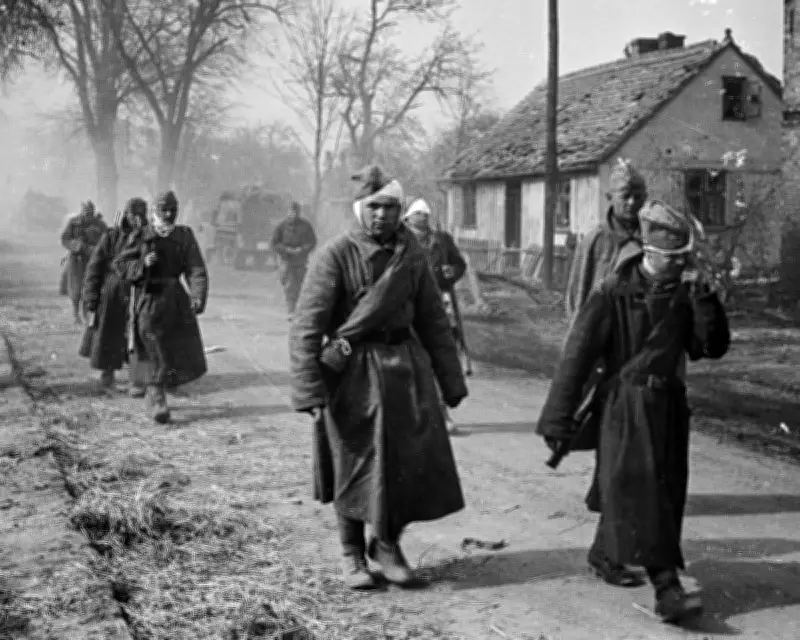
Bondar's latest acquisition, purchased online from a German seller, depicts women from the Reichsarbeitsdienst, a female labor force serving the Nazi Reich. This adds to his vast collection of approximately 35,000 WWII negatives, amassed since 2016. He describes the process as "buying a black cat in a black sack," often unaware of the content until he flattens and scans the negatives. Bondar exclusively buys negatives from amateur and professional photographers across the Soviet Union and United States, believing they offer the most unadulterated wartime truths.
Negatives, he argues, are photographic truths that resist historical distortion, unlike prints that Soviet military practices sometimes manipulated—such as creating collages or removing dead soldiers from images.
Smuggling Treasures Amidst Political Peril
In 2023, Bondar undertook eight risky hauls to smuggle his photographic treasures out of Moscow, where he had lived for over a decade. Leaving his personal archive behind, he transported the negatives first to Georgia and then to Germany, where he and his wife, Oksana, a Ukrainian-Russian artist from Kharkiv, now reside in what they term self-imposed relocation. This daring move risked confiscation, fines, or imprisonment under Russian laws, which since 2020 have criminalized images deemed to dishonor "defenders of the fatherland" by showing soldiers' vulnerability, distress, injury, humanity, or humor.
"To boot, I was a Ukrainian doing this 'dishonourable' act," says Bondar, born into a military family in Krivoy Rog, Ukraine. Despite interrogation, he successfully evacuated the images.
Countering Propaganda with Humanistic Narratives
Bondar's archive serves as a powerful counterpoint to Moscow's "comfortable" WWII narrative, which celebrates triumph over tragedy to justify the invasion of Ukraine, encapsulated in the propaganda slogan "we can do it again." He is driven by the war in Ukraine to showcase "all the sides of war, above all its stupidity and uselessness." Through a curated website, hardback books, and exhibitions—like one at the Seelow Heights museum—he shares these images to highlight wartime humanity.
His most prized find is Valery Faminsky, a photographer whose poor eyesight initially barred him from the front. Faminsky's negatives, neatly stored in homemade boxes, offer unvarnished scenes of German civilians and Soviet soldiers, providing what Bondar calls "one of the most enlightening views of war possible."
Rescuing Forgotten Photographers and Fading Memories
Bondar also preserves the work of Olga Ignatovich, one of only seven female military photographers, whose 1,500 negatives were handed to him in a shoebox in Moscow. Some were too mold-damaged to save, a metaphor for fading memories. Ignatovich's images, including those of Auschwitz's liberation used in the Nuremberg Trials, were long misattributed to her brother Boris. Bondar located her neglected grave in Moscow, noting her focus on individuals rather than combat, often capturing genuine smiles.
His archive has connected people from Siberia to New York with lost relatives, as he verifies claims and shares high-resolution copies. Haunted by countless lost negatives, Bondar faces decades of work with his stored collection and seeks institutional collaboration to ensure these photographic truths endure.