Dame Averil Cameron: The Historian Who Revolutionized Byzantine Studies
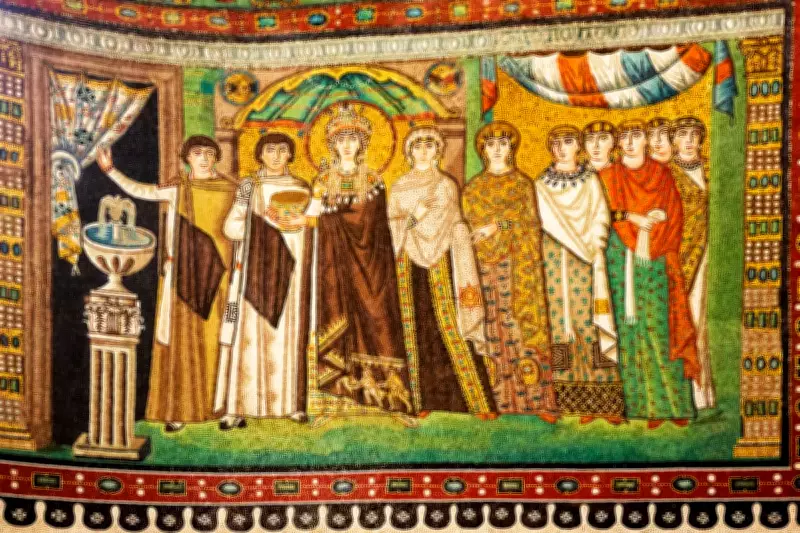
The Byzantine empress Theodora and her attendants, depicted in a mosaic at the Basilica San Vitale in Ravenna, Italy, symbolize the rich cultural tapestry that historian Dame Averil Cameron dedicated her life to exploring. Much of what we know about figures like Theodora stems from sources such as Procopius, a subject Cameron meticulously analyzed in her groundbreaking scholarship. Through her work, she challenged long-held stereotypes and reshaped our understanding of a civilization often dismissed as stagnant.
Challenging Gibbon's Legacy
For centuries, the Byzantine empire was viewed through the lens of 18th-century historian Edward Gibbon, who portrayed it as a weak, superstitious, and bureaucratic society doomed to failure. Averil Cameron, however, demonstrated that this prejudice was unfounded. Her research revealed the Byzantines as innovative and dynamic, operating within a melting pot of ideas, languages, and cultural influences. Starting with Emperor Constantine's dedication of Constantinople in AD 330, her scholarship opened up a largely unexplored historical territory for new generations.
Pioneering Scholarship and Early Works
Cameron's early books on Byzantine writers like Procopius (1967), Agathias (1970), and Corippus (1976) brought sixth-century Constantinople to life, as reviewers noted. She excavated the complexities of Byzantine society before the modern field of Byzantine studies fully existed, asking fundamental questions that remain relevant today: Was Byzantium truly an empire? Was its society Orthodox? By applying modern critical theories and integrating disciplines such as art history and archaeology, her contributions from the 1970s and 1980s remain strikingly influential.
Bridging Classical and Medieval Worlds
Unusually, Cameron was both a classicist and a Byzantinist, covering history from classical antiquity (around 800 BC to AD 300) through the fall of Constantinople in 1453. She treated the transition from the Roman empire to the Byzantine empire not as a decline but as a continuous, evolving narrative. Her work on early Christian historiography was pioneering, showing that Christianity's dominance was not inevitable but resulted from a successful rebranding and battle of ideas.
Career Milestones and Barriers
Born in Leek, North Staffordshire, Cameron rose from humble beginnings, encouraged by her parents to pursue education. After studying at Oxford, she faced gender barriers in academia, including being removed from a job shortlist because her husband was employed. Despite this, she became the first woman to hold the chair of ancient history at King's College London in 1978 and the first female head of its classics department, where she appointed Mary Beard to her first role.
Leadership and Legacy
Cameron co-founded the Society for the Promotion of Byzantine Studies in 1983 and served as warden of Keble College, Oxford, breaking gender norms at the traditionally all-male institution. Awarded a CBE in 1999 and DBE in 2006, she continued to mentor and publish until her health declined. In 2020, she was only the second woman to receive the British Academy Kenyon medal, and in 2024, she published her memoir, Transitions: A Historian's Memoir, donating her archive to the Bodleian Library.
Dame Averil Cameron's legacy endures through her children, Daniel and Sophie, and her grandson, Silas. Her work has forever altered how we perceive the Byzantine empire, proving it to be a vibrant and innovative society rather than a historical footnote.