Jane Austen's Relative Decries £10 Note Removal as 'Real Shame'
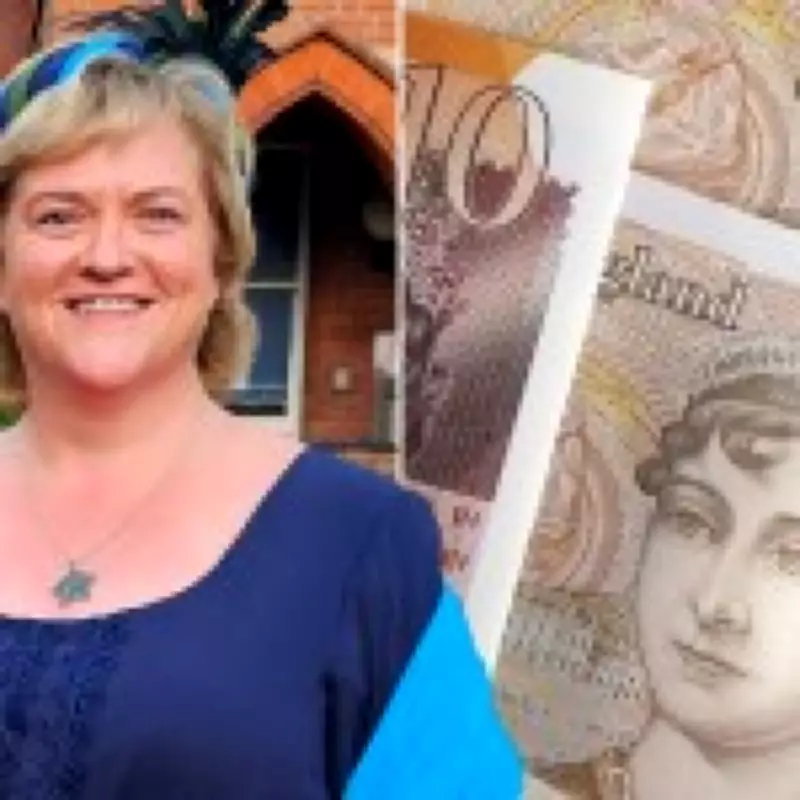
Caroline Jane Knight, the fifth great niece of literary icon Jane Austen, has expressed profound disappointment at the Bank of England's decision to remove her ancestor from the £10 note. This move comes during the government's National Year of Reading campaign, which Knight describes as 'peculiar' and 'extraordinary' timing.
Questioning the Timing and Replacement
Ms. Knight, who founded the Jane Austen Literacy Foundation, told reporters: 'Jane Austen deserves to be in our pockets, not just on our bookshelves. The banknote was a daily reminder of who she was and what she gave us. It is a real shame she is now coming off the £10 note.'
The 55-year-old descendant of Austen's brother Edward was the last family member to grow up in Chawton House, where Austen wrote her most famous novels. While acknowledging that no figure can remain on currency indefinitely, Knight questions why Austen's portrait is being removed after only nine years, noting that Charles Darwin, her predecessor, enjoyed double that tenure.
'And it is not like she is being replaced by someone more deserving,' Knight added, referencing the Bank's plan to feature wildlife like otters and beavers instead of historical figures.
Cultural Impact and Political Reactions
The Bank of England announced last week that wildlife imagery would replace historical figures on future banknotes, citing enhanced counterfeit protection and an opportunity to celebrate nature. However, this decision has drawn criticism across the political spectrum.
Kemi Badenoch called it 'a silly thing to do,' while Reform's Nigel Farage labeled it 'absolutely crackers.' Liberal Democrat leader Sir Ed Davey remarked, 'I can't think of a worse time to do this with a war waging in Europe.'
Ms. Knight expressed particular concern about the cultural message: 'It's a real shame that the currency is no longer going to celebrate the finest minds that Britain has produced. How else are they going to be part of everyday culture and not just sit on a bookshelf somewhere?'
She emphasized that money 'passes through everybody's hands' and 'creates conversations,' arguing that Austen's presence on currency helped maintain her relevance in daily life.
National Year of Reading Contradiction
The timing strikes Knight as particularly ironic. The 2026 National Year of Reading represents the UK's largest-ever reading initiative, aimed at inspiring regular reading habits. Yet, as Knight points out, 'One arm of government is urgently trying to reconnect the nation with books. Another has just taken the country's most beloved author off the banknote.'
She notes that reading rates among children are declining significantly, making this 'a peculiar moment to make that choice.'
Historical Context and Legacy
Jane Austen, born in Steventon, Hampshire in 1775, lived a modest life focused on family and drew inspiration from her surroundings among the minor landed gentry. She spent her final eight years at Chawton House, where she revised, completed, and published her most celebrated works, including Pride and Prejudice and Emma.
Despite never marrying, Austen left an indelible mark on English literature before her death in 1817. Her novels continue to attract hundreds of thousands of visitors to Britain annually.
Ms. Knight has pledged to intensify efforts to promote her ancestor's legacy, especially following Austen's 250th birthday celebration last December. She warns that internationally, the decision may be viewed as 'another sign that there is a decline in how culture is valued.'
Wider Implications for Historical Figures
The Bank of England has featured historical figures on banknotes for over fifty years. Currently, Winston Churchill appears on the £5 note, JMW Turner on the £20, and Alan Turing on the £50. The decision to remove Churchill has sparked particular controversy, with Badenoch arguing it 'erases our history.'
However, Churchill's granddaughter, Emma Soames, disagrees with accusations of 'wokery,' stating that her family understood his appearance on currency wouldn't last forever.
A panel of experts will now create a wildlife shortlist for public consultation, marking a significant departure from celebrating human achievement on British currency.