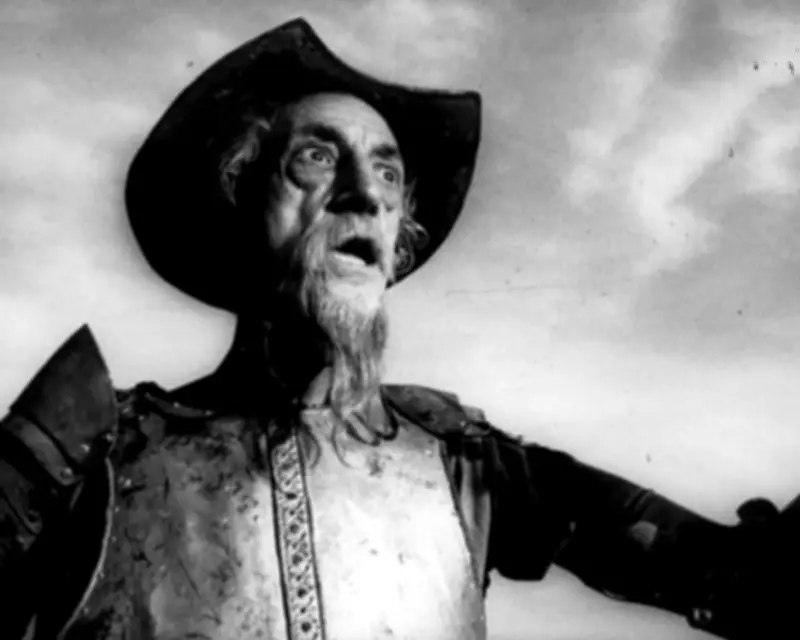
A consortium of European film archivists is working to complete Orson Welles' long-unfinished adaptation of Don Quixote, more than 70 years after he first shot footage. The project, backed by archives in France, Spain, and Italy, along with the Munich film museum, aims to produce a coherent film from 30 hours of footage scattered among them.
Background of the Project
Welles began working on the film in 1957 as a television project backed by Frank Sinatra, but the deal fell through. He continued shooting scenes in Mexico, Italy, and Spain whenever he could find a backer, working on it almost until his death in 1985. The film is based on Miguel de Cervantes' classic 1605 novel, but Welles took liberties, such as setting the puppet theatre scene in a Mexican cinema where Don Quixote attacks the screen to save a heroine.
Archival Challenges
The reconstruction team, led by Esteve Riambau, a Welles authority and former head of the Catalan film archive, faces significant hurdles. The Cineteca Nazionale in Rome must digitise 50,000 metres (164,000 feet) of negative, adding to 50,000 metres of 16mm and 35mm film held by Spain and 80 minutes of 35mm footage in France. “We don’t have a complete script but enough to reconstruct it,” Riambau said. “Half the material is in the form of a negative in Rome which has to be printed before we can see it.”
Approach to Reconstruction
Riambau emphasised that the team will not invent anything or use special effects to fill gaps. “We’re not working with hypotheses. The idea is to show the original in so far as it’s possible, but it’s like working on a mosaic where there are missing pieces.” Most footage is black and white, though some scenes were shot in colour in Andalucía. The soundtrack is incomplete, but where it exists, Welles himself voices Don Quixote and Sancho Panza.
Timeline and Significance
Riambau noted that Welles called the project his “bambino” and wrote several screenplay versions, suggesting uncertainty about how to finish it. When asked about completion, Riambau said, “I think we’ll need at least until 2028.” He compared Welles to Michelangelo, calling him much more than a film-maker. The film is expected to be a significant addition to Welles' body of work, which includes Citizen Kane (1941), A Touch of Evil (1958), and his acting roles in The Third Man (1949) and A Man for All Seasons (1966).