The End of an Era: Coup Leader's Death Coincides with Historical Revelations
Antonio Tejero, the Spanish military officer whose armed invasion of parliament became one of the most defining moments of Spain's young democracy, has died at the age of 93. His passing occurred on the very same day that Spain's socialist-led government declassified 153 documents relating to the failed 1981 coup attempt that Tejero led.
A Life Defined by Rebellion
Tejero's family announced his death in a statement on Wednesday, describing him as a man who devoted his life "to God, Spain and his family." His lawyer, Luís Felipe Utrera Molina, paid tribute on social media, calling Tejero "a man of honour, of unshakeable faith and with a great love for Spain."
The former lieutenant colonel remained unrepentant about his role in the coup attempt until the end. "It cost me my career and my freedom, but despite that I don't regret having tried," he told an interviewer five years before his death.
The 23 February 1981 Coup Attempt
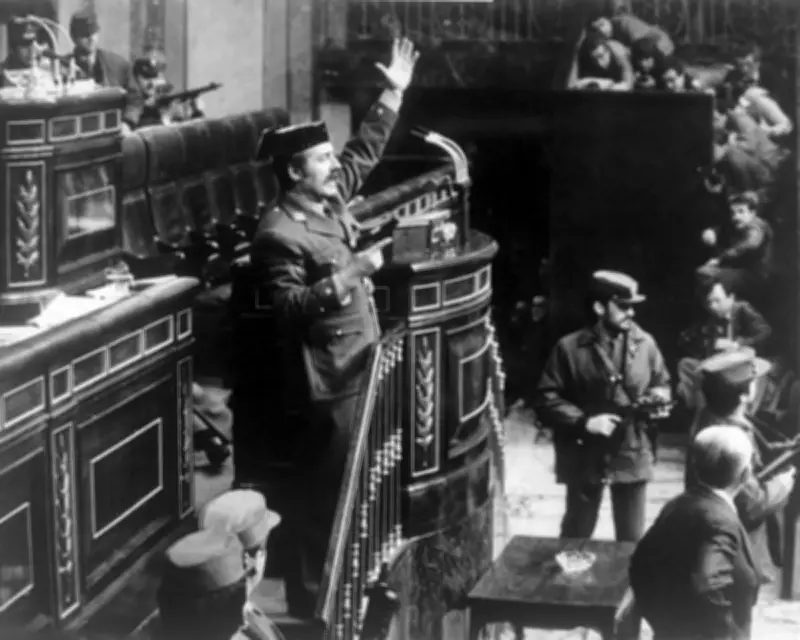
On that fateful day, Tejero led 200 armed Civil Guard officers into the Spanish Congress of Deputies during a vote to confirm Leopoldo Calvo-Sotelo as prime minister. Photographs of Tejero wearing the distinctive tricorn patent leather hat of the Guardia Civil and brandishing a pistol at terrified parliamentarians became indelible images of Spain's fragile post-Franco democracy.
The coup attempt was ultimately thwarted when King Juan Carlos I refused to support the plotters and instead delivered a televised address defending constitutional order. Tejero, who had previously been involved in another attempted putsch in 1978, was sentenced to 30 years in prison but served only half that time before his release.
Declassified Documents Reveal New Details
The Spanish government's decision to declassify documents about the coup on the day of Tejero's death provides new insights into the events of 1981. Among the revelations is a defense ministry report indicating that members of Spain's intelligence service were either involved in or had prior knowledge of the coup plot.
According to the document, six individuals "either knew the facts before 23 February, or who drew up operational support and then tried to cover their involvement using an operation that sought to justify their movements that day."
Questions About Royal Involvement
Another declassified document reveals that some plotters later attempted to implicate King Juan Carlos himself in the coup attempt. An interior ministry investigation found that defense lawyers for those involved, along with political groups sympathetic to their cause, had "pushed the alleged involvement of his majesty the king as the main reason for the coup attempt."
The report states these efforts involved twisting facts, maliciously interpreting events, and inventing scenarios that "have existed only in the minds of those who thought them up."
Historical Context and Legacy
Prime Minister Pedro Sánchez marked the document release with a social media post emphasizing "Truth, memory and democracy" as essential for progress. The declassification represents a significant step in Spain's ongoing reckoning with its authoritarian past and democratic transition.
Tejero remained active in right-wing circles throughout his life, even participating in protests against the exhumation of Francisco Franco's remains in 2019. His son, the priest Ramón Tejero, said mass at Franco's reburial at the family's request.
The simultaneous occurrence of Tejero's death and the document declassification creates a poignant historical moment, allowing Spaniards to reflect on both the individual and the events that tested their democracy four decades ago.