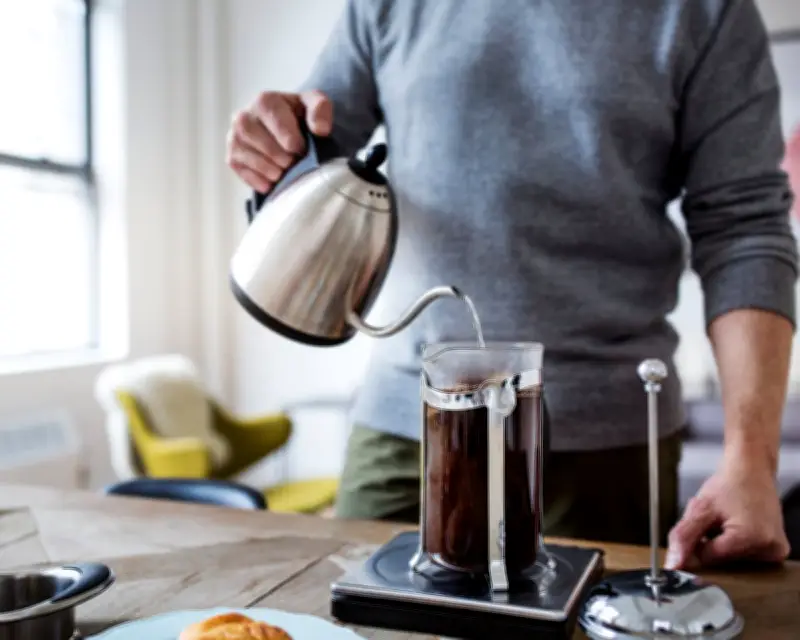
Making great cafetiere coffee requires attention to detail, from water temperature to brew time. Connoisseurs insist electronic scales are non-negotiable, along with patience and trial and error.
Grinder and grind size matter
Ben Kovar, head of coffee at Campbell & Syme Coffee Roasters in north London and Hertfordshire, says a grinder makes a big improvement. For personal use, he recommends a hand grinder like Comandante, as you avoid paying for electronics and get good burrs. However, if you have a good local cafe, buying pre-ground coffee from them can be better because they use top-end grinders, provided you use the bag within two weeks.
Water quality and temperature
Water dramatically impacts taste. Kovar notes that filter coffee is 98% water, and hard tap water like London's can be unpleasant. A filter jug helps soften water. Do not use water straight off the boil; wait 30 seconds before using the very hot water.

Scales and brew ratio
Scales are essential to measure coffee and water accurately. Kovar uses 60g coffee per litre of water: for a 250ml cup, use 15g coffee. Bespoke coffee scales often have a built-in timer, but standard kitchen scales work fine.
Brewing technique
James Hoffmann, barista and author of The World Atlas of Coffee, recommends a four-minute brew. Then stir the crust that forms on top, scoop off the floating bits, and let it rest for at least another five minutes. When plunging, do not push all the way to the bottom to avoid stirring up sediment. Decant the entire cafetiere in one go for a consistent brew.
Trial and error
Kovar advises changing only one variable at a time: if too strong, add more water or use less coffee. Keep track of adjustments until you find a recipe you like.