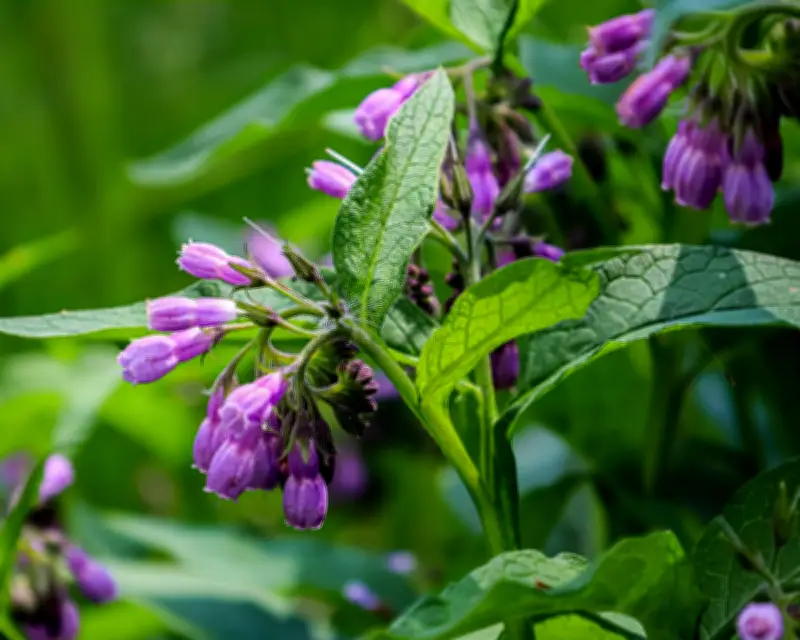
Comfrey thrives in damp earth and is a favorite for making nutritious plant feed. This perennial plant produces thick, hairy leaves and clusters of drooping pink, purple, or white flowers. It can be found by streams and rivers but also grows in less welcoming ground, thanks to its deep taproot that pulls up nutrients into its leaves. Bees, hoverflies, and butterflies benefit from its flowers, especially in spring.
Making comfrey feed
To make comfrey feed, harvest the leaves and place them in a lidded bucket with enough water to cover them. Weigh the leaves down with a brick to ensure efficient rotting. In as little as two weeks, a dark brown, smelly liquid forms. Separate the liquid from the leaves (which can go on your compost heap), and your feed is ready. Use a solution of one part feed to 10 parts water to boost flowering and fruiting plants in midsummer.
Other plants for feed
This simple process works with a wide range of plants. Nettles in spring produce a liquid rich in nitrogen, beneficial for leafy plants. Weeds like dandelion or groundsel can also be used, offering a better alternative to tossing them in the green-waste bin.

Growing comfrey
Comfrey can be grown from root cuttings or division. It does best in a sunny spot with adequate moisture. Most comfrey varieties spread through self-seeding, which can be problematic. The 'Bocking 14' variety is sterile and will not set seed, making it ideal for gardens.
As midsummer arrives, keeping crops watered and harvested is key, but supplemental feeding can make a difference. Homemade plant feed is an easy, cost-effective way to nourish your garden without a trip to the garden centre.