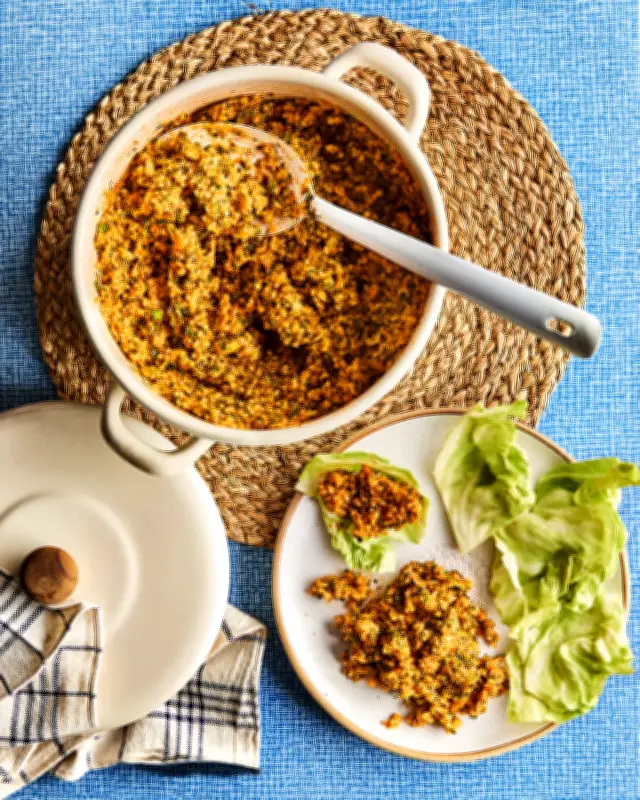
Anissa Helou, the acclaimed cookbook author, presents two traditional Lebanese grain dishes that highlight the versatility of bulgur wheat and rice. The recipes, excerpted from her upcoming book Lebanon: A Culinary Celebration, include a savory green bulgur wheat 'risotto' known as mafrükeh and a unique tahini rice pudding called müffata'a.
Green Bulgur Wheat 'Risotto' (Mafrükeh)
This dish originates from Deir Intar in southern Lebanon, where bulgur wheat is commonly cooked with greens and tomato sauce. According to Helou, it is served like tabbüleh—a kind of cooked tabbüleh—and is traditionally scooped up with raw cabbage leaves or fresh vine leaves when in season. The addition of spring onions and fresh herbs creates a fresh and intriguing flavor combination.
The recipe requires soaking 250g of coarse bulgur wheat in cold water for 30 minutes. In a wide pot, 80ml of extra-virgin olive oil is heated, then the drained bulgur is added and stirred for two minutes. One bunch of sliced spring onions (about 100g), a large bunch of finely chopped flat-leaf parsley (about 200g), and ¾ bunch of finely chopped fresh mint leaves (about 150g) are mixed in. Then, 112g of tomato paste diluted in 750ml of cold water is added, along with salt to taste. The pot is covered and simmered for 10 to 15 minutes until the bulgur absorbs the liquid. After removing from heat, the lid is wrapped in a clean tea towel and placed back on the pot to rest and cool. The dish is served at room temperature with cabbage or vine leaves.

Tahini Rice Pudding (Müffata'a)
This unique dessert is a Sunni specialty from Beirut. Helou discovered it while researching her book Feast when her friend Ziad Ghorly took her to al-Makari, the most famous müffata'a maker in the city. Mr. Makari kindly shared his recipe, which Helou now presents.
The recipe starts by boiling 875ml of water with 1 tablespoon of ground turmeric. After rinsing and soaking 250g of short-grain white rice for 30 minutes, it is drained and added to the boiling water. The heat is reduced to low, and the rice simmers partially covered for 30 to 45 minutes, stirring regularly. In a separate large pot, 250g of tahini, 500g of baker's or superfine sugar, and 75g of Mediterranean pine nuts are combined. Once the rice is cooked, it is added to the tahini mixture along with any remaining liquid and a pinch each of ground fennel and anise. The pot is placed over medium-low heat and cooked for about an hour, stirring continuously, until the oil from the tahini rises and the pudding becomes very thick. Helou notes that the pudding is ready when a spatula dipped into the rice comes out clean without any rice dropping back. The pudding is then spread on a large platter or individual plates, with a groove marked around the inside, and served at room temperature.
These recipes are edited extracts from Lebanon: A Culinary Celebration, to be published in August by Bloomsbury at £30. Helou's book explores the rich culinary traditions of Lebanon, where grains are a staple in almost every meal.