Emerald Fennell's Wuthering Heights Adaptation Ignites Fiery Race Debate
Emerald Fennell's cinematic interpretation of Wuthering Heights has ignited a substantial controversy even before its widespread theatrical release, with the central debate showing no signs of diminishing. At the heart of this heated discussion lies the casting decision of Jacob Elordi as the iconic character Heathcliff, prompting accusations that the film has engaged in whitewashing one of English literature's few racially diverse protagonists.
The Personal Vision Versus Literary Interpretation
For director Emerald Fennell, this casting choice was profoundly personal. She explained to the BBC that her objective was to capture the raw, visceral emotion she experienced when first encountering the novel as a teenager, describing it as "primal, sexual." Fennell stated she selected Elordi because he "looked exactly like the illustration of Heathcliff on the first book that I read." However, this artistic decision raises a critical question: has Fennell compromised the integrity of the story and disadvantaged actors of color to fulfill a personal fantasy?
Examining Heathcliff's Racial Identity in the Original Novel
In Emily Brontë's seminal 1847 novel, Heathcliff is consistently portrayed as racially and socially distinct from other characters. He is described by Mr. Lockwood as a "dark-skinned gipsy," and upon his arrival at Wuthering Heights, he is depicted as "a dirty, ragged, black-haired child" discovered on the streets of Liverpool. Additional references label him a "gipsy brat" and note he spoke "some gibberish that nobody could understand." Later, Mr. Linton refers to him as "a little Lascar, or an American or Spanish castaway."

While no single description definitively establishes his race, the cumulative effect unmistakably presents Heathcliff as a character who is not straightforwardly white and English. This ambiguity has fueled scholarly debate for generations.
Expert Perspectives on the Casting Controversy
Dr. Jenni Ramone, Associate Professor of Postcolonial and Global Literatures at Nottingham Trent University, argues that although Heathcliff's race "is not identified absolutely in the novel," the textual details strongly "suggest that he is probably Black or mixed race." She emphasizes the disturbing context of Mr. Earnshaw finding the child in Liverpool—a major slave-trading port in the late 1700s—and asking if he had "an owner."
Dr. Kadian Pow, Lecturer in Sociology and Black Studies, notes there is "no singular scholarly consensus on Heathcliff's racial identity except to agree that he is noted as non-white." She contends this deliberate ambiguity is central to the novel's power. "For a white woman author to specify that Heathcliff's racial heritage is dubious or ambiguous is integral to the 'otherness' of him that Brontë establishes early on," Pow explains.
She further argues that casting a white actor is far from a neutral decision. "With markedly fewer opportunities for people of colour in historical films, replacing an obviously non-white character with an explicitly white one is egregious," Pow states. "It matters to global majority audiences, and that should be worth something."
Andrew Washington, founder of the film site On the Reel, echoes this sentiment, labeling the casting "egregious." He points out that "every piece of Heathcliff's conflict is tied in some way to how he looks." While color-blind casting can be effective for roles not intrinsically linked to race, Washington asserts that in Wuthering Heights, "one of Heathcliff's defining characteristics is that he is 'dark-skinned' with 'black hair.'" He suggests Elordi is "not even a dark-skinned white man," making the decision feel "disarming and almost disrespectful to Black actors for whom there already aren't many roles."

Historical Precedents in Adaptation
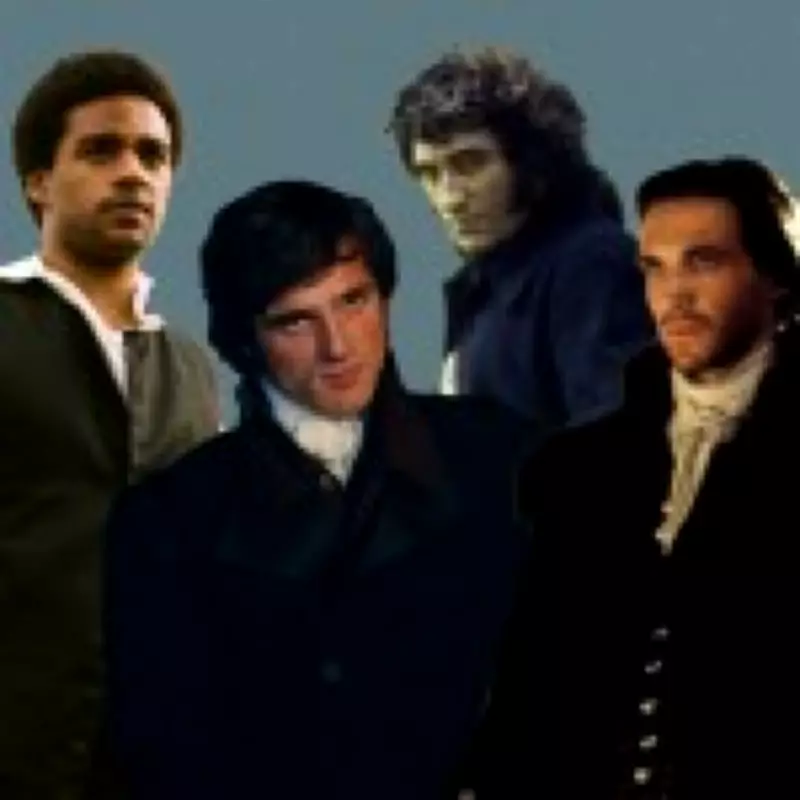
This controversy unfolds against a backdrop where alternative casting paths have been successfully pursued. Andrea Arnold's 2011 adaptation made history by casting James Howson as Heathcliff—the first Black actor to portray the character on screen. More recently, Audible's original drama Heathcliff featured Daryl McCormack, who is mixed race, in the title role, exploring the character's missing years.
McCormack has described Heathcliff as "one of the most complex and interesting individuals in literature" and expressed a desire to foster audience compassion for this "anti-hero." These adaptations demonstrate that interpreting Heathcliff as a person of color is not only feasible but can add profound layers to the narrative.
Arguments Supporting Fennell's Interpretation
Not all scholars view Elordi's casting as unequivocal whitewashing. Professor Serena Trowbridge of Birmingham City University highlights that the textual clues are "ambiguous characteristics." While there are "hints in the text" that Heathcliff may be Black, Brontë never explicitly confirms it. "The ambiguity in the text means that the film shouldn't necessarily be criticised for that," she suggests.
Dr. Ella Dzelzainis of Newcastle University agrees, noting the novel provides "multiple, sometimes conflicting descriptions." Heathcliff "could be a gipsy, could be Irish, could be Spanish, could be a fugitive slave from the States." What remains certain, she says, is that he is "black-haired and alien (or alienating) in some way." This imprecision "leaves film makers with a liberating set of options."
A complex historical consideration also arises: if Heathcliff were unambiguously Black in late eighteenth-century England, could he realistically have amassed wealth and reintegrated into rural society as a gentleman without the narrative directly confronting the era's brutal racism? Some argue that portraying him as fully Black without addressing these structural realities might gloss over the genuine dangers he would have faced.
The Broader Cultural Implications
Ultimately, this controversy reflects a persistent tension in adaptation: the balance between honoring the political undertones of source material and allowing a director's personal vision to reinterpret it. Fennell is undoubtedly entitled to her interpretation, as adaptation is inherently an imaginative act rather than a purely academic exercise.
For some critics and fans, the novel's ambiguity, combined with its complicated historical context, grants Fennell legitimate creative freedom. If her Heathcliff mirrors the image that initially captivated her as a young reader, that constitutes a defensible artistic choice.
However, Wuthering Heights is not a racially neutral text. Its repeated use of terms like "dark-skinned," "Lascar," "gipsy," and "castaway" ensures that Heathcliff's identity has always been imbued with racial significance, however ambiguous Brontë left it.
The most compelling criticism may be that casting a white actor represents a missed dual opportunity: first, to create a rare leading role for an actor of color in a period piece, and second, to enrich the story's emotional and political depth by having someone with lived experience of social otherness embody Heathcliff.
That this debate continues to burn so intensely is revealing. Heathcliff's "darkness" was never merely a Gothic flourish; it has always been intertwined with themes of power, belonging, and exclusion. Nearly two centuries after the novel's publication, these tensions remain as unresolved and provocative as ever.