Sirāt: A Cinematic Journey into the Heart of Rave Culture
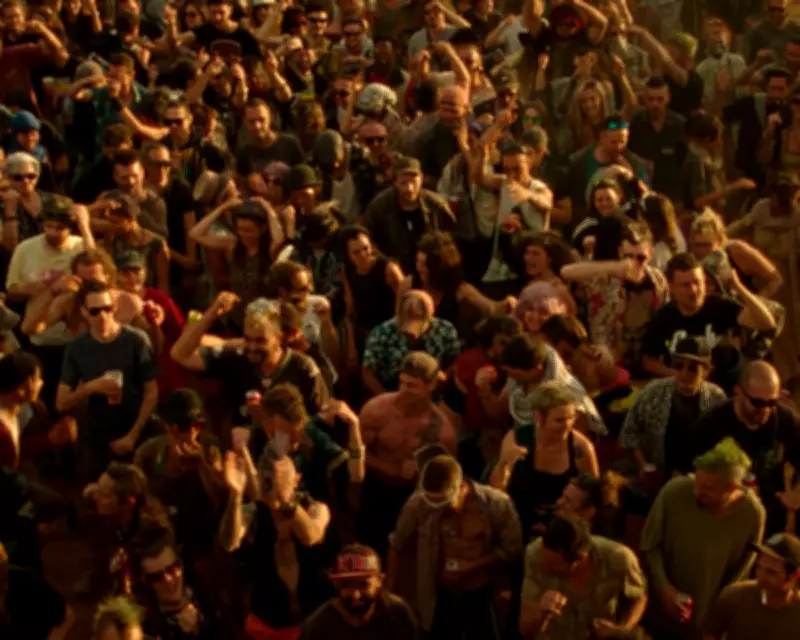
In the arresting opening scene of Oliver Laxe's existential mystery thriller Sirāt, a determined crowd of partygoers assembles a formidable sound system amidst the stark beauty of the southern Moroccan desert. This is not merely a film set; it is the genesis of a genuine, temporary festival. Laxe, the French-born Spanish director, reveals that these were no ordinary extras. They were dedicated, lifelong ravers who journeyed from across Europe to participate. Among them was Sebastian Vaughan, known as 69db, a core member of the pioneering 1990s British "free party" collective, Spiral Tribe.
Adapting Cinema to Reality
"In film, reality is usually made to adapt to the rules of cinema," Laxe explains during a meeting in Berlin. "But we do the opposite: we adapt cinema to reality." This philosophy was paramount during negotiations with the ravers. Their fundamental stipulation was clear: the music could not stop for three days. Laxe embraced this demand, seeing it as essential to capturing an authentic, unbroken flow of energy and experience.
Following its Jury Prize win at Cannes last May, Sirāt is poised to become a significant arthouse crossover success. Set for release in UK cinemas in February, the film is shortlisted in five Oscar categories, including Best International Feature Film. On its surface, the narrative follows a modest family—patriarch Luis, his son Esteban, and their dog Pipa—as they search for a missing daughter named Mar. Their quest becomes entangled with the outbreak of an unnamed armed conflict and the subsequent military disruption of the desert festival.

Beyond the Plot: Rave as Metaphysical Subject
Yet, over its nearly two-hour runtime, the search-mission plot gracefully recedes. Rave culture itself, with its deeper metaphysical implications, emerges as the film's true protagonist. While other films like Beats, Eden, or All These Sleepless Nights have explored dance music, Laxe's approach is distinct. He views raving and the associated dissolution of ego as a profound confrontation with mortality.
"If you die on a dancefloor, it's considered a mythological death," says Laxe, who observes Sufism and studies gestalt psychotherapy. His depiction of character deaths is key to the film's growing cult status, intended not as cruelty but as a spiritual allegory. It references the shedding of worldly attachments to achieve liberation. "This is the same in the core of all cultures, where the hero transcends the idea of his own death," he notes, citing scholar Joseph Campbell. "He knows that his death is not the end of anything, it's the door to eternity. It's like a triumphant death." Sirāt is thus Laxe's interpretation of the universal hero's journey.
Inspirations from Rumi to Raw Expression
The poetry of the 13th-century Sufi mystic Rumi, which exhorts dancing "when you're broken open," deeply influenced the film's portrayal of raving and psychedelic use as ecstatic rites amid suffering. "As a film-maker, I would like to evoke transcendence," Laxe explains. "Even the worst disasters, tragedies, obstacles—the worst thing that can happen to you—it's a gift, in a way. It has to be like this. It's painful at some point, but I think there is serenity."
To externalise the emotional imperfections of those seeking solace, Laxe intentionally cast non-professional actors with disabilities, including Tonin Janvier, who has a prosthetic leg, and Richard Bellamy, who has a missing hand. He sees raves as unique spaces for uninhibited expression. "You can scream, you can cry, you can fall on the floor," he says. "At some point, you see the construction of your ego, you see how fake you are... In this moment, the beat, the kick, the music comes. It's like it's pushing you up. It's like you are celebrating your wounds when you land."

The Sculpted Sound of Despair and Solace
The film's spiritual themes are powerfully anchored by its score, created by Berlin-based underground producer David Letellier, known as Kangding Ray. A veteran of the experimental label Raster-Noton and a regular DJ at iconic venues like Berghain, Letellier observes that contemporary electronic music has often lost its DIY and queer subcultural roots to corporate co-option. What remains vital, he argues, is "the solidarity, the resistance, the anti-authoritarian, anti-system ethos that was once its base."
Laxe contacted Letellier after hearing his 2014 track Amber Decay. The producer describes his compositional process as akin to sculpture. "I take sounds and I carve them and I polish them or cut them or destroy them or explode them," he says. The resulting soundtrack evolves from visceral electronics into dark, skeletal ambient noise, mirroring the narrative's emotional disintegration.
In the film's poignant second half, the character Luis confronts sudden devastation. As a low techno heartbeat drones, he stares in surrender, lifting his hands in a moment where dance becomes solace. "The body has memory of the pain, of your pain, the child's pain, the trauma of a child," Laxe reflects, "but also the pain of your lineage, your family, and the pain of the world." Sirāt is released in UK cinemas on 27 February, offering a transcendent exploration of dance, death, and liberation.