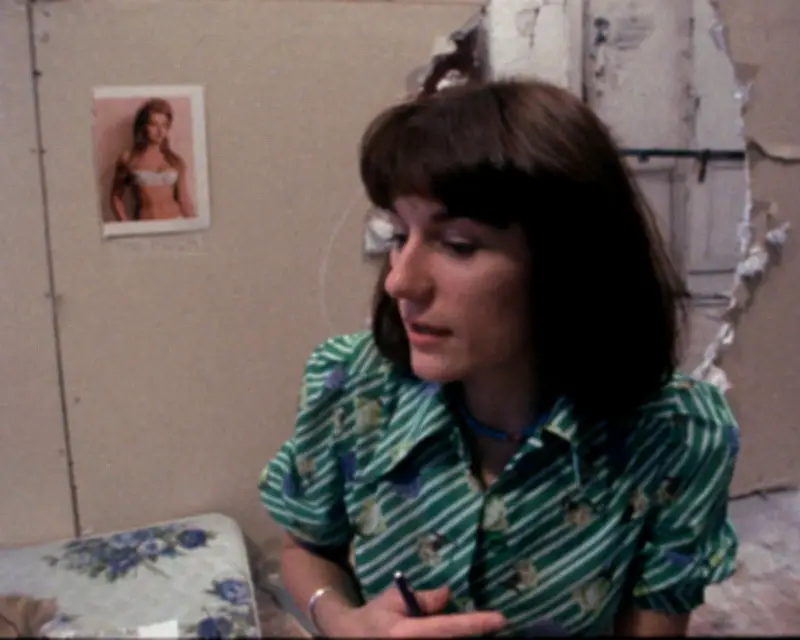
Martha Coolidge's overwhelmingly candid and courageous personal docudrama from 1976, Not a Pretty Picture, remains a pioneering study of rape made more powerful by the radical modes of scrutiny that she devised. Fifty years after its release, the film's dramatisation of the key moments leading up to and following the rape she survived as a teen co-ed by a fellow student is still absolutely essential viewing.
A Radical Docudrama Approach
Coolidge set out to dramatise the key moments surrounding the rape she experienced a decade or so earlier. The film shows the rapist driving her and a group of other students to a party in New York, insisting they stop at a dilapidated apartment on the way, where the crime occurs. The aftermath is made worse by bullying from malicious girls in a neighbouring dorm and the insidious, misjudged condescension from the dean when he hears the rumours.
The film presents these scenes alongside fly-on-the-wall sequences of Coolidge discussing the project with the actors, rehearsing, and improvising. These latter scenes are so extensive that viewers are invited to question whether they constitute the main (fictional) event. The lead, Michele Manenti, playing “Martha,” openly reveals she has experienced a similar date rape. Her dorm-mate Anne is played by Anne Mundstuk, Coolidge’s actual dorm-mate at the time.

Actor Perspectives and Uncomfortable Truths
The rapist “Curly” is played by Jim Carrington, an actor who later gained prominence in 1980s teen movies and as a screenwriter. In a later, separate on-camera discussion with the director, Carrington unconsciously makes the rape scene even more horrendous by explaining how he can see Curly’s point of view, suggesting that men are allegedly at the mercy of their own urges in the moment. After that unwatchably horrible scene, Carrington confesses to feeling such rage at his victim that he wanted to punch her in the face.
This Brechtian experiment forces viewers to confront uncomfortable truths about the crime and its representation. The riding-in-the-car sequence has an ominous queasiness for the audience who knows where it is leading. The film serves as an interesting corrective to more innocent films about the era, such as American Graffiti, and recalls the chilling pre-rape car ride in Mary Harron’s The Notorious Bettie Page (2005).
Enduring Relevance and Availability
Could a movie of such unselfconscious daring be made today? It remains unclear. But Not a Pretty Picture is a brilliant Brechtian experiment and an essential filmic document. It is available on Mubi from 1 July.
Information and support for anyone affected by rape or sexual abuse is available. In the UK, Rape Crisis offers support on 0808 500 2222 in England and Wales, 0808 801 0302 in Scotland, or 0800 0246 991 in Northern Ireland. In the US, Rainn offers support on 800-656-4673. In Australia, support is available at 1800Respect (1800 737 732). Other international helplines can be found at ibiblio.org/rcip/internl.html.