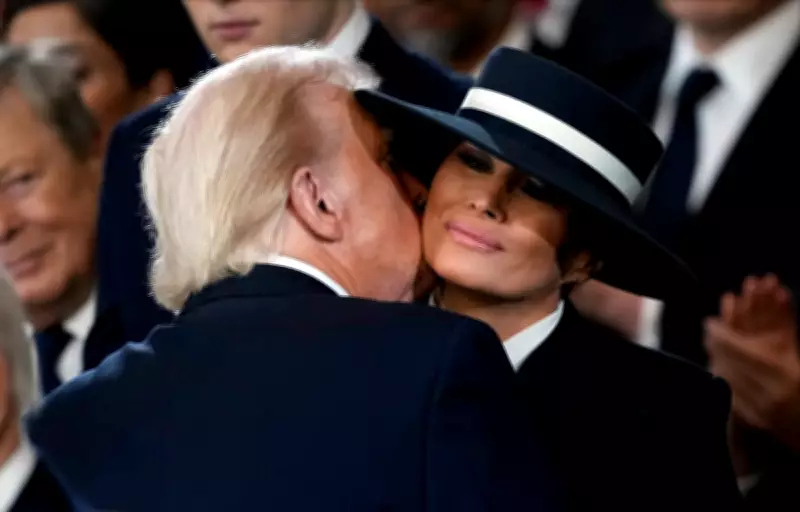
Melania Documentary Creates Unexpected Box Office Success Among Republican Women
The recent Amazon documentary focusing on Melania Trump has generated significant attention and revenue during its opening weekend, bringing in approximately $7 million at the box office. This figure represents a notable achievement for a documentary film, though it falls short of covering the reported $70 million production and marketing costs. The film's performance has positioned it as the top-performing documentary in a decade, creating an unexpected success story in the current cinematic landscape.
A Cultural Event for Republican Supporters
Across the United States, groups of Republican women have transformed screenings of the Melania documentary into social occasions. Lisa Copeland, a 60-year-old real estate entrepreneur from Austin, Texas, described attending with nine friends as "girls' night" for Republican supporters. The attendees embraced the event's atmosphere, with Copeland noting they dressed in "power suits" inspired by Melania Trump's signature menswear-inspired style, though she added her own Texas flair with black leather pants and a pearl jacket.
The documentary, which covers the 20 days leading up to Donald Trump's second presidential inauguration on 20 January 2025, has created what observers describe as "a tale of two Americas." While many film critics have panned the production—with The Guardian giving it a zero-star review and calling it "a gilded trash remake of The Zone of Interest"—the film has found an enthusiastic audience among Trump supporters.

Demographic Breakdown Reveals Target Audience
According to data obtained by Variety, the opening weekend audience presented a distinctive demographic profile that contrasts sharply with typical cinema audiences. The statistics reveal that 72% of viewers were female, while 83% were over the age of 45. This represents what the publication described as "a rarity at a time when the box office is driven by younger men."
The racial breakdown further illustrates the film's specific appeal, with 75% of ticket buyers identifying as white, 11% as Hispanic, and 4% each as Black and Asian. These figures suggest the documentary has resonated particularly strongly with a specific segment of the American population.
Viewer Reactions and Expectations
Attendees expressed various motivations for seeing the documentary. Many Republican women hoped for insights into Melania Trump's private life, though they acknowledged the former first lady's well-documented preference for privacy. Kelsey Davis, a 36-year-old stay-at-home mother from Claremore, Oklahoma, attended with family members and noted that while she appreciated learning more about Melania's personal history, she wished the film had explored more of her relationship with Donald Trump beyond her official role.
"I wish we got to see a little bit more of her as Donald Trump's wife, not so much her as the first lady," Davis commented. She did highlight one particular moment she found revealing: "When Trump was working on his speech, and she insisted that he add something specific. At first he said no, then she demanded it, and he ends up adding it into his speech."
Political Context and Controversies
The documentary's release occurred amidst several political developments, including the publication of additional Epstein files on the same day. Director Brett Ratner, who had not worked since facing allegations during Hollywood's #MeToo movement, appeared in a photograph with the disgraced financier, though Ratner has stated he "didn't have a personal relationship" with Epstein and has denied the allegations against him.
Martha Jenkins and Judy Barlow, president and vice-president respectively of the National Federation of Republican Women, viewed the film while attending a conference in Nashville. Jenkins noted that the documentary accurately reflected their experience attending the 2024 inauguration, which was moved indoors due to extreme cold temperatures and security concerns following an attempted assassination of Trump during his campaign.

Critical Reception vs Audience Response
The documentary has generated strikingly different responses from critics and audiences. While professional reviewers have largely panned the film, it has achieved a 99% audience score on Rotten Tomatoes compared to a critics' score of only 6%. Some commentators, including television host Jimmy Kimmel, have speculated about possible manipulation of audience ratings, though Rotten Tomatoes' owner has stated that "there has been no bot manipulation."
Jenkins addressed the criticism directly: "I know there's all types of criticism coming from the left. I don't think the movie itself is political. The film has been made political by people who, frankly, hate President Trump."
Future Screenings and Cultural Impact
Following its initial success, Amazon plans to expand the documentary's theatrical release, adding 300 more movie theaters for its second weekend. This expansion will bring the total to approximately 2,000 screens across the country during Super Bowl weekend—traditionally a slow period for cinema attendance as Americans focus on the football game.
The documentary's focus on Melania Trump's fashion choices, preparation for the inauguration, and personal history has resonated with viewers who appreciate what they see as an apolitical portrayal. Angelina, a 25-year-old member of the Palm Beach Young Republicans Club who attended a screening, noted that "like 70% of the documentary was Melania with her designers, her day-to-day," and described the atmosphere when inauguration scenes appeared: "The whole theater broke out in applause. There was a lot of clapping, I will tell you that."
As the documentary continues its theatrical run, it represents not just a film release but a cultural phenomenon that has brought together Republican women across the country for what they view as both entertainment and affirmation of their political perspectives.