Chloé Zhao's latest cinematic venture, Hamnet, is a profoundly moving and audacious piece of speculative fiction. It dares to imagine the personal tragedy that may have fuelled one of literature's greatest works: William Shakespeare's Hamlet.
A Speculative Origin Story for a Masterpiece
Inspired by Maggie O'Farrell's acclaimed 2020 novel, which Zhao co-adapted for the screen, the film posits a compelling theory. It suggests that the death of Shakespeare's 11-year-old son, Hamnet, in 1596 was the catalytic agony that later found expression in the play Hamlet. The film, drawing also on Stephen Greenblatt's scholarly essay, weaves a narrative where private, unspeakable grief becomes public, immortal art.
This is not presented as a definitive historical solution, but rather as a deeply felt exploration of loss. The film acknowledges the coincidental nature of the names—Hamnet and Hamlet were considered interchangeable in Elizabethan England—yet builds an entire, impassioned world upon this connection.

Beguiling Performances Anchor the Emotional Core
The film's power rests squarely on the shoulders of its two magnetic leads. Jessie Buckley delivers a mesmerising performance as Agnes (Anne) Hathaway, Shakespeare's wife. She is portrayed as a woman deeply connected to nature, almost witch-like in her intuition, whose world is shattered by loss. Buckley conveys volumes through a glance, her performance both ethereal and grounded in raw emotion.
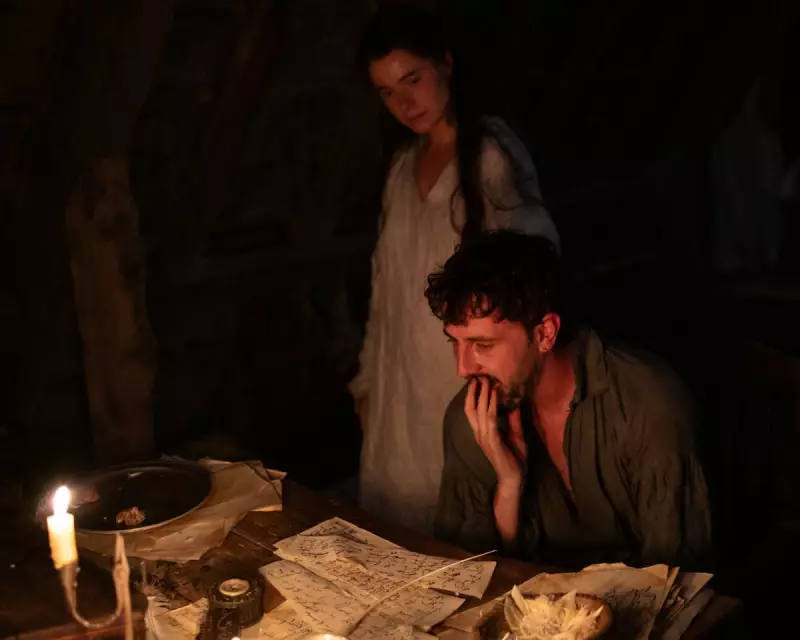
Opposite her, Paul Mescal brings a fierce, intelligent intensity to the role of the young William Shakespeare. He is a man straining against the confines of his Stratford life, desperate for artistic fulfilment in London, yet ultimately consumed by a guilt and sorrow that transcends distance.
The supporting cast, including Emily Watson as William's disapproving mother Mary, provides a sturdy foundation for the central drama.
Visual Poetry and Narrative Ambition
Zhao's direction is characteristically lyrical. The opening scenes, following Agnes through the folk-horror tinged forests outside Stratford-upon-Avon, establish a tone of mystical connection and impending doom. Cinematographer Łukasz Żal captures the English landscape with a pellucid, haunting beauty, while Max Richter's score swells with emotive force around the actors.
The narrative structure draws a direct line from domestic catastrophe to creative zenith. As Shakespeare grapples with his son's death—an event handled with devastating simplicity—the film suggests he transformed his paternal ghost into the spectral king of Denmark. His own sense of a murdered soul, condemned to wander, fuels the play's themes of existential paralysis and anguished indecision.
While some may find the theory contrived—after all, such personal grief could be mapped onto many of Shakespeare's tragedies—the sheer daring of the creative leap is thrilling. It attempts, much like Tom Stoppard did with Rosencrantz and Guildenstern Are Dead, to find a bold new doorway into a classic.
In the end, Hamnet succeeds not as biography, but as a powerful, standalone myth about the price of art and the shadows that inspire it. It is a film carried by the absorbing, captivating power of its two central performances, making the centuries-old story of the Shakespeares feel urgently, painfully human.
Hamnet is released in UK cinemas on 9 January.