Rio de Janeiro's 2026 Carnival: A Tapestry of Contrasts and Power Play
Rio de Janeiro's 2026 carnival unfolded as a vibrant spectacle, masterfully weaving together stark social contrasts and playful subversion. In a city where opulence and poverty often collide, the festival served as a dynamic canvas, exploring themes of power and identity through its rich visual expressions.
Subverting Authority in a Catholic Heartland
Brazil, home to the world's largest Catholic population, witnessed a fascinating twist during the carnival. Revellers donned racy nun costumes and sexy police outfits, transforming traditional symbols of authority into tools of street theatre. This Catholic cosplay highlighted carnival's underlying subversive nature, where figures of power are softened, flipped, and reimagined through playful performance.
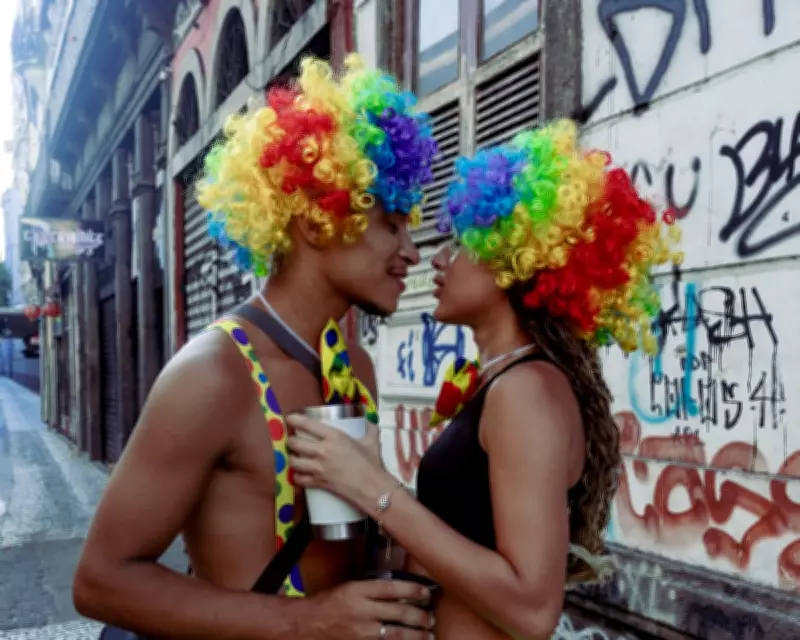
From the hills of Santa Teresa to the bustling streets of Lapa, the festival pulsed with energy. A couple dressed as clowns strolled through Lapa, while partygoers in fancy dress celebrated at block parties in Santa Teresa. Residents like Suzana navigated the steep paths to join the festivities, embodying the hard labour that underpins the joyful abandon.

Scenes of Daily Life Amidst Celebration
The carnival was not just about grand parades; it captured intimate moments of daily life. Monique took a cigarette break during a rainy brass band parade in Lapa, and Sandra enjoyed a street party near the iconic Lapa arches. Gizelle, dressed as a devil, added a touch of whimsy as live music filled the air.
Community spirit shone through, with a Santa Teresa resident spraying water from a hose to cool off revellers at a block party. People danced around a street vendor and his son, while Pêssego and Alé struck poses in Lapa, showcasing personal style amidst the collective revelry.
Beating the Heat and Embracing Tradition
As the afternoon heat intensified, crowds sought shade under trees, and a reveller lifted a red folding fan during a parade. The Turma Vingança Anchieta group posed proudly outside the Lapa arches, and a moto taxi weaved through paradegoers, illustrating the festival's chaotic charm.
At the Sambadrome Marquês de Sapucaí, the epicenter of Rio's samba school parades, Andreza Kakau waited eagerly. A costumed participant posed against a wall in Lapa, while a resident watched from a doorway, blending observation with participation.
Final Celebrations and Cultural Echoes
On Terça-feira Gorda, the final day of Brazil's official carnival, two Rio residents dressed as nuns shared a kiss in Lapa, symbolizing the festival's embrace of love and rebellion. Samba drummers performed on street corners, and a TV in a cornershop broadcast news coverage of the samba school competition, connecting local festivities with broader cultural narratives.
Street vendors pushed their carts, and Lucas Couto posed in a Snow White costume in Santa Teresa, adding fairy-tale flair. As revellers sang and danced outside a corner store in Lapa, the 2026 carnival concluded, leaving behind memories of a world where contrasts and subversion danced hand in hand.