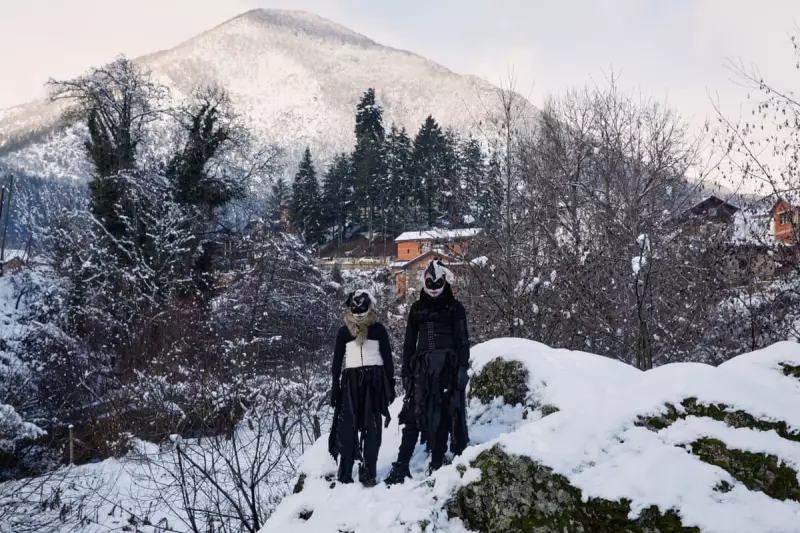
The ancient streets of Vevcani, a village in south-western North Macedonia, have once again transformed into a vibrant, open-air theatre. Over two days, the community celebrated its remarkable 1,400-year-old carnival, a unique fusion of pagan ritual, Christian motifs, and sharp contemporary satire.
A Living Tapestry of Tradition and Mockery
This extraordinary event, which marks the beginning of the New Year according to the old Julian calendar, is believed to have the power to scare away evil spirits. The entire village participates, with locals and thousands of visitors donning elaborate masks. These range from traditional depictions of devils, demons, and Vikings to pointed satirical masks representing modern political figures.
Participants, known as 'Vasiličari', bring the festival to life. One of the key rituals involves a pair dressed as a bride and groom parading through the village, going door-to-door. The festival cleverly intertwines its ancient roots with commentary on the present day, creating a living, breathing cultural spectacle.

Satire and Spectacle in the Balkan Mountains
In recent years, the carnival has gained particular attention for its political satire. Masks of global leaders, such as Russia's Vladimir Putin and former US President Donald Trump, are common sights, with villagers acting out current events in a humorous and often critical light. This blend of the ancient and the urgently modern is a defining characteristic of the event.
The festival schedule aligns with the 12 days of Eastern Orthodox Christmas and New Year, taking place annually after the modern celebrations. It has grown into a major tourist attraction for the Balkan region, drawing international visitors to the small, mountainous village.
Fire, Music, and the Final Purification
The culmination of the carnival is a powerful and symbolic finale. The procession finishes with the ritualistic burning of the masks in large fires, sometimes lit in unconventional vessels like bathtubs. This act symbolises the destruction of evil spirits and the end of the old year, clearing the way for the new.
Throughout the celebration, the sound of traditional woodwind instruments called zurlas fills the air, accompanying dancers and revellers in their elaborate costumes. From groups riding a wild boar costume to children watching eagerly from windows, the event is a community effort of immense historical depth.
The Vevcani Carnival stands as a powerful testament to the endurance of cultural tradition. It demonstrates how ancient rituals can evolve, absorbing contemporary themes to remain a relevant and captivating experience, continuing to banish evil and welcome hope for another year.