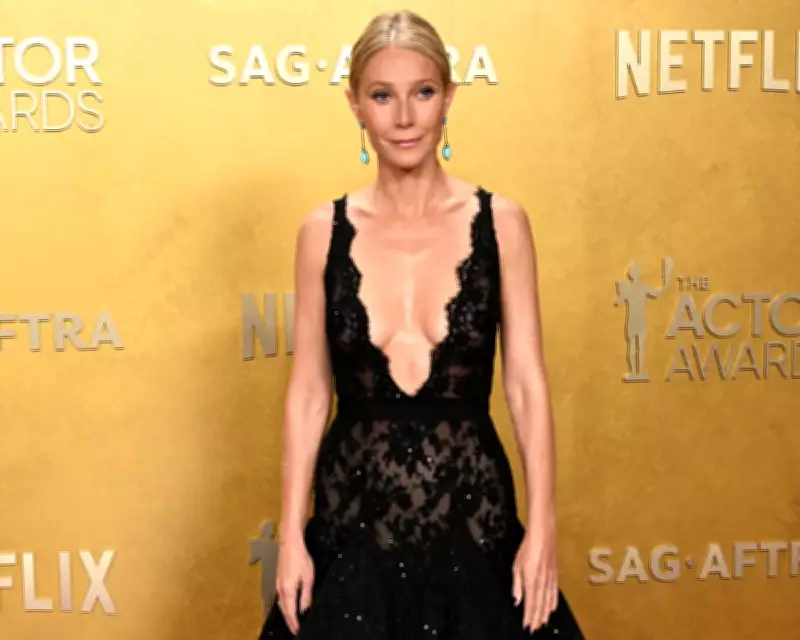
The Rise of Veavage: How a Deep V Neckline Conquered the Red Carpet
Forget traditional cleavage—the fashion world has plunged headfirst into the era of the "veavage." This striking trend, characterized by a deep V-shaped neckline that extends all the way to the waist, has become the undisputed ruler of red carpets in recent years. From the 32nd annual Actor Awards in Los Angeles to high-profile events in London and Milan, celebrities are embracing this bold look that redefines glamour and sparks intense cultural conversations.
A Star-Studded Phenomenon
The veavage made its dramatic entrance at the SAG awards, where it appeared on an impressive roster of Hollywood's elite. Kristen Bell, Jenna Ortega, Gwyneth Paltrow, Sarah Paulson, Odessa A'zion, and Lauren Miller all showcased variations of this daring style. The trend has since spread like wildfire, with Zendaya, Emma Stone, Elle Fanning, and Erin Doherty joining the ranks of veavage enthusiasts. At some events, this plunging neckline has reportedly outnumbered traditional cleavage by a remarkable 2:1 ratio.
What makes the veavage particularly noteworthy is its technical execution. These aren't simple necklines—they represent couture-level craftsmanship with exacting precision. The effect combines elements of boyband fashion aesthetics with dramatic cinematic references, creating a look that's both contemporary and timeless.
Beyond the Fabric: Cultural Implications
The conversation surrounding veavage extends far beyond mere fashion criticism. According to Bridget Dalton, a semiotician and cultural analyst at Truth Consulting, this trend represents a significant shift in how women's bodies are presented and perceived in public spaces. "The prairie dress with its sweetheart neckline dominated recent years by emphasizing traditional cleavage," Dalton explains. "That look became associated with specific cultural movements, including what some call the 'trad wife' aesthetic."
The veavage, by contrast, presents a different proposition. By revealing the décolletage while minimizing actual cleavage, it creates what Dalton describes as "a revealing look that reveals nothing." This paradoxical approach allows wearers to make a bold statement while maintaining a certain ambiguity—potentially shaming viewers for looking too closely at what isn't actually being shown.
Body Politics and Accessibility
The veavage trend raises important questions about body standards and accessibility in fashion. Unlike traditional cleavage that emphasizes breast size, the deep V neckline actually works better on smaller-chested figures. This has led some to view it as a more inclusive trend, though critics point out other barriers to participation.
"The veavage is fundamentally a thin person's trend," Dalton observes. "It requires not just a specific body type but complete confidence in that thinness. There's also an element of defying age—it presents an almost super-human ideal."
Economic factors further complicate the picture. Research indicates that users of weight-loss medications like GLP-1 agonists are disproportionately high-earners, suggesting that the body type associated with veavage may be more accessible to wealthy individuals. This creates a complex intersection of body politics, class, and fashion accessibility.
Historical Context and Future Directions
While the veavage feels distinctly contemporary, deep V necklines have historical precedents. During what's now called the "indie sleaze" era of the late 2000s and early 2010s, retailers like American Apparel popularized similar styles, though primarily in menswear. The current iteration represents a significant evolution, with women's fashion embracing and expanding upon these concepts.
As with all fashion trends, the pendulum continues to swing. Recent runway shows, including Gucci's much-discussed presentation in Milan, suggest that designers may already be moving toward new focal points. At that particular show, only one veavage-inspired piece appeared—a sea-blue lace halter top with strategically placed threadwork. Instead, designers seem to be exploring other areas of the body for emphasis.
Yet for those who have invested in deep-cut pieces, there's no need for concern. Fashion cycles ensure that bold statements like the veavage will likely resurface in new iterations. What remains clear is that this trend has sparked important conversations about how women present themselves in public, who gets to participate in fashion movements, and what our clothing choices communicate in an increasingly complex cultural landscape.