Royal Fashion as Diplomatic Armor: King Charles and Kate's Coded Messages
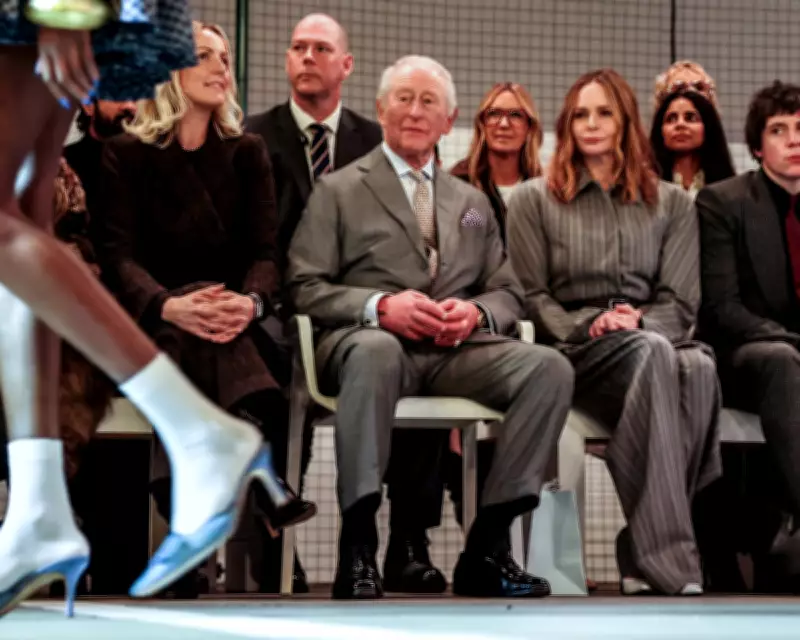
In a striking display of resilience, King Charles made a surprise appearance at the opening show of London Fashion Week, joining designer Stella McCartney on the front row. Styled in a British-made suit, a jaunty tie, and a clashing pocket handkerchief, his ensemble broadcast a clear message: business as usual, despite the recent arrest of his brother, Andrew Mountbatten-Windsor.
Pantone Diplomacy and United Fronts
This theme of sartorial solidarity continued at the Baftas, where the Prince and Princess of Wales presented a united front in coordinated burgundy velvet outfits. Dubbed "Pantone diplomacy" by the New York Times, Catherine's blush Gucci gown, which she had worn previously, subtly emphasized sustainability and restraint during a week when the royal family faced intense scrutiny.
Justine Picardie, former editor-in-chief of Harper’s Bazaar UK and author of Fashioning the Crown: A Story of Power, Conflict and Couture, notes, "The king’s whole look might be construed as putting on a brave face and keeping calm during yet another existential crisis. For Catherine, it is another expression of her taking a sustainable approach, showing restraint rather than excess."
Historical Precedents of Sartorial Strategy
The House of Windsor has long wielded fashion as a weapon in times of crisis. Picardie points to similar tactics after the abdication crisis of 1936, when Queen Elizabeth, the Queen Mother, was dressed by Norman Hartnell in traditional English styles to counteract the pro-Nazi chic of the Duke and Duchess of Windsor.
"Clothes are used to express power and many other things—emotion, vulnerability, grief, birth, death, loss," Picardie explains. Her research uncovered the concept of "dress diplomacy," where royals use fashion as a tool of soft power on official occasions.
Global Examples of Diplomatic Dressing
Royal fashion often carries covert political messages. For instance, the Princess of Wales wore a black Jenny Packham dress with silver fern leaves in New Zealand, a national emblem, and donned Canadian red at a Commonwealth Day service. Princess Diana chose dresses with red circles in Japan and gold falcons in Saudi Arabia, aligning with local symbols.
Queen Elizabeth II mastered this art, from ostrich-plumed hats in South Africa to her wartime habit of re-wearing outfits. In later years, her color choices, such as a blue and yellow hat during Brexit debates, sparked speculation about EU flag references, though the palace denied any intent. Her brooch selections, like one from the Obamas during a Trump visit, also fueled royal watchers' theories.
Personal Insights and Political Nuances
Picardie, who met the queen several times, recalls her comfort in traditional Scottish attire at Balmoral. When asked about designer Hardy Amies, rumored to have been a spy, the queen remarked, "Of course, it was excellent cover for a spy, to be a couturier," revealing a rare moment of openness.
Royal dressing can be overtly political, as seen in 1947 when Prime Minister Clement Attlee questioned the origin of silk for Princess Elizabeth's wedding dress, ensuring it was from China, not Japan or Italy. Even when not intended to draw attention, choices like Kate's collaboration with Johnstons of Elgin on a tartan-like fabric support British textiles, embedding meaning regardless of public disclosures.
Modern Royalty and Fashion Freedom
Picardie praises Catherine as "the most valuable ambassador for British fashion," highlighting her focus on recycled outfits and sustainability, such as a gold Phillipa Lepley gown at a state banquet. Meanwhile, the Duchess of Sussex has spoken about the liberation of no longer adhering to royal protocol, including wearing "nude pantyhose," now that she is not a working royal.
As for Andrew Mountbatten-Windsor, losing his uniform symbolizes a "stripping off," leaving him in casual attire seen in Epstein's photo album. For the remaining royals, fashion will likely continue to convey coded messages, reinforcing the crown's resilience through every stitch and hue.