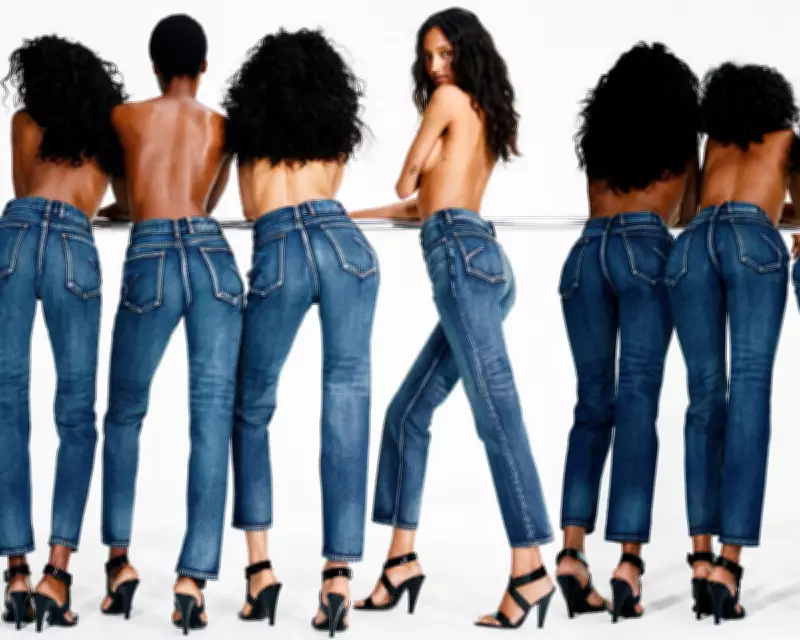
Denim Mania Sweeps Fashion as Luxury and High Street Clash
The resurgence of 90s minimalism has ignited an explosive popularity in denim, sparking a fierce debate across the fashion world. At the pinnacle of luxury, Alaia has launched a line of jeans, including an Aegean blue pair priced at a staggering £800, crafted from Japanese denim for comfort and flattery. Meanwhile, at the accessible end, JW Anderson's collaboration with high street giant Uniqlo offers jeans for just £34.90. Both extremes are proving wildly popular, with Alaia's new line already seeing such high demand that customers are advised to reserve styles in-store or call ahead, while Uniqlo's straight-cut versions routinely sell out online and have graced the front rows of recent fashion weeks.
The Great Jeans Divide: Quality vs. Affordability
The central question looms: can consumers truly discern the difference between a £800 luxury jean and a £35 high street alternative? According to Amy Leverton, founder of denim consultancy Denim Dudes, comparisons are tricky due to differing manufacturing methods. She notes that sagging and loss of shape, common in cheaper jeans, relate to factors like weave density and stretch content. "If a pair of jeans feels soft when you put them on, it sometimes means the weave is loose," Leverton explains, highlighting how initial comfort might mask long-term durability issues.
Evoléna de Wilde d'Estmael, co-founder of the sustainability-focused secondhand app Faircado, emphasizes that the gap between cheap and quality denim becomes stark in care routines. "A £30 pair that bags out after a few wears pushes you into constant washing, which breaks down the fabric even faster and wastes a lot of water. It's a vicious cycle," she says. In contrast, high-quality denim holds its shape, requires minimal washing, and improves with wear, fostering a deeper relationship with the garment.
The Sustainability and Transparency Revolution
Despite the allure of affordability, with many willing to tolerate sagging for £35, the fashion industry faces a transparency overhaul. The introduction of Digital Product Passports this year promises to expose the true cost of clothing by requiring a transparent record of materials, supply chains, and environmental impacts. "Once every pair of jeans has to come with such a record, it becomes much harder to hide behind a low price tag," d'Estmael asserts. She predicts that much of fast-fashion may struggle under this scrutiny, while quality brands could seize the opportunity to showcase their ethical practices. Leverton echoes this sentiment, revealing her preference for secondhand Levi's as a sustainable choice.
The Soaring Price of Artisan Denim
The trend of luxury jeans has been building for years, with notable examples like Bottega Veneta's leather jeans selling out at $6,900 in 2022 and high-priced versions from Valentino, Erdem, and others hitting catwalks. Margot Robbie's Chanel jeans, though not yet available, are expected to join ranks with Versace (£2,310), Balenciaga (£1,550), Brunello Cucinelli (£1,200), and Khaite jeans (around £600). But can any jean justify an £800 price tag? Leverton points to inflation and the artisanal nature of slow-made selvedge denim from Kojima, Japan, which Alaia utilizes. However, production challenges persist, with an estimated 10 to 20 factories closing due to ageing ownership and a skilled worker shortage, as reported by fashion journal WWD.
D'Estmael argues that such a high price can make sense if the jeans last, maintain their shape, and retain resale value. She highlights the economic illusion in clothing costs, factoring in raw materials, manufacturing, and transportation. "Obviously, the real sweet spot is buying those same pieces, secondhand," she concludes, advocating for a shift towards more sustainable consumption in the denim frenzy.