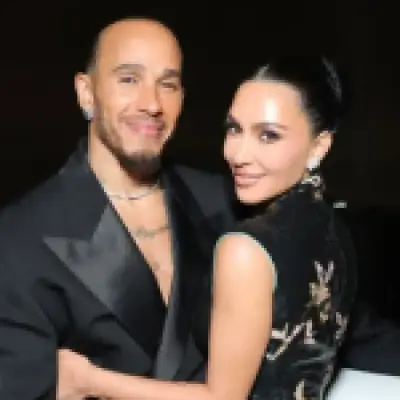
At the prestigious Grammy awards ceremony in Los Angeles, the red carpet transformed into a platform for political expression as numerous celebrities sported symbolic accessories. Billie Eilish notably wore an 'ICE out' badge on her lapel, joining fellow stars Justin and Hailey Bieber in making a visual statement against US Immigration and Customs Enforcement actions.
The Rise of Accessory Activism
This display follows a growing trend where Hollywood's elite use high-profile events to voice political opinions. The 'ICE out' pins represent just one example of how fashion accessories have become tools for social commentary on red carpets worldwide. These black and white badges serve as direct condemnation of recent ICE operations, creating visible solidarity with affected communities.
From Golden Globes to Grammys
The movement gained momentum at last month's Golden Globes, where celebrities including Mark Ruffalo and Natasha Lyonne wore 'Be Good' pins. These paid tribute to Renee Good, a 37-year-old unarmed US citizen fatally shot by an ICE agent in January, and Keith Porter Jr, another Los Angeles resident killed by an off-duty ICE officer on New Year's Eve.
Organisations like the American Civil Liberties Union back these campaigns, recognising the influential power of celebrity platforms. Nelini Stamp, a campaign organiser, emphasised the importance of diverse voices in civil society, stating that artists and entertainers who reflect societal concerns play crucial roles in advocacy efforts.
Beyond Badges: The Fashion Protest Expands
The trend extends far beyond simple pin badges. TikTok now features numerous tutorials for creating button badges, while online marketplaces like Etsy have seen sellers quickly capitalise on demand. UK-based Rad Badges sold over thirty packets of four-pin sets reading 'Abolish ICE' and 'Nobody is illegal' within a single week, demonstrating international reach.
Craftivism and Creative Resistance
Missouri beadwork artist Komina Guevara creates 'ICE out' and 'FCK ICE' charms that can be attached to pins, chains, or phone straps. She describes wearing these items as 'a small, intimate protest' that offers confidence to those hesitant about public political expression.
The movement has inspired various creative expressions, including:
- T-shirts featuring Bad Bunny's Grammy speech text: 'ICE out. We're not savage, we're not animals, we're not aliens. We are humans and we are Americans'
- Graphic tops with ice-related puns like 'I like my ICE crushed' and 'Remember ICE melts'
- Anti-ICE manicures featuring tiny ice cube designs and lettering
- Knitted 'Melt the ICE' hats inspired by Norwegian resistance symbols from the 1940s
Minneapolis yarn store Needle and Skein has raised over $650,000 for immigrant organisations through pattern sales and protest stitch-alongs, showing how craftivism can generate substantial support for causes.
Criticism and Counterarguments
While pin badges and slogan T-shirts have long histories in resistance movements, some critics label this new wave of celebrity activism as performative. Unlike more controversial international issues, opposing ICE represents a widely accepted liberal position, leading to concerns about virtue signalling similar to those raised during the 2017 pink pussyhat movement.
The Power of Small Actions
However, craftivism expert Betsy Greer, author of 'Craftivism: The Art of Craft and Activism', argues that projects like the Melt the ICE caps create crucial connections that can inspire further action. 'Speaking out can be scary,' Greer acknowledges, 'but once you start talking to and learning from others also doing communal projects, it can become easier to take other steps that feel right for you.'
Greer views knitting and badge-making as 'a step toward action' that can encourage people to attend protests, contact politicians, or volunteer locally. She believes these creative expressions serve as 'galvanising things that help people take action toward the good,' transforming personal craft into collective political power.
As celebrities continue to use their visibility for political statements, and crafters worldwide join the movement through accessible creative projects, fashion activism appears poised to remain a significant feature of cultural events and everyday resistance alike.