Stefano Gabbana Resigns as Dolce & Gabbana Chair in Major Governance Shift
Stefano Gabbana, the renowned co-founder of the iconic Italian fashion house Dolce & Gabbana, has officially stepped down from his position as chair of the company. His resignation, which took effect on January 1st of this year, marks a significant evolution in the brand's organizational structure and governance framework.
Leadership Transition and Stake Considerations
According to official statements from the luxury label, Gabbana's departure is described as part of a natural progression within the company's leadership. Alfonso Dolce, brother of co-founder Domenico Dolce and the current chief executive of D&G, has assumed the chair role following Gabbana's exit. This transition was first reported by Bloomberg, highlighting the strategic reshuffle within the fashion empire.
Importantly, the company emphasized that Gabbana's resignation does not impact his ongoing creative contributions to the brand. He continues to be actively involved in the creative direction and design activities that have defined Dolce & Gabbana's distinctive aesthetic for decades.
In a parallel development, Gabbana is reportedly evaluating various options for his substantial 40% stake in the business. This comes as the company prepares for crucial negotiations with its bank lenders, with former Gucci CEO Stefano Cantino taking on a prominent management role as part of the broader organizational restructuring.
Financial Challenges and Market Pressures
The Italian fashion house, established in 1985 by Stefano Gabbana and Domenico Dolce, has faced considerable financial headwinds in recent times. The luxury sector has experienced a notable downturn, exacerbated by geopolitical uncertainties including conflicts in the Middle East—a crucial market for high-end fashion brands.
In March, Dolce & Gabbana appointed Rothschild & Co as its financial adviser ahead of planned discussions with creditors. At that time, the company carried approximately €450 million (£391 million) in bank debt following a refinancing round in 2025. This financial restructuring was intended to support a new growth strategy aimed at maintaining the brand's independence.
Lenders had previously granted temporary waivers on borrowing terms, but the ongoing negotiations remain critical to the company's financial stability. A D&G spokesperson stated: "With regard to the debt position, the group has no statement to make at this time, as negotiations with the banks are still ongoing."
Ownership Structure and Brand Legacy
The ownership of Dolce & Gabbana is divided among key stakeholders. Both Stefano Gabbana and Domenico Dolce hold 40% stakes in the business through a holding unit, while the remaining 20% is separately held by Domenico's siblings, Alfonso and Dorotea Dolce.
The brand's journey to international prominence began in 1993 when Madonna commissioned Dolce & Gabbana to create costumes for her Girlie Show tour, catapulting the label into the global spotlight. Despite their romantic separation in 2004, the creative partnership between Gabbana and Dolce has remained professionally prolific, expanding from initial womenswear offerings to encompass menswear, lingerie, accessories, fragrances, and cosmetics. By 2009, the brand reported an impressive €1 billion in annual turnover.
Controversies and Brand Challenges
Over the past fifteen years, Dolce & Gabbana has navigated numerous controversies that have tested its brand reputation. In 2012, the company faced accusations of romanticizing slavery after featuring earrings with Blackamoor statue designs. The following year, images surfaced from a Disco Africa-themed Halloween party where some attendees appeared in blackface, with Gabbana present at the event.
In 2015, co-founder Domenico Dolce sparked outrage by referring to children born via IVF as "synthetic babies" and expressing opposition to gay adoption rights, though he later apologized for these remarks. The brand faced perhaps its most significant crisis in 2018 when social media advertisements featuring a Chinese model attempting to eat Italian food with chopsticks led to allegations of cultural insensitivity.
This controversy escalated when Gabbana allegedly sent direct messages on Instagram containing offensive remarks about China, though the company claimed both accounts had been hacked. The incident resulted in the brand's removal from major Chinese e-commerce platforms and the cancellation of a Shanghai fashion show, reportedly costing Dolce & Gabbana approximately one-third of its business in the region.
Most recently, the brand's menswear show drew criticism for featuring an exclusively white model lineup, highlighting ongoing diversity concerns within the fashion industry.
Creative Vision and Future Direction
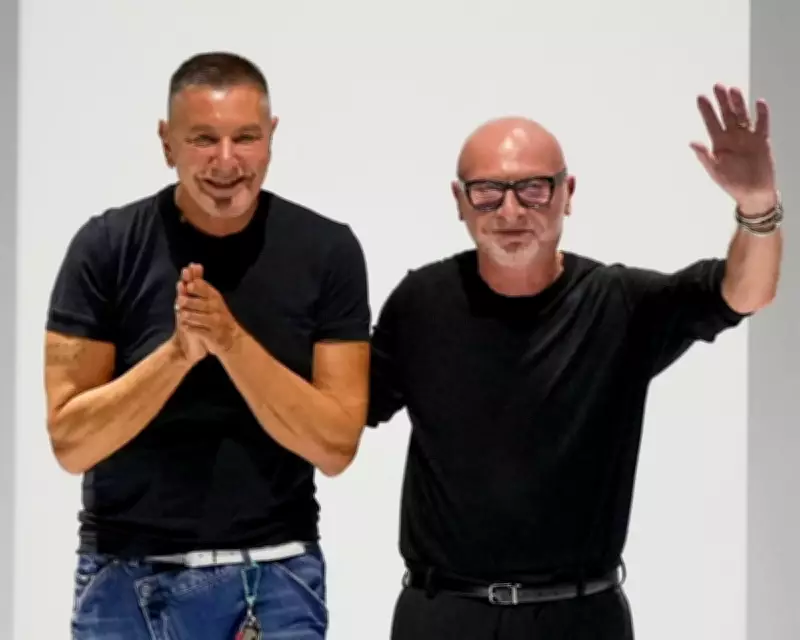
Despite these challenges and the recent leadership changes, Gabbana and Dolce presented a united front during the D&G womenswear show in Milan this February. The event attracted numerous celebrities, including Madonna, underscoring the brand's enduring cultural relevance.
In an interview with the Guardian following the show, the designers emphasized their commitment to creating "instantly recognizable" clothing that embodies their distinctive aesthetic without following transient fashion trends. They articulated their vision for garments that immediately communicate "Oh, that's Dolce & Gabbana" without requiring label identification.
As Stefano Gabbana explores options for his significant stake in the company he helped build, and as Dolce & Gabbana navigates crucial financial negotiations with lenders, the fashion world watches closely to see how this iconic brand will evolve in an increasingly competitive and scrutinized luxury market.