The Making of Chuckie Egg: A Teenager's Triumph in 8-Bit Gaming
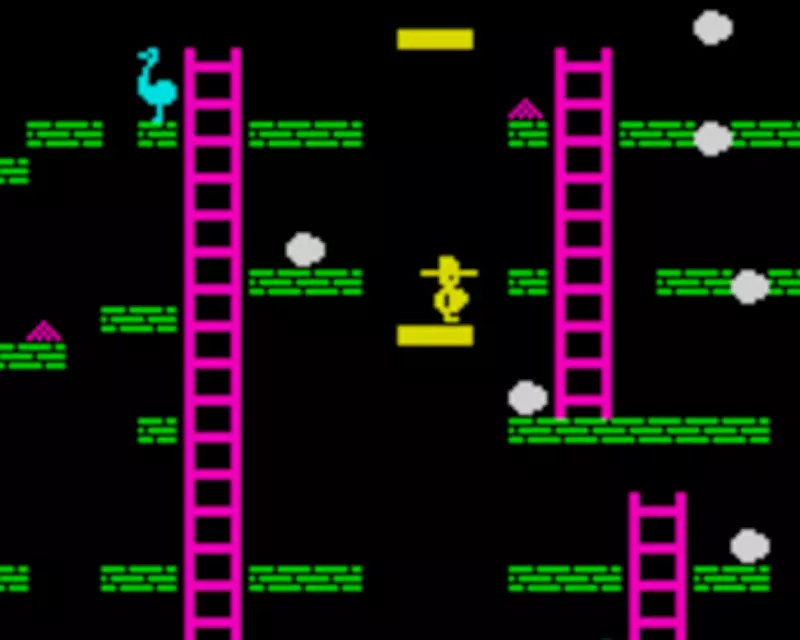
In the early 1980s, if you owned a home computer, you undoubtedly knew about Chuckie Egg. This deceptively simple platform game, set in a chicken shed where players collected eggs while dodging patrolling hens, became an instant classic. Its defining moment arrived at level eight, when a large duck was unleashed, transforming the gameplay into a frantic chase that predated modern boss battles. Chuckie Egg's widespread appeal stemmed from its accessibility, quickly topping charts upon its 1983 release on systems like the ZX Spectrum, BBC Micro, and Dragon 32.
Humble Beginnings in a Manchester Computer Shop
The origins of Chuckie Egg were remarkably modest. A&F Software, the publisher, was not a global corporation but a small operation run by friends Doug Anderson and Mike Fitzgerald from their computer shop in Denton, Greater Manchester. In a backroom filled with tape recorders for duplicating games, a team of programmers worked tirelessly. The mastermind behind Chuckie Egg was Nigel Alderton, a 15-year-old Saturday employee who started as a tea boy. Alderton's fascination with computers began in school, where he eagerly spent time on TRS-80 machines, later receiving a ZX Spectrum as a prized gift that fueled his programming passion.
Inspiration from Arcade Classics and Creative Innovation
Alderton's inspiration for Chuckie Egg came not from other computer games but from the arcade hits of the era. During bus rides home from work, he would visit an arcade, spending his earnings on games like Donkey Kong and Space Panic. He admits, "If you put a screenshot of Space Panic next to Chuckie Egg they're embarrassingly similar. I nicked all the bits out of Space Panic that I liked." However, his creation was no mere copy; it refined these elements into something uniquely engaging. When he showcased the game to his colleagues, the reaction was immediate awe, with programmers and bosses crowding around the screen in admiration.

The game's visual style emerged from hardware limitations, with enemies designed to be two characters high and one wide for simplicity. A&F Software contributed the whimsical setting of a hen house and the protagonist's name, Hen House Harry, aligning with the surreal tone of games like Hungry Horace and Manic Miner. Alderton focused intensely on perfecting character movement, tweaking speeds and jump lengths to create a fluid, satisfying experience that encouraged mastery and replayability.
Lasting Impact and Modern Revival
Chuckie Egg's legacy endures, woven into the fabric of British 8-bit gaming culture alongside titles like Bruce Lee and Skool Daze. Alderton continued in the industry briefly, working on games such as Street Hawk and conversions of Commando and Ghosts 'n Goblins, but eventually left due to the demanding hours. Yet, Chuckie Egg never faded away. Recently, Elite Systems announced a new smartphone version with 3D graphics, highlighting its timeless appeal. Steve Wilcox of Elite Systems notes, "It's one of the handful of games from the first half of the 80s that people still think about and talk about."
Today, Alderton works as a forecaster for a global firm, but the game remains a point of pride. He recalls a boiler servicer recognizing a framed Chuckie Egg T-shirt and being stunned to learn Alderton was the creator. "People still remember it 40 years later. It's lovely. It's very flattering," he says, reflecting on the enduring nostalgia and impact of his teenage creation.