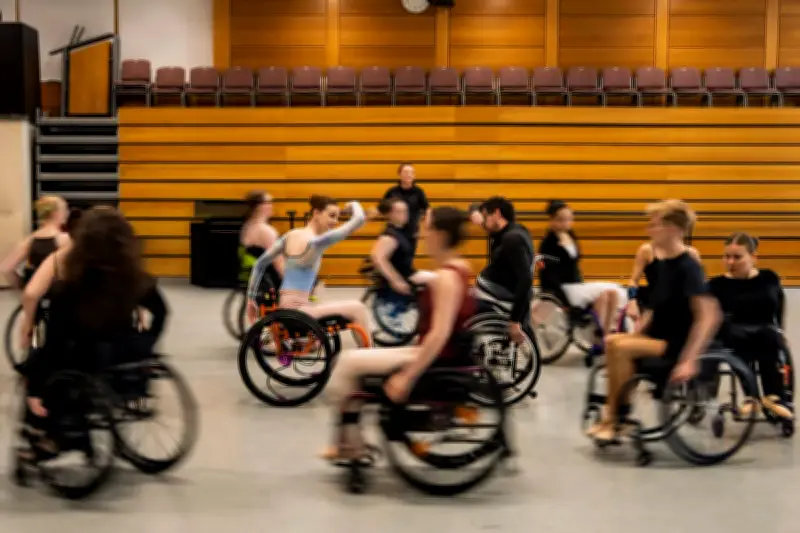
Niamh Ní Hoireabhaird, a 29-year-old wheelchair user with Friedreich's ataxia, travelled from Dublin to London to attend an adaptive ballet class at the Royal Ballet School, led by professional disabled dancer Kate Stanforth. The class, part of a collaboration with the Kate Stanforth Academy of Arts and supported by Allied Mobility, sold out within minutes, with hundreds on the waiting list.
From nervousness to belonging
Entering the Royal Ballet School, Ní Hoireabhaird felt like an impostor, but her nervousness melted away when she saw a dozen wheelchair-using dancers doing warm-up exercises. The class began with barre exercises instructed by Stanforth and Rachael Hunt, international artistic manager at the Royal Ballet School. Despite her stiffness and imperfect movements, Ní Hoireabhaird felt accepted. “My abilities were accepted, and that meant everything to me,” she said.
Cathartic experience with Giselle
After barre work, the group moved on to a dance repertoire from the 19th-century romantic ballet Giselle. Ní Hoireabhaird watched in awe as dancers crossed the room with graceful arm movements between synchronized wheelchair pushes. “As they glided past, they looked as if they were swimming through the air,” she described. The class emphasized listening to one's body and having fun, which made the experience cathartic for her after nearly two decades without dancing.

Growing visibility for disabled dancers
Stanforth, who lives with ME and Ehlers-Danlos syndrome, founded the Kate Stanforth Academy of Arts to promote accessible dance education. She noted that the academy has a worldwide network of 500 disabled dancers. “This community is not small or rare – it has simply not always been visible,” she said. “As that visibility grows, so does the possibility of a more open and inclusive future for ballet, where no dancer has to question whether they belong.”
Impact and future hopes
The class left Ní Hoireabhaird with a satisfied tiredness, unlike the frustrated exhaustion she often feels. She now hopes to turn adaptive ballet into a hobby, though no such classes exist near her home in Dublin. “If a class like this existed closer to home, I’d be a regular attender,” she said. The overwhelming interest, with attendees from across the UK and the Netherlands, underscores the demand for inclusive dance opportunities.