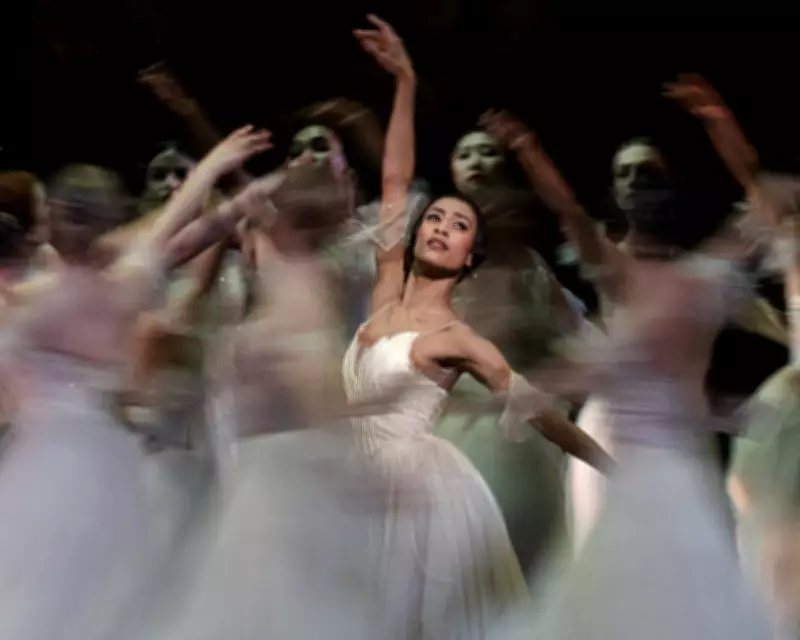
The Royal Ballet's production of Giselle at the Royal Opera House in London has witnessed a remarkable debut that signals the arrival of a major new talent. Twenty-five-year-old Ukrainian dancer Marianna Tsembenhoi, currently a first artist three ranks below principal, delivered a performance of such clarity and emotional resonance that it immediately establishes her as a future star of the ballet world.
A Debut of Exceptional Promise
From her first buoyant entrance across the stage, Tsembenhoi demonstrated extraordinary elevation that created the illusion of barely touching the ground. The Ukrainian dancer, who came to train in the UK in 2017, brought a bright-eyed, girlish quality to the tragic peasant girl Giselle, infusing the role with the lightness of innocence and goodness. Her technical precision was evident throughout, with long arms that swayed gracefully like willow branches, creating a visual poetry that enhanced the emotional narrative.
Dual Debuts Create Compelling Chemistry
Tsembenhoi was not alone in making her debut in a leading role. Joseph Sissens also appeared for the first time as Albrecht, the nobleman who poses as a peasant and becomes Giselle's love interest. Sissens delivered a subtle, nuanced performance that captured the character's complex motivations and privileged background. His dancing exhibited careful attention to detail, from the tightly fluttering beats of his feet to the deliberate extension of each movement phrase, creating a compelling counterpoint to Tsembenhoi's performance.

Emotional Journey Through Two Acts
The role of Giselle is particularly coveted because it requires the dancer to traverse an immense emotional landscape within two hours. Tsembenhoi navigated this journey with remarkable maturity, moving from innocence to disbelief, then madness, and finally into the realm of spirits. Her mad scene demonstrated sophisticated use of stillness to draw audience attention before unleashing emotional intensity. In the second act's afterlife sequence, her girlishness transformed into quiet resignation, with her technical neatness taking on new emotional weight.
While not reinventing the role in the manner of Natalia Osipova or creating the infinite inner world of Francesca Hayward, Tsembenhoi established herself confidently as her own artist with a distinctive interpretation that promises significant future development.
Strong Supporting Cast Enhances Production
The production benefited from excellent supporting performances that complemented Tsembenhoi's rising star. The second act maintained a solemn, sorrowful atmosphere with the wilis (spirits) appearing bewitchingly ghostly. Nadia Mullova-Barley delivered a fantastically stark, still power as their queen Myrtha, while Julia Roscoe created a deliciously imperious Mean Girl as Bathilde, Albrecht's aristocratic fiancée. Her patronizing treatment of Giselle added compelling dramatic tension to the production.
The Royal Ballet's faith in Tsembenhoi appears well justified based on this exceptional debut performance. Her combination of technical precision, emotional depth, and stage presence suggests she will become a significant figure in ballet's future. The production continues at the Royal Opera House in London until 20 March, offering audiences the opportunity to witness this emerging talent in one of ballet's most demanding and rewarding roles.