Ronin Review: Yukiko Masui's Swordplay Choreography Delivers Exhilarating Cut and Thrust at The Place London
Some contemporary dance productions can feel exclusive, requiring specialized knowledge to appreciate fully. Yukiko Masui's Ronin breaks this mold entirely. This audiovisually immersive, anime-inspired dance piece at The Place in London is designed to welcome everyone—bring children aged ten and above, invite your un-arty relatives, or accompany friends who are not dance insiders, and no one will feel left out. It is a spectacular show that combines stylishly fluid movement with thrilling fights and dramatic face-offs.
An Accessible Yet Mystical Journey
Ronin is a show with its own unique arcana, drawing from samurai swordfighting traditions, anime references, and video-gaming aesthetics. Despite these elements, it maintains an approachable charm. Running through the rapid switches and jump-cuts of its various scenes is a slender thread of metaphysical quest, adding depth without alienating the audience.
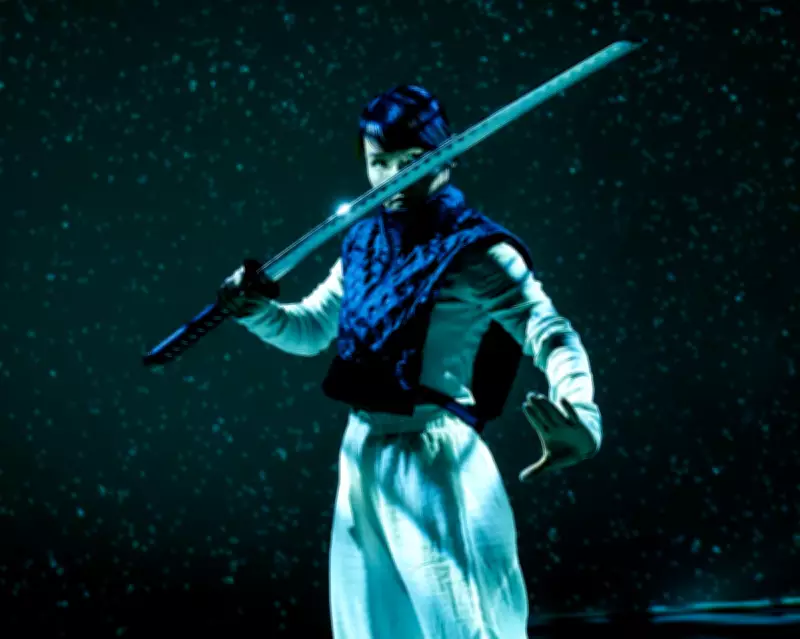
Cher Nicolette Ho stars as the main character, first seen in ritual preparation for a journey. The stage, while physically empty, is audiovisually rich. All three walls and the floor serve as screens for Barret Hodgson's immersive digital animations. These visuals transition from downpours of rain and uprisings of bubbles to fantastical worlds where neon flowers bloom, fish swim through forests, pathways pixellate, gyrating white cubes wheel through geometric space, and a cold moon merges with a boiling sun.

Immersive Sound and Dynamic Choreography
In tandem with the visuals, Ruth Chan's soundscore evolves from the gentle patter of rain on roofs to synthesized noise, drum-driven beats, and, in one particularly memorable scene, a silence that suddenly feels overwhelmingly loud. This auditory landscape enhances the disorienting universe that Ho navigates.
As Ho ventures into this realm, she encounters two other seekers, Nathan Bartman and Jacob Lang. Their roles fluctuate intriguingly between adversary, assistant, and companion, adding to the narrative's discombobulating yet engaging nature. While the plot and setting can be perplexing, the choreography itself is clean and pacy, featuring intense fights, stalking sequences, chases, tense advances, and nimble tumbles.
Exhilarating Swordplay and Fluid Movement
The most striking aspect of Ronin is undoubtedly the swordplay. The dancers' torques and lunges are amplified by the long arcs of their swords as they take swipes out of the air. Even without swords, the style leaves a lasting imprint—the moves are sharp-edged, simultaneously fluid and stabbing, sometimes freeze-framed, and always poised. This creates an exhilarating effect that captivates audiences.
The first act concludes with a powerful image: Lang lunging to skewer Ho's flung-back body while Bartman holds him back. The second act revisits this tableau via a different route, offering an alternative perspective on the same scene. This riveting pivot-point serves as a highlight, though the rest of the act diffuses this focus with more assorted quantum leaps through the narrative.
A Choice Between Coherence and Spectacle
Ultimately, Ronin presents a compelling choice: would you prefer a story that coheres perfectly, or the sheer spectacle of three dashing swordspeople slashing away at their simulated universe? For those seeking an accessible yet mystically rich dance experience, this show delivers in spades. Ronin is touring until 23 May, offering audiences across the UK a chance to witness its unique blend of martial arts and contemporary dance.