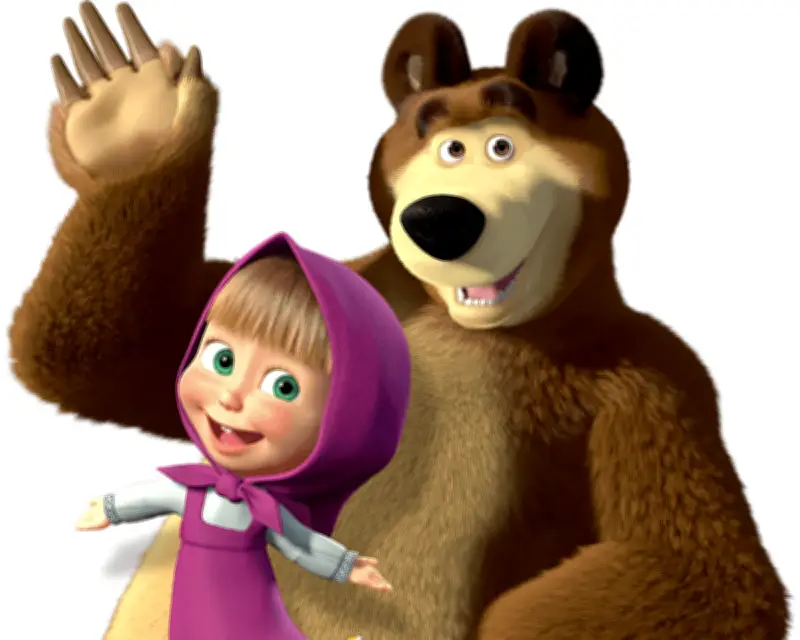
Liberal Democrat MP Tom Gordon, along with a cross-party group of over 50 MPs, has called for the ban of the animated children's show Masha and the Bear, alleging it is Russian propaganda aimed at the 'militarisation of children'. The programme, popular on YouTube and available on ITVX and Netflix in the UK, follows a young girl and her bear companion in a woodland. Critics, including Ukraine's Center for Countering Disinformation and Estonia's foreign minister, point to the use of Soviet-era military costumes as a flex of Russian 'soft power'.
Early Propaganda Cartoons
Cartoons as propaganda have a century-long history, dating back to World War I, according to David Welch, emeritus professor of modern history at the University of Kent. 'All belligerents employed them,' he says. British animator Lancelot Speed created 'lightning sketches' ridiculing Kaiser Wilhelm II, which were hugely popular with cinema audiences.
During World War II, the use of propaganda cartoons exploded. Warner Brothers produced The Ducktators (1942), depicting Hitler, Mussolini, and Tojo as ducks, and Daffy – The Commando (1943), where Daffy Duck hits a rotoscoped Hitler with a mallet. Disney produced Der Fuehrer's Face (1943), an Oscar-winning film where Donald Duck dreams of living in Nazi Germany and ultimately declares 'Am I glad to be a citizen of the United States of America!' Many US wartime films featured racist caricatures, such as Bugs Bunny Nips the Nips, now banned.
Axis and Cold War Propaganda
The Axis powers also produced propaganda cartoons. Fascist Italy released Il Dottor Churkill (1941), depicting Winston Churchill as a Jekyll and Hyde monster. In 1943, Nazi Germany ordered Nimbus Libéré in Vichy France, portraying an allied invasion as dangerous with antisemitic caricatures. During the Cold War, propaganda shifted to ideological differences. Britain's first animated feature, Animal Farm (1954), was later revealed to have been funded by the CIA, altering the original ending to support the overthrow of communist governments.
Modern Propaganda and Slopaganda
With the rise of digital animation, individuals began producing propagandistic cartoons. After 9/11, crude Flash animations mocked Osama bin Laden, and both sides in conflicts used cartoons. The far-right series Murdoch Murdoch (2015) uses pre-existing internet memes to spread racism and Nazi ideology. During the Russo-Ukrainian war, both sides produced cartoon counter-propaganda, anthropomorphising states into children and combining fiction with real events, notes Kristián Földes, a lecturer at Charles University.
The cost of cartoon warfare has plummeted. Iranian media company Explosive Media used generative AI to create Lego Movie-style animations supporting Iran, featuring plastic versions of Donald Trump and Benjamin Netanyahu. Michał Klincewicz, assistant professor at Tilburg University, terms this 'slopaganda', noting that cartoons excel at communicating emotions rather than facts. 'Our current infrastructure is designed to verify factual claims, not narratives and stories,' Földes adds.
Masha and the Bear: Propaganda or Not?
Földes says he cannot be sure if Masha and the Bear is propagandistic without further study. 'There are obvious symbolic elements throughout the series. The bear, for example, quite clearly symbolises Russia. However, compared to the Russian cartoon that we analysed – which was specifically produced as a piece of propaganda – Masha and the Bear exhibits these propagandistic elements only episodically.' The fate of the show on UK screens remains undecided, but Klincewicz doubts that cartoon propaganda will disappear: 'The idea is to deliver a message in a form that is more familiar, less threatening, or that elicits affective responses. I don't see that changing any time soon.'