From Radio to Removalist: How Jess McGuire's Decade of Heavy Lifting Shaped Her Career
Radio broadcaster and comedian Jess McGuire spent a decade as a furniture removalist after losing her dream job in Melbourne, a period she calls her "wilderness years." During this time, she took on various gigs to survive financially, but it was the removalist work that profoundly changed her perspective on life and career.
The Unseen Realities of Furniture Moving
McGuire quickly learned the practical truths of the job. She now vows never to own a glass dining table, describing them as heavy and cumbersome, and humorously questions the desire to see guests' crotches during dinner parties. She also discovered that all mattresses have stains, a fact removalists accept without judgment, though awkward explanations from clients sometimes ensued.
One of the biggest surprises was people's overconfidence in packaging. McGuire recalls a client who filled a washing machine box with fragile items like crockery and glassware, expecting it to hold up during the move. Another time, a personal trainer packed a plastic tub with weights so heavy it couldn't be moved, assuming removalists were obligated to lift it simply because it was in a container.

Gender Dynamics and Customer Reactions
As one of the few women in the company initially, McGuire faced mixed reactions from customers. Some were delighted, others uncertain, and a few refused to believe a woman could handle the job. One man insisted he couldn't help due to a back injury, assuming she would struggle, but McGuire and her colleague effortlessly moved his massive fridge, leaving her whistling merrily.
At the other extreme, an elderly mother followed her around during a move, taking photos and cheering her on with exclamations like "You're so STRONG!" McGuire notes that this encouragement made her work harder and more efficiently than ever before.
The People Who Made the Job
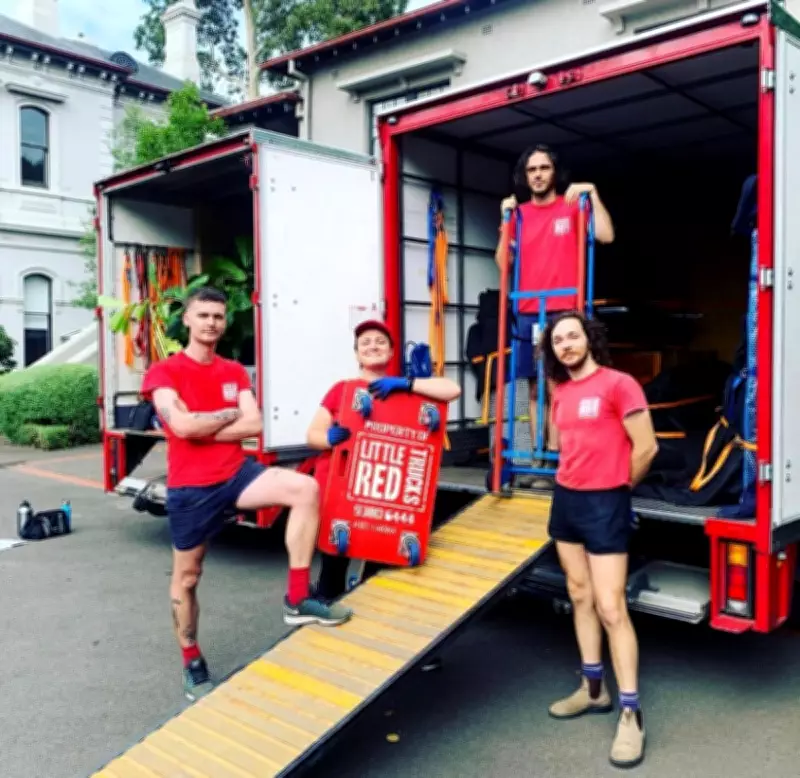
More than the furniture, it was the people McGuire worked with that defined her experience. The team included a diverse group of men and women, many of whom were creative professionals—actors, comedians, writers, and even a musician who had played at Coachella. Despite stereotypes about physical laborers, she found them to be intelligent, affectionate, and open about mental health, challenging notions of toxic masculinity.
McGuire emphasizes that in this job, there was no faking it; you either could do the work or you couldn't, and the furniture didn't discriminate.
Lessons in Resilience and Attitude
Initially, McGuire struggled with the physical demands and felt stuck in her career, fearing financial instability. However, she learned that attitude was everything. Showing up in a foul mood made hard shifts unbearable, but approaching tasks with positivity brought moments of laughter and camaraderie, even on tough days.
She compares the work to life itself: starting box by box, piece by piece, until eventually, the job is done. McGuire believes that if she had sailed through her 30s in radio without this experience, she would lack real-life insights that now enrich her broadcasting. Her wilderness years, though challenging, ultimately made her stronger and more resilient.
Today, as the host of ABC NSW Drive and a comedian performing at the Melbourne International Comedy Festival, McGuire credits her removalist years for shaping her into a better broadcaster and person—and she's confident she could still lift a fridge if needed.