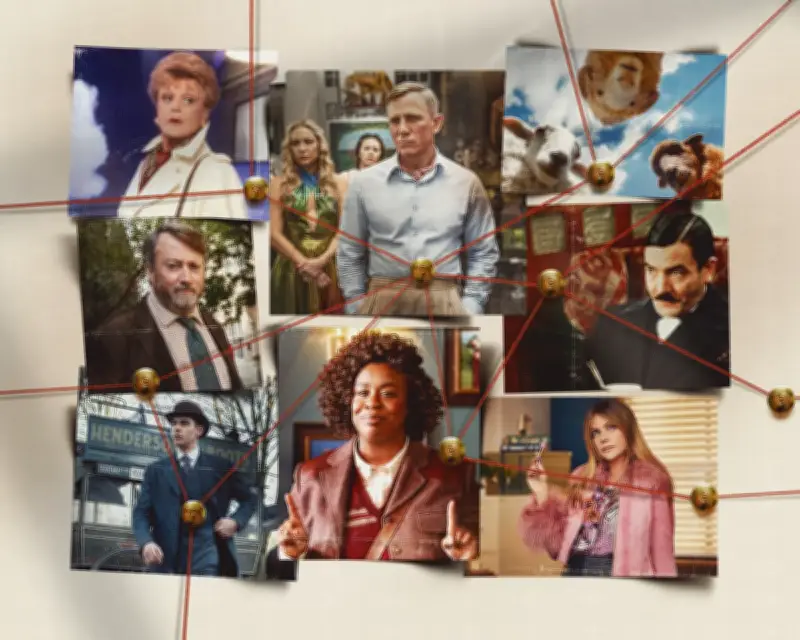
The figure of the amateur detective—a hyper-talented investigator who isn't a police officer but teams up with law enforcement to solve crimes—has become a staple of television and cinema. Known as the "No badge? No problem!" trope on the website TV Tropes, this character type has seen a recent surge in popularity with shows like High Potential, Elsbeth, and Ludwig, as well as film offerings such as The Sheep Detectives.
Origins in Detective Fiction
The roots of the consulting detective can be traced back to Edgar Allan Poe's C. Auguste Dupin, who first appeared in The Murders in the Rue Morgue (1841). Elspeth Latimer, an associate tutor in crime writing at the University of East Anglia, explains: "Between 1841 to 1844, Edgar Allan Poe published three mystery stories set in Paris featuring C Auguste Dupin, who uses his powers of observation and deduction to assist the gendarmerie in solving seemingly impossible crimes." Dupin's boast that "most men, in respect to himself, [wear] windows in their bosoms" set the stage for the archetype.
Arthur Conan Doyle's Sherlock Holmes, introduced in 1887's A Study in Scarlet, refined the model. Holmes describes himself as a "consulting detective," noting: "Here in London we have lots of government detectives and lots of private ones. When these fellows are at fault they come to me, and I manage to put them on the right scent." Like Dupin, Holmes is an outsider who outsmarts the official police force.
Modern Variations and Trends
Today's consultants come in many forms. In High Potential, Morgan Gillory is a mother with a high IQ who works as a cleaner for the LAPD and is recruited after cracking a case. Elsbeth features a sharp lawyer monitoring the NYPD. Ludwig follows a puzzle-maker impersonating his detective twin. The BBC has announced a new version of Hercule Poirot as a thirtysomething private detective, and The Sheep Detectives features sheep helping solve a murder.
Latimer notes that these characters often have a different interpretation of events that sets them apart. They spot clues others miss, have eureka moments, and elicit confessions in dramatic reveals. The tone is typically lighthearted, with murders occurring early to allow for humor and puzzle-solving.
From Holmes to the Lady Detective
The most traditional consultants are Holmesian figures: introverted and obsessive men, like David Mitchell's character in Ludwig, which hints at neurodivergence. Miss Marple represents another template: the kindly old spinster. A countervailing trend in the 2000s was the handsome bachelor rogue, such as Patrick Jane in The Mentalist.
Recently, there has been an uptick in "lady detectives," aligning with women-centred storytelling. The BBC's new series The Hairdresser Mysteries features a village salon owner turned sleuth. Characters in Elsbeth and High Potential are warm and empathic, using soft skills as their superpower.
Reality vs. Fiction
Stuart Gibbon, a former detective who consults for crime writers, says that while expert advisers like forensic podiatrists are sometimes called in, their contributions are specialized. Dr. Lorraine Sheridan, a former behavioural investigative adviser, notes: "I wasn't attending crime scenes or sitting in interview rooms. There's no ongoing partnership, no hot desk at the station, no banter with the detectives over coffee." Civilian investigators exist in UK forces but handle low-level offences like shop theft, not murder cases.
A friend who worked as a Metropolitan police detective admits she rarely watches crime shows: "I get irritated when they don't do things accurately." She was trained to focus on evidence, not intuition.
The Appeal of the Outsider
The consultant's outsider status taps into anti-authoritarian impulses. These characters display disregard for rules and often clash with bureaucratic institutions. In High Potential, Morgan is fired for insubordination but quickly rehired. However, the subversion is contained; the shows ultimately endorse the system, portraying the happy integration of individual and institution. As PD James wrote: "What the detective story is about is not murder but the restoration of order." The moment of resolution conjures a soothing fantasy that chaos can be understood and controlled.
In an era of high mistrust in institutions, these shows offer comfort and stability. The enduring appeal lies in the fantasy that anyone, with no training, could step up and solve the mess we're in. No badge? No problem.