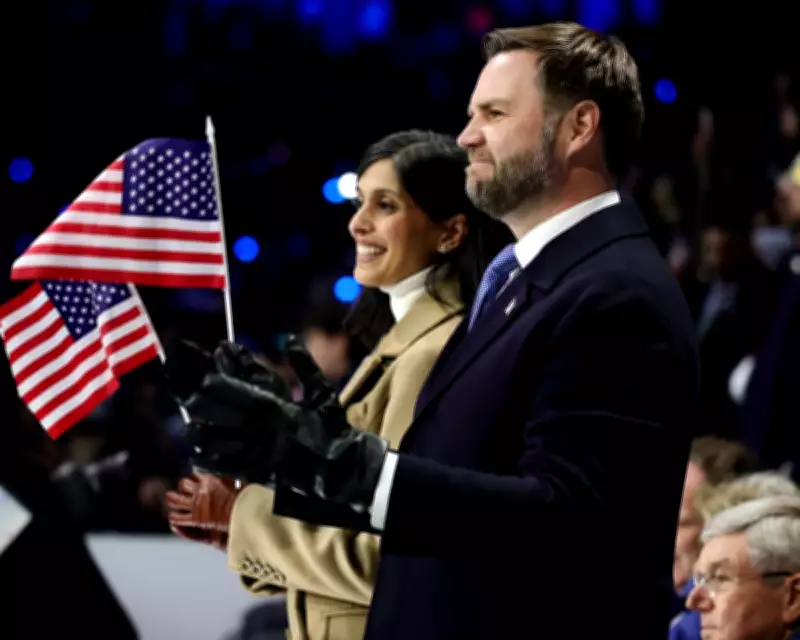
US Vice-President JD Vance and Second Lady Usha Vance attended the opening ceremony of the Winter Olympics in Milan on Friday, but their appearance was met with a chorus of boos from sections of the crowd. However, American viewers tuning into NBC's coverage would have been completely unaware of this hostile reception, as the broadcast appeared to cut out the audible dissent.
Contrasting Broadcasts Reveal Omission
When speedskater Erin Jackson led Team USA into the iconic San Siro stadium, she was greeted by enthusiastic cheers. Yet, as television cameras shifted to focus on Vice-President Vance and his wife, the atmosphere turned notably negative, with boos, jeers, and only scattered applause emanating from the audience. This reaction was clearly captured on the Canadian broadcaster CBC's feed, where a commentator remarked, "There is the vice-president JD Vance and his wife Usha – oops, those are not … uh … those are a lot of boos for him. Whistling, jeering, some applause."
Media Silence and Social Media Backlash
In stark contrast, the NBC broadcast did not feature the boos or any commentary about them when Vance appeared on screen; the team simply stated "JD Vance" without further acknowledgment. This omission did not go unnoticed, as footage of the booing quickly circulated on social media platforms across the United States, amplifying the controversy. The White House added to the narrative by posting a clip from NBC's broadcast showing Vance applauding, devoid of any negative crowd noise.
Journalists present at the event, including The Guardian's Sean Ingle and USA Today's Christine Brennan, confirmed the boos in their reports, highlighting the discrepancy between live experience and televised representation.
Historical Context of Censoring Dissent
This incident is not an isolated case in recent US media history. In September, at the US Open men's final, tournament organizers explicitly requested broadcasters to avoid showing any crowd reactions to former President Donald Trump's attendance. Part of their directive read: "We ask all broadcasters to refrain from showing any disruptions or reactions in response to the president’s attendance in any capacity." This pattern raises questions about the portrayal of political figures in major sporting events.
Broader Protests and Political Tensions
Earlier on Friday in Milan, hundreds of protesters demonstrated against the presence of US Immigration and Customs Enforcement (ICE) agents at the Olympics. The US State Department has clarified that several federal agencies, including ICE, are deployed to assist in protecting American visitors, noting that the ICE unit in Italy operates separately from those involved in domestic immigration enforcement.
The political climate also affected athletes, with freestyle skier Hunter Hess expressing mixed emotions about representing the United States. He stated, "There’s obviously a lot going on that I’m not the biggest fan of. Just because I’m wearing the flag doesn’t mean I represent everything that’s going on in the US."
Vance was not the sole target of negative reactions; the four athletes representing Israel also received a mix of boos and cheers during their appearance at the opening ceremony, underscoring the complex interplay of politics and sport on the global stage.