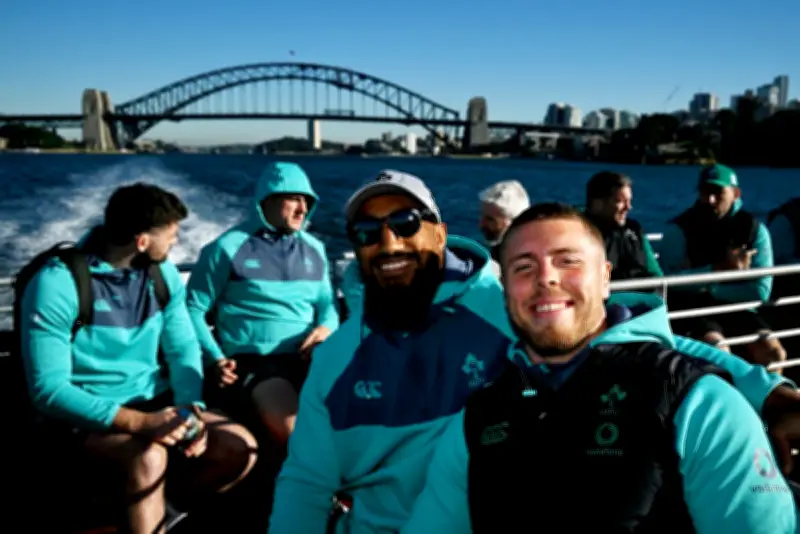
The inaugural Nations Championship, a biennial men's rugby tournament, launches next weekend with matches in Christchurch, Tokyo, Sydney, Cardiff, Johannesburg, and Córdoba. The competition aims to boost global interest and broadcasting revenue by pitting northern hemisphere teams against southern hemisphere sides, but critics point to increased long-haul flights, a larger carbon footprint, and the absence of key players.
Format and fairness concerns
The tournament features six games per nation, followed by a November finals weekend in London, using a Ryder Cup-style aggregate scoring to determine the strongest hemisphere. However, the structure has drawn criticism for inequity. Fiji, for instance, will "host" Wales in Cardiff's Hill Dickinson Stadium rather than in Suva, a move intended to maximize revenue for Fiji but raising questions about competitive balance. Similarly, Japan will host Ireland in Newcastle, Australia, after Ireland refused to play in Tokyo alongside Sydney and Auckland on consecutive July weekends.
Georgia and other non-elite nations remain excluded, with no guaranteed promotion path. According to organizers, the longer-term goal is to build reserves for Fiji and others to improve facilities, but the arrangement has been described as having a "colonial-style whiff."
England's grueling schedule
England's itinerary includes a 26,000-mile round trip from London to Johannesburg, Liverpool, Santiago del Estero, and back within three weeks. Coach Steve Borthwick and his players are putting on a brave face, focusing on performance. England face South Africa at Ellis Park, while France take on the All Blacks in Christchurch to kick off the concept with high-profile matches.
Marcus Smith vowed that England will "leave it all out there" against South Africa, highlighting the intensity expected.
Key storylines and player availability
Dave Rennie makes his debut as All Black coach, buoyed by the Hurricanes' Super Rugby domination, against Six Nations grand slam champions France. However, not all French stars, including Louis Bielle-Biarrey and Thomas Ramos, will be available, though Antoine Dupont is set for a rare southern-hemisphere appearance against Australia in round two.
Ireland, missing injured captain Caelan Doris, use the tournament to familiarize themselves with Australian conditions ahead of the 2027 World Cup, 15 months away. Their historic 2-1 series win against the All Blacks in 2022 set a high bar.
Environmental and scheduling challenges
The tournament launches amid soaring jet-fuel prices and climate-change concerns, with more long-haul flights than traditional tours. The format also clashes with other major sporting events like the football World Cup, Wimbledon, and Formula One. Critics argue that less could be more, as the congested calendar includes a potential final between France and South Africa just two weeks after their Paris match and less than a year before the World Cup.
The finals weekend in London will feature matches from sixth-place playoffs to the first-place final, with points awarded: one point per undercard winner, two for the first-place final winner, and a maximum of seven points total. The first hemisphere to collect four points wins overall, likely sparking social media debates.
England may not make the final two days at their own stadium, potentially slotting into the third-place fixture on Friday night, given the superior rankings of South Africa, New Zealand, Ireland, and France.