Circulation(s) Festival Returns to Paris for 16th Edition
The Circulation(s) photo festival, a premier showcase for young European photography, has made its triumphant return to Paris for its 16th edition. This year's event, held at the Centquatre-Paris, presents a dynamic collection of works by 26 emerging photographers from across Europe. The festival, running from March 21 to May 17, 2026, captures the vibrant pulse of contemporary European photography, highlighting its intuitive insights, creative challenges, and deep social commitments.
Exploring Identity and Conflict Through Lens
Among the standout projects is Clodagh O'Leary's series, Who Fears to Speak, which delves into the experiences of children and young people in the Republican strongholds of Bogside and Creggan in County Derry. These areas were profoundly impacted by the Troubles, with violence from both the British army and local paramilitary groups. Although the conflict largely ended with the Good Friday Agreement in 1998, O'Leary's work reveals how residual tensions persist, subtly influencing the youngest members of the community and sometimes serving as a gateway to paramilitary recruitment.
Davide Degano's Do-li-na explores the intricate connections between images, memory, and identity in the Friuli-Venezia Giulia region of Italy. This forested area, where Italian, Slovenian, Friulian, and German cultures converge, has a history of concealed borders and cultural coexistence. Degano's project was sparked by the rediscovery of his grandmother's hidden Slovenian heritage, suppressed by fascist Italianisation policies, prompting him to question how archives and imagery shape what is remembered or erased.
Celebrating Queer Expression and Cultural Heritage
Dónal Talbot's Becoming investigates how subjective experience and identity mold our perception of the world. Inspired by Jack Babuscio's concept of 'gay sensibility,' Talbot illustrates that queerness, often marked by social oppression, manifests through a unique way of seeing and living. His work embraces authenticity beyond societal norms, unfolding with a sense of surrender to consciousness and nature, inviting viewers to consider identity as a fluid, ever-evolving process.
Ellen Blair's Homemade Undercuts is a tender and intimate series that celebrates hair-cutting as an act of solidarity, care, and queer expression. In LGBTQIA+ spaces, hairstyles serve as accessible canvases for self-presentation, with shaved heads and vibrant colors being omnipresent. Blair honors how queer communities have historically used hairstyles to assert, distract, and subvert cultural, political, and gender norms, turning personal grooming into a form of celebration and resistance.
Addressing Global Issues and Historical Narratives
Ruby Wallis's Bloodroot & Foxglove (Fuil Fréamh agus Lus Mór) emerged from a residency at Lismore Castle Arts in Ireland, in collaboration with nearby asylum seekers. Through night walks, Wallis created a space for sharing stories and reflecting on displacement. The project involves naming home plants as acts of memory and healing, uncovering layers of history in colonised land, with each plant referencing healing, spiritual, or culinary traditions passed down through collected narratives.
Rafael Roncato's Tropical Trauma Misery Tour is a speculative documentary that critiques the rise of the far right in Brazil. Using staged images, archive fragments, and meta-fictional strategies, Roncato constructs a political-farce theatre, exposing how populism blurs the lines between reality and fiction. His work highlights global strategies of misinformation and digital chaos, offering a stark commentary on contemporary political landscapes.
Mythology, Immigration, and Environmental Themes
T2i & NouN's Manman Dilo reimagines the Water Mother, a mystical half-woman, half-fish figure from Guyanese folklore, as an Afro-futuristic icon. Starting from the toponym 'Guyana,' meaning 'land of abundant water,' they envision a world where water is omnipresent, addressing themes of natural power and cultural representation in the public sphere.
Ricardo Tokugawa's work explores family identity, ancestry, and home through his background as a Brazilian of Okinawan descent. For Tokugawa, photography is about the process between idea and image, inviting viewers to revisit their own evolving questions of identity and traditions.
Reflections on Nature, Conflict, and Personal Histories
Tanguy Muller's Feuillages Rebelles, Pelages Revêches examines our ambivalent relationship with other life forms through human-shaped and aestheticised subjects like trimmed trees and groomed dogs. This series reflects on practices of domestication and control, highlighting hybrid forms that blur natural and artificial boundaries.
Olia Koval's Eruption uses forty thousand handmade red-winged beetles to metaphorically represent the Russian occupation of Ukrainian territories. The installation transforms a living room from a refuge into a hostile space, echoing Ukraine's forced coexistence with a disturbing new reality, told through a pseudo-documentary narrative.
Deep Dives into Migration and Regional Dynamics
Mashid Mohadjerin's Riding in Silence & The Crying Dervish is a meditative journey into her family history, exploring migration, forced departures, and the intersection of masculinity with political ideology. Her work examines how historical forces like war and colonialism shape personal stories, offering a poignant look at displacement and patience.
Marco Zanella's Mezzogiorno provides an intimate perspective on southern Italy, capturing landscapes marked by economic insecurity, unfinished buildings, and rituals. Zanella reveals paradoxes between time and space, light and shadow, myth and reality, creating a politically conscious visual language that reflects contemporary fragmentation.
Focus on Youth and Hidden Histories
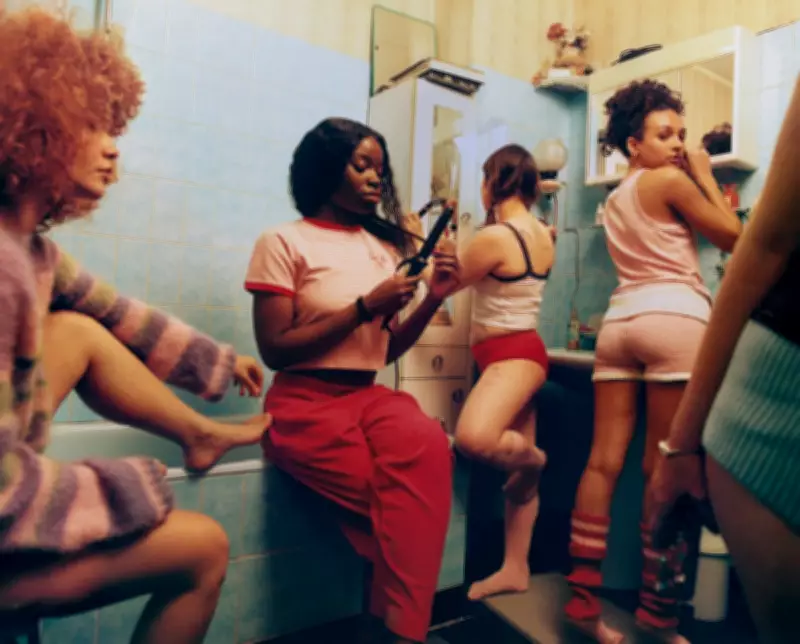
Marine Billet's Reliées turns to Generation Z to explore how young women shape their identities. Through intimate encounters with five women, Billet creates a universe between documentary and staging, capturing moments of inner turmoil and movement, paying tribute to the evolving nature of female identity.
Konstantin Zhukov's Black Carnation Part Three reflects on the little-documented history of queer people in Latvia. Referencing a pre-World War II term for homosexual men that disappeared under Soviet censorship, Zhukov addresses stories that have been forgotten or erased, reclaiming hidden narratives.
Sadie Cook & Jo Pawlowska's Everything I Want to Tell You emerges from dialogues about class, illness, immigration, gender, and sexuality. Using images as a shared space, they blend records of their parallel trajectories with staged fantasies, escaping imposed definitions and creating a projection of desired worlds.
This expanded edition of the Circulation(s) festival not only showcases artistic talent but also fosters critical conversations on identity, politics, and heritage, solidifying its role as a key platform for emerging European voices in photography.